
Arthdal Chronicles returned after a long four-year gap with its second season, titled Arthdal Chronicles: The Sword of Aramun. The fantasy epic was one of the most ambitious Korean dramas ever produced, combining political intrigue, mythology, tribal warfare, and large-scale world-building rarely seen in K-dramas. Because of that, expectations for Season 2 were incredibly high, especially after the first season ended with several unresolved storylines.
The new season introduced major cast changes, expanded the conflict between Arthdal and the Ago Union, and pushed its central characters toward a large-scale war. While some fans were initially concerned about the recasting of key roles, others were excited to see the story continue after years of uncertainty. The result is a season that delivers stronger pacing, larger stakes, and more focused storytelling, though it still carries some of the same strengths and weaknesses that defined the original series.
Story Review: A Bigger and More Focused Conflict
Season 2 takes place roughly eight years after the events of the first season. Arthdal has transformed under the rule of Ta-gon, who has established himself as king and strengthened his political power. At the same time, Eun-seom has risen as the leader of the Ago Union and become a symbol of resistance against Arthdal’s growing influence.
This setup immediately gives the story a clearer direction than parts of Season 1. Instead of spending large amounts of time introducing tribes, cultures, and mythology, Season 2 benefits from already having an established world. The narrative can focus more heavily on political conflict, character development, and the inevitable war between opposing factions.
One of the biggest strengths of the season is how it expands the consequences of decisions made in the original story. Characters who once struggled for survival are now leaders carrying the burden of entire nations. This shift adds weight to nearly every major storyline and creates a stronger sense of progression.
The political elements remain central to the drama. Betrayals, alliances, and power struggles continue to drive the narrative, making the series feel closer to a fantasy epic than a traditional K-drama. Many viewers compared the scale of these conflicts to major Western fantasy productions, though the series maintains its own identity through Korean mythology and cultural influences.
World-Building Remains the Show’s Greatest Strength
One of the reasons Arthdal Chronicles stands out in the K-drama industry is its commitment to world-building. Very few Korean series attempt fantasy storytelling on this scale, and Season 2 continues to expand the mythology introduced in the original run.
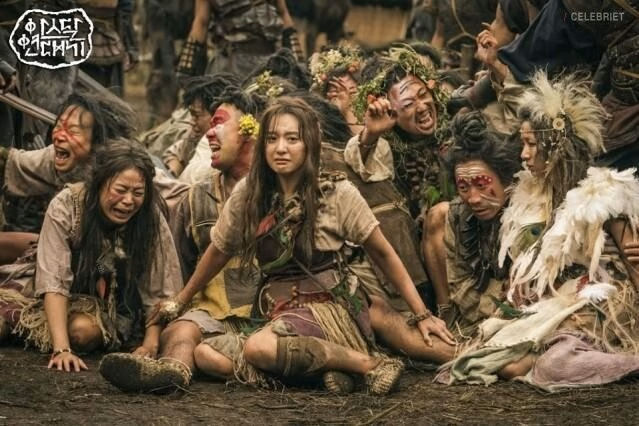
The world of Arth feels lived-in and complex. Different tribes maintain unique customs, beliefs, and political goals, creating a setting that feels larger than the central conflict. Rather than existing solely as background details, these cultural differences directly influence character decisions and plot developments.
The mythology surrounding prophecy, destiny, and divine figures also receives greater attention. The season continues exploring the symbolic roles of the Sword, Bell, and Mirror while connecting them to larger political and spiritual themes. This helps the story feel more cohesive than a simple war narrative.
Many fans praised the show’s ambition, particularly its effort to create a fantasy universe that does not rely heavily on familiar Western fantasy conventions. Discussions among viewers frequently highlighted how the series feels unique within Korean television despite occasional comparisons to Game of Thrones.
Cast Changes: The Biggest Challenge of Season 2
Before the season premiered, the biggest concern among fans was the recasting of major characters. Song Joong-ki and Kim Ji-won did not return, with their roles being taken over by Lee Joon-gi and Shin Se-kyung.
The decision generated significant debate before release. Many viewers had become deeply attached to the original cast, making any replacement difficult to accept. Online discussions reflected concerns that the emotional connection built during Season 1 might be lost.
Fortunately, the series handles the transition more effectively than many expected. The eight-year time jump provides a logical explanation for the slightly different interpretations of the characters. Rather than attempting direct imitation, the new actors bring their own approaches to the roles.
While some fans continued to prefer the original cast, others felt the replacements eventually became natural as the season progressed. The reception remained divided, but many viewers acknowledged that the performances themselves were strong, even if adjustment required time.
Lee Joon-gi’s Performance as Eun-seom and Saya
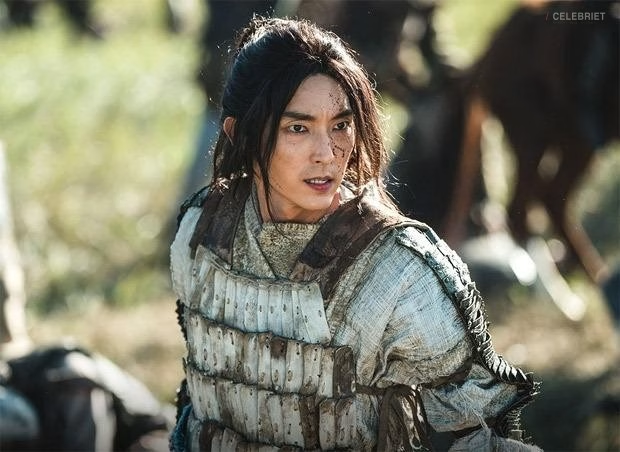
Lee Joon-gi arguably faced the most difficult challenge in the cast transition because he inherited two major roles: Eun-seom and Saya. Both characters carry significant narrative importance and require distinctly different personalities.
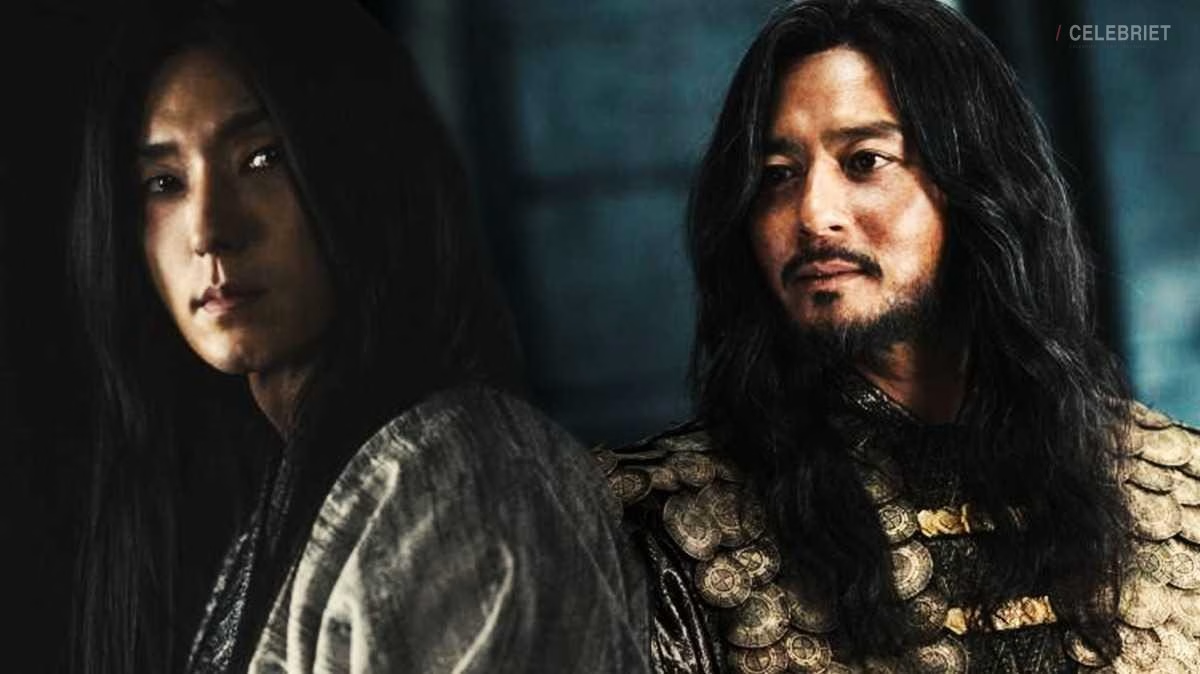
Lee approaches the dual performance with confidence. His version of Eun-seom feels more battle-hardened and mature, reflecting the years spent leading the Ago Union. At the same time, Saya retains the mysterious and calculating qualities that defined him in Season 1.
One of the strongest aspects of Lee’s performance is his ability to create clear distinctions between the twins. Even without major visual differences, viewers can immediately recognize which character is on screen based on posture, tone, and expression.
Many fan reactions highlighted Lee as one of Season 2’s strongest additions. Even viewers initially skeptical about the recasting often praised his ability to handle the complexity of both roles.
Shin Se-kyung’s Version of Tan-ya
Shin Se-kyung entered the series under similar pressure due to the popularity of Kim Ji-won’s original performance as Tan-ya. The character serves as both a spiritual leader and a key political figure, making her one of the story’s most important players.
Shin portrays Tan-ya with greater authority and confidence, reflecting the character’s growth over the eight-year gap. She feels less like a reluctant participant in history and more like someone actively shaping events.
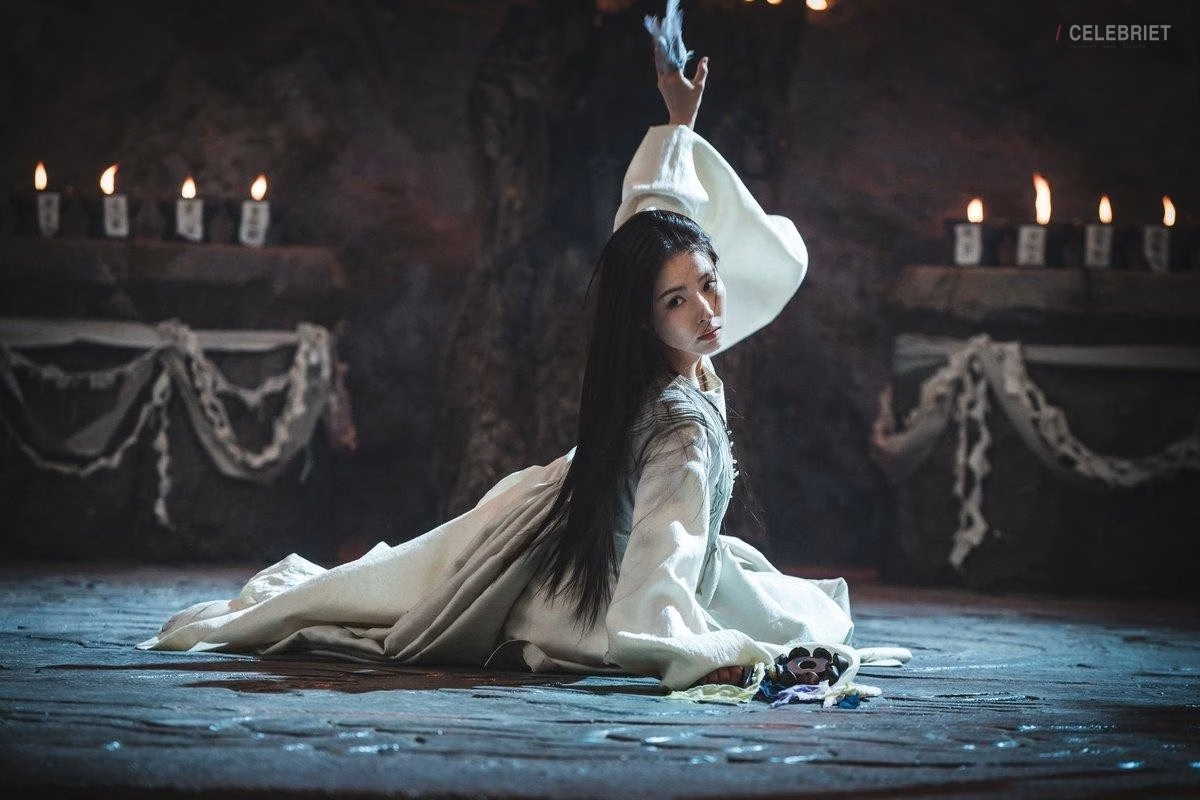
Her performance received mixed reactions from viewers. Some fans appreciated the more mature interpretation, while others struggled to separate the character from Kim Ji-won’s portrayal. These differing opinions became one of the most discussed aspects of the season.
Regardless of preference, Tan-ya remains central to the narrative, and Shin successfully captures the character’s evolving role within the political and spiritual structure of Arthdal.
Returning Cast Members Continue to Shine
While much attention focused on the recasting, returning cast members provided continuity that helped stabilize the season.
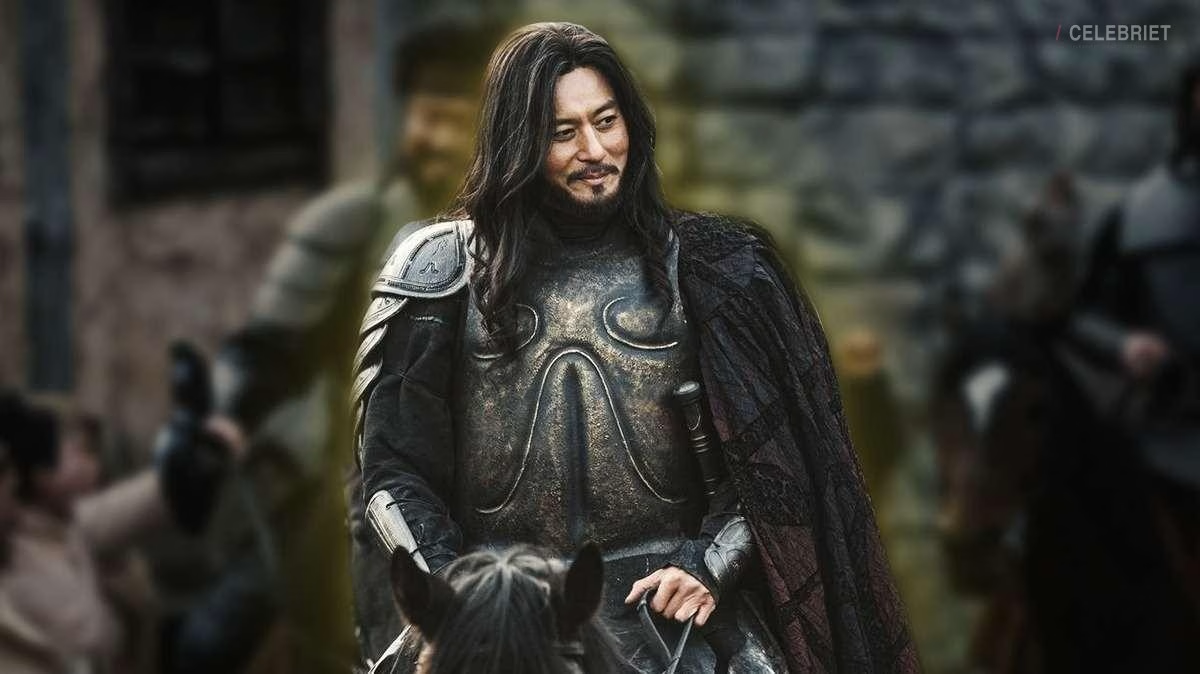
Jang Dong-gun once again delivers a commanding performance as Ta-gon. The character remains one of the series’ most fascinating figures, balancing charisma, ambition, and ruthless political instincts. His presence continues to drive much of the show’s tension.
Kim Ok-vin also remains excellent as Taealha. Her intelligence, manipulation skills, and determination make her one of the most compelling characters in the story. The power dynamic between Taealha and Ta-gon remains among the season’s strongest elements.
Their performances help preserve the identity of the series while providing emotional continuity between seasons. For many viewers, these returning characters serve as anchors connecting the old and new versions of the show.
Pacing Improvements Over Season 1
One criticism frequently directed at the original season involved pacing. Many viewers felt the extensive world-building sometimes slowed narrative momentum. Even supporters of the series acknowledged that certain storylines took time to develop.
Season 2 addresses this issue by moving much faster. Because the world has already been established, the story can focus on advancing character arcs and major conflicts. The result is a more streamlined viewing experience.
Episodes generally feel more purposeful, with fewer detours away from central storylines. Important developments occur regularly, helping maintain viewer engagement throughout the season.
This faster pacing does come with trade-offs. Some side characters and political developments receive less attention than they might have in the first season. However, many viewers considered the improved momentum a worthwhile exchange.
Visuals, Production Value, and Action Sequences
The production value remains one of the show’s strongest selling points. The scale of the sets, costumes, and environments continues to distinguish Arthdal Chronicles from most Korean fantasy dramas.
Battle sequences receive greater emphasis in Season 2. Large-scale warfare becomes increasingly important as tensions between Arthdal and the Ago Union escalate. These scenes benefit from improved choreography and stronger visual direction.
The cinematography also helps reinforce the epic atmosphere. Wide terrain shots, detailed costume design, and ambitious set construction create a believable fantasy world. Even viewers critical of certain story elements frequently praised the visual presentation.
While some CGI limitations remain visible in certain scenes, the production quality remains impressive for a television series. The ambition behind the project is evident throughout the season.
Fan Reception: Divided but Largely Positive
Fan reception to Season 2 was ultimately more positive than many expected before release. Initial skepticism surrounding the cast changes gradually softened as viewers became invested in the story again.
Many fans praised the stronger pacing, larger stakes, and expanded character development. Online discussions frequently highlighted Lee Joon-gi’s performance and the continued strength of the political storytelling.
However, criticism remained regarding the recasting. Some viewers never fully adjusted to the new versions of Eun-seom and Tan-ya, feeling that the emotional connection from Season 1 could not be fully replicated. Others argued that the transition ultimately worked because of the time skip.
The season also continued generating discussion around the future of the franchise. Many viewers expressed interest in a potential third season, particularly because several story elements still offer room for expansion.