
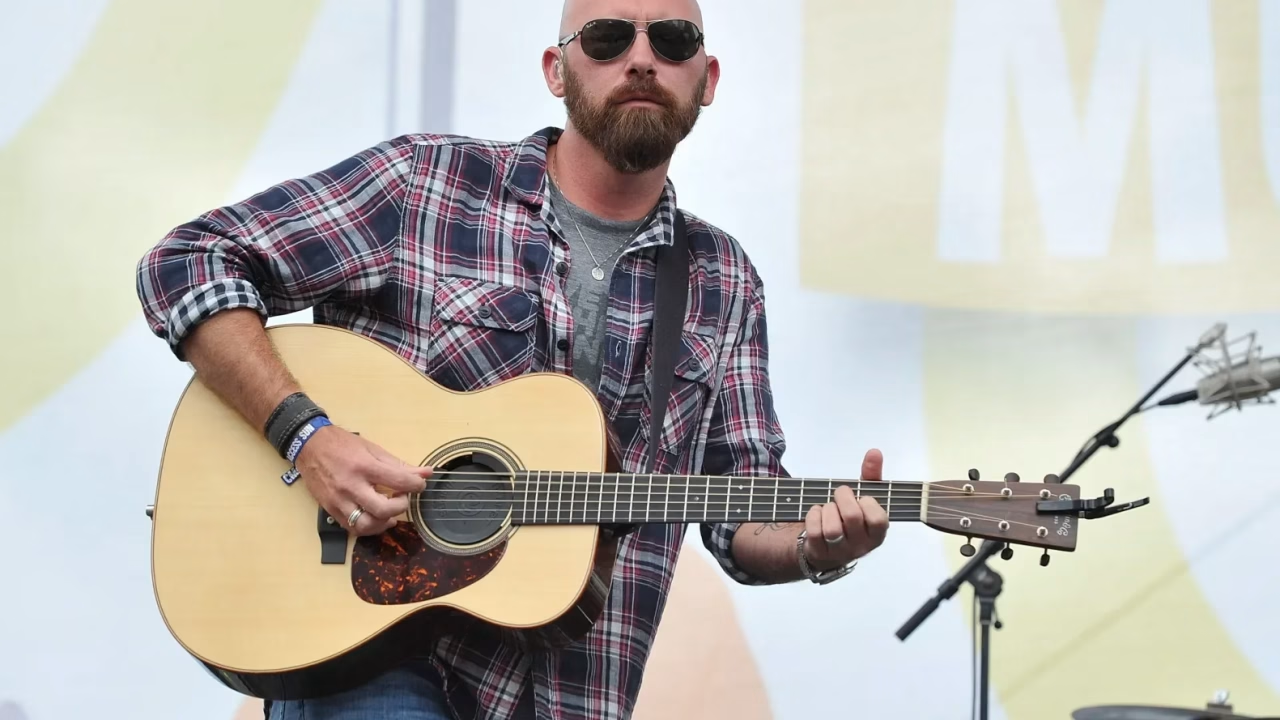
Corey Smith has spent much of his career building a reputation as one of country music’s most outspoken independent artists. Unlike many Nashville stars tied closely to major labels and radio-friendly branding, Smith became known for direct songwriting, politically charged opinions, and a fiercely loyal fanbase that followed him through grassroots touring success across the South.
One of the biggest controversies connected to the singer emerged after a live performance incident involving allegations of censorship. The situation centered around Smith’s song “F*ck the Po-Po,” a track criticizing police misconduct and abuse of authority. During a concert performance in Wilmington, North Carolina, Smith claimed venue management cut his set short after he attempted to perform the song, sparking a heated public debate over free speech, censorship, and political expression in country music.
The controversy gained attention partly because outspoken anti-police messaging is relatively uncommon in mainstream country music, a genre often associated with patriotic and pro-law-enforcement themes. Here is what really happened in Corey Smith’s censorship controversy and why the case became such a widely discussed moment among fans and free speech advocates.
Corey Smith Built His Career Outside Traditional Nashville Systems
Before the controversy erupted, Corey Smith had already developed a strong reputation as an independent country and Southern rock artist.
Born in Georgia, Smith gained popularity during the 2000s through relentless touring, college-town performances, and word-of-mouth fan support rather than traditional country radio promotion. Unlike many Nashville artists, he avoided major-label control for much of his career and cultivated an audience that appreciated his more unfiltered songwriting style.
His music often blended humor, emotional storytelling, drinking culture, and political frustration. Fans viewed him as more authentic and raw compared to heavily commercialized mainstream country acts.
That independent reputation became especially important during the censorship controversy because many supporters believed Smith’s willingness to challenge authority aligned with the rebellious identity he had always projected publicly.
The main source of controversy involved Smith’s song “F*ck the Po-Po,” one of the most politically charged tracks in his catalog.
The song strongly criticizes police brutality, abuse of power, and aggressive law enforcement behavior. While protest songs criticizing police have long existed within hip-hop and punk music, they remain relatively rare in country music circles.
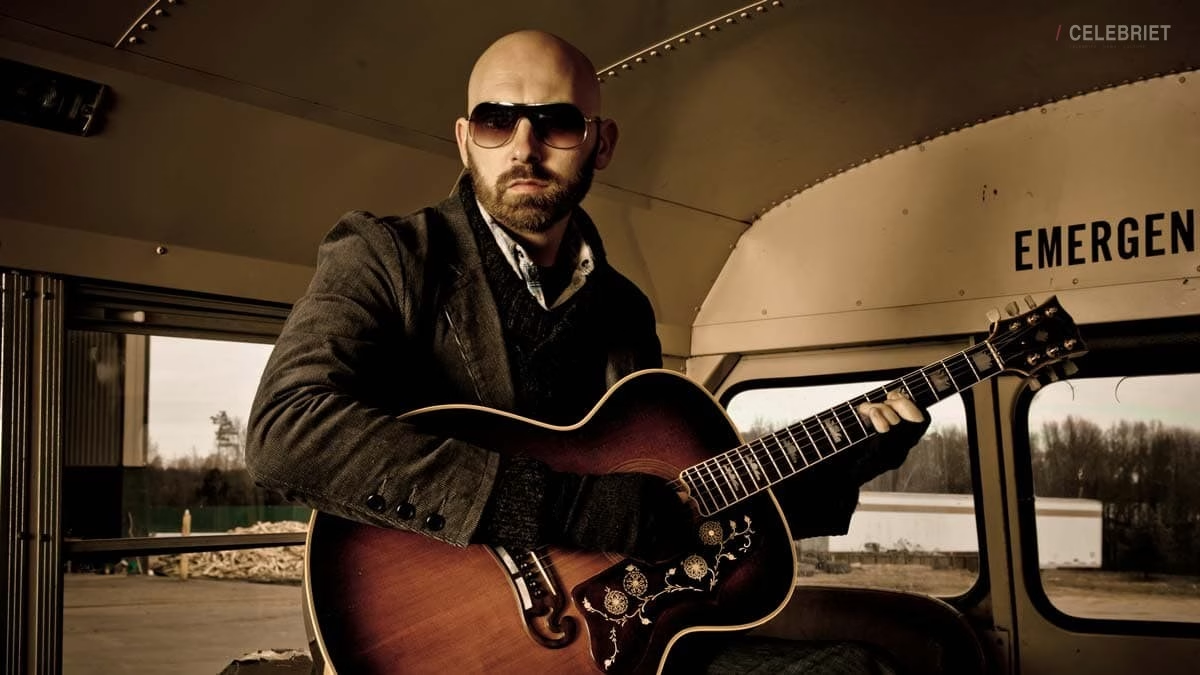
Because of that, the track immediately stood out within Smith’s discography and generated polarized reactions among listeners. Some fans praised the song as a bold defense of free speech and anti-authoritarian expression, while critics argued the lyrics were inflammatory and disrespectful toward police officers.
The controversy intensified during a live show at Track 29 in Wilmington, North Carolina.
According to Smith, venue management interrupted the concert after he began performing the song. Reports and video coverage later circulated online showing Smith claiming the venue cut the power and shortened his performance because of the politically controversial lyrics.
The incident quickly spread across local news outlets and social media discussions.
Corey Smith Accused the Venue of Censorship
After the show, Corey Smith publicly accused Track 29 management of censorship.
According to reports, Smith told audiences and later discussed online that management intentionally interfered with the performance because they objected to the song’s anti-police message.
The singer framed the issue as a free speech matter rather than simply a disagreement over venue policy. Fans supporting Smith argued that artists should be allowed to perform controversial material without interference, especially when audiences knowingly attended a concert by an artist famous for outspoken lyrics.
Many supporters also pointed out that music has historically served as a space for political protest and criticism of authority.
The controversy arose during a broader national conversation surrounding police accountability, freedom of expression, and politically divisive speech in entertainment. Because of that context, reactions to the incident became especially intense online.
Some fans defended Smith passionately, while others accused him of deliberately provoking conflict for publicity.
Track 29 management later disputed aspects of Corey Smith’s claims. According to statements reported in local media coverage, venue representatives argued the situation was not a politically motivated censorship case. Instead, management reportedly claimed the concert faced operational or scheduling issues unrelated to suppressing the song’s message.
This disagreement over what actually happened fueled even more online debate. Supporters of Smith believed the timing surrounding the interruption made censorship obvious. Critics, however, argued that independent venues still maintain authority over performances happening inside their property and that disputes between artists and venues are not automatically free speech violations.
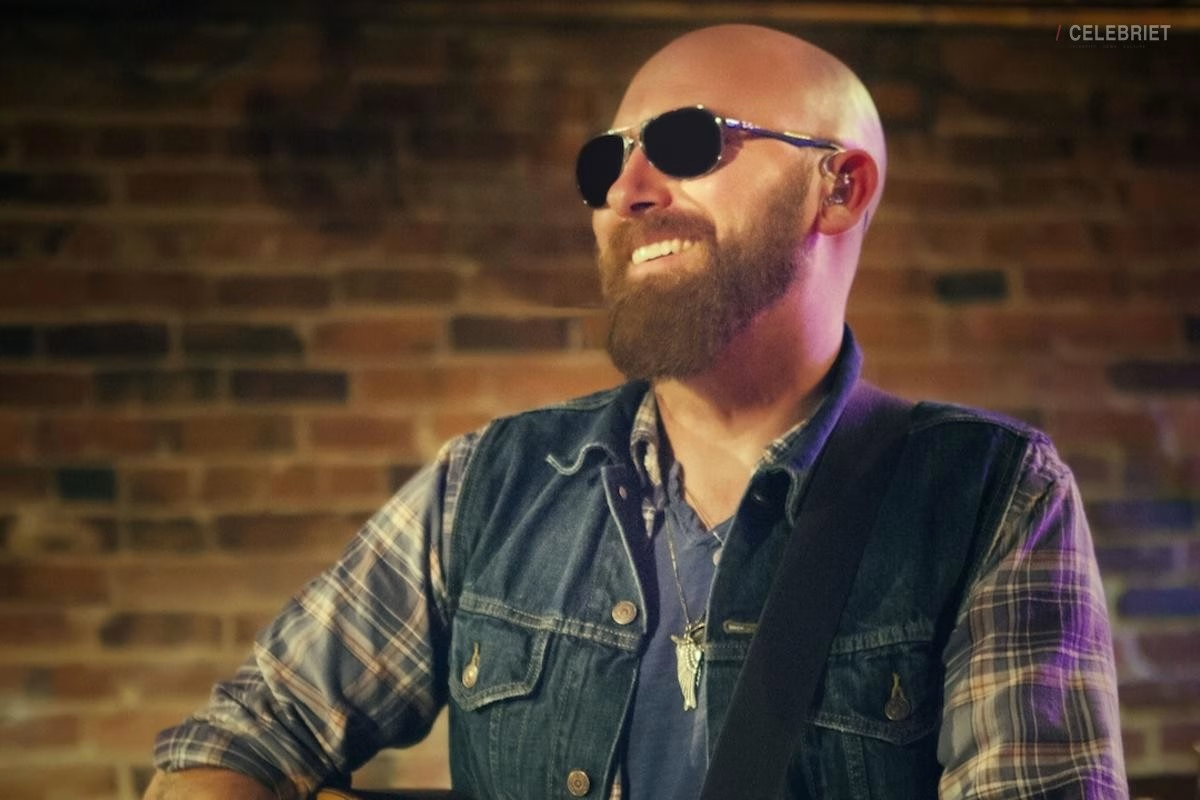
The disagreement reflected a larger cultural debate around the meaning of censorship itself. Legally, government censorship and private venue decisions are not identical concepts. However, artists and fans often still describe private suppression of performances as censorship when political content appears to influence decisions.
That nuance became central to discussions surrounding the Corey Smith controversy.
Why the Case Drew National Attention
Several factors explain why the Corey Smith censorship controversy spread far beyond local concert coverage.
The first involved the unusual nature of the song itself within country music. Anti-police protest songs are much more commonly associated with rap, punk, and alternative rock than with Southern country artists.
Because country music traditionally leans heavily toward a patriotic and conservative in public image, Smith’s lyrics surprised many listeners and challenged stereotypes surrounding the genre.
The second factor involved growing national polarization surrounding policing issues in America. Public debates around police accountability, protest movements, and law enforcement criticism had already become politically explosive topics across entertainment and media.
As a result, even a relatively localized concert dispute quickly became part of a much larger national cultural argument.
Smith’s independent status also helped the controversy gain traction. Fans viewed him as someone outside mainstream Nashville systems, making it easier for supporters to portray him as an artist resisting institutional pressure.
Corey Smith’s Fans Defended His Right To Perform the Song
Many longtime Corey Smith fans defended him aggressively during the controversy.
Supporters argued that attending a Corey Smith concert meant understanding the artist’s reputation for blunt and occasionally provocative material. Fans also pointed out that controversial political music has existed across multiple genres for decades and should not suddenly become unacceptable because it criticizes police behavior.
Some online discussions compared the situation to broader examples of music censorship throughout entertainment history. Protest music, explicit lyrics, and anti-authority messaging have repeatedly generated backlash across genres ranging from rap to punk rock to heavy metal.
Smith’s defenders believed the controversy reflected a double standard within country music, specifically, where politically conservative themes are often accepted more easily than criticism of law enforcement. Others, however, strongly disagreed with the song’s message itself.
Critics argued the lyrics unfairly generalized police officers and promoted hostility toward law enforcement. That disagreement made the debate highly emotional on both sides.
The Controversy Reinforced Corey Smith’s Independent Image
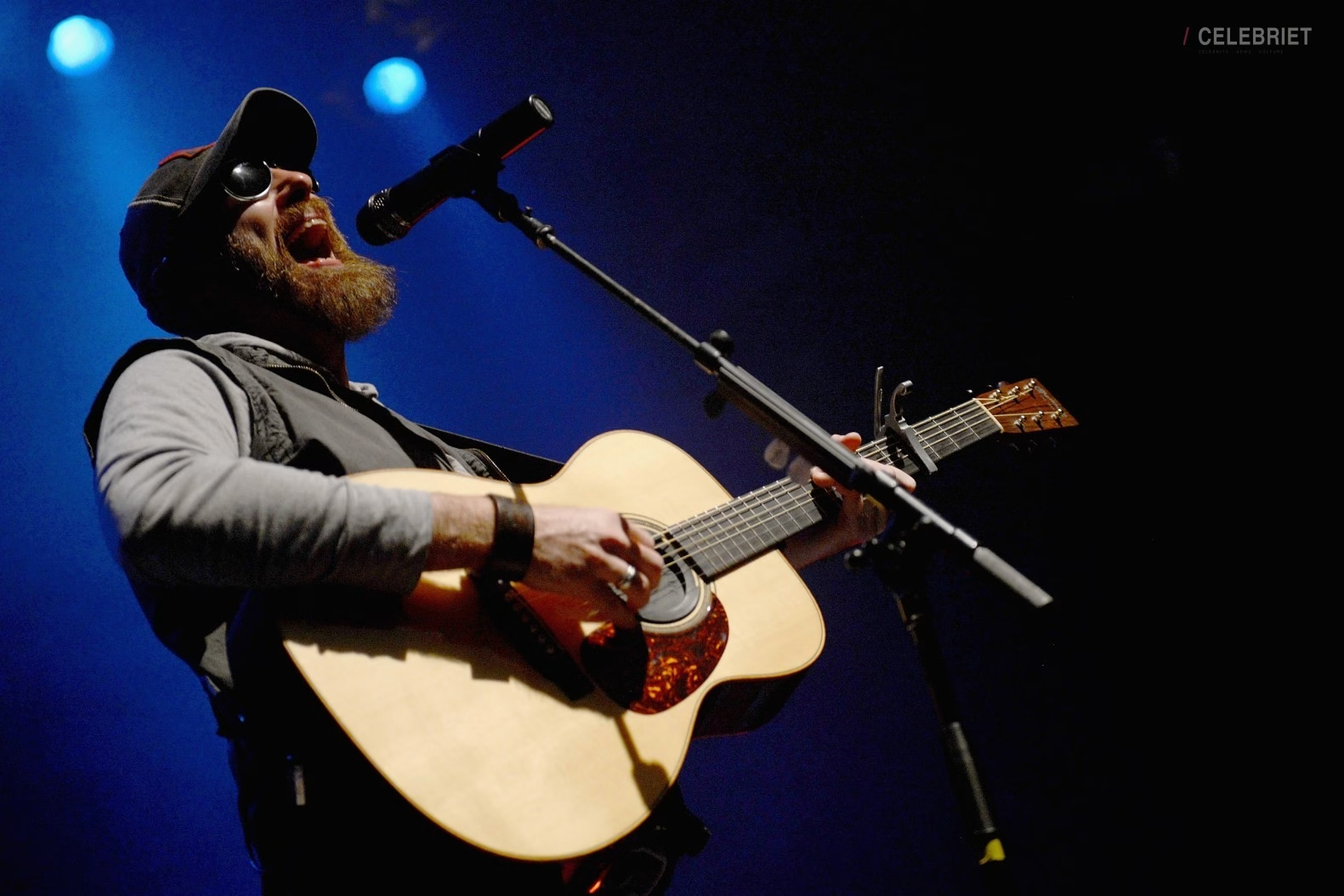
Ironically, the controversy may have strengthened Corey Smith’s image among core fans.
Independent country artists often build loyal audiences precisely because they appear less filtered than mainstream performers. Smith’s willingness to publicly challenge venue management and continue defending the song reinforced his reputation as someone unwilling to soften opinions for broader commercial approval.
That rebellious image has long been central to outlaw country and independent Southern rock traditions.
At the same time, the controversy also highlighted how politically divided country music audiences had become. While many listeners strongly supported Smith’s free speech arguments, others distanced themselves from the artist because of the anti-police messaging.
The incident demonstrated how even country music, historically marketed as culturally unified, increasingly reflects broader national political polarization.
The Corey Smith controversy also fits into a much longer history of music censorship debates in America. Across decades, artists in nearly every genre have faced backlash, bans, edited lyrics, radio restrictions, or venue disputes connected to controversial material. Songs criticizing authority, discussing explicit themes, or challenging political norms frequently become flashpoints in public debates over free expression.
Country music itself has experienced multiple controversies surrounding politics, patriotism, and public backlash. However, direct anti-police messaging remains relatively uncommon within the genre compared to hip-hop or punk scenes.
That difference partly explains why Smith’s case attracted such strong reactions. The debate surrounding his performance ultimately became larger than one concert or one song. Instead, it evolved into a broader argument about artistic freedom, political expression, and whether controversial speech should face restrictions within entertainment spaces.
What Happened After the Controversy?
Although the censorship controversy generated heavy online discussion, it did not derail Corey Smith’s career.
The singer continued touring and releasing music while maintaining his reputation as a fiercely independent artist with a dedicated regional fanbase. Unlike mainstream country stars who rely heavily on radio support, Smith’s career structure allowed him to survive controversies that might seriously damage more commercially dependent artists.
For many fans, the incident actually reinforced why they supported him in the first place.
Whether audiences agreed with the song or not, the controversy surrounding Corey Smith highlighted the continuing tension between artistic freedom and public backlash in modern music culture. It also showed how country music, often viewed as politically predictable, still contains artists willing to challenge expectations and provoke uncomfortable debates.