As Victor Wembanyama continues to dominate the NBA playoffs, former All-Star DeMarcus Cousins has shared his perspective on how defenders can attempt to slow him down. Speaking in a recent interview with TMZ Sports, Cousins described the challenge as nearly unprecedented. His analysis comes at a time when Wembanyama is delivering standout performances on the biggest stage. The French phenom’s size, skill, and versatility have made him one of the toughest matchups in the league. For defenders, finding a solution has become a pressing question.
Cousins began with a candid admission about the difficulty of the task.
“First, I’m going to say it’s probably easier said than done. He’s one of one,”
he explained, emphasizing how unique Wembanyama’s game is. This acknowledgment sets the tone for the rest of his breakdown. Rather than offering a guaranteed solution, Cousins focused on strategies that might at least limit the impact. His comments reflect the growing recognition of Wembanyama as a generational talent.
“Make It Physical”: The Key Defensive Approach
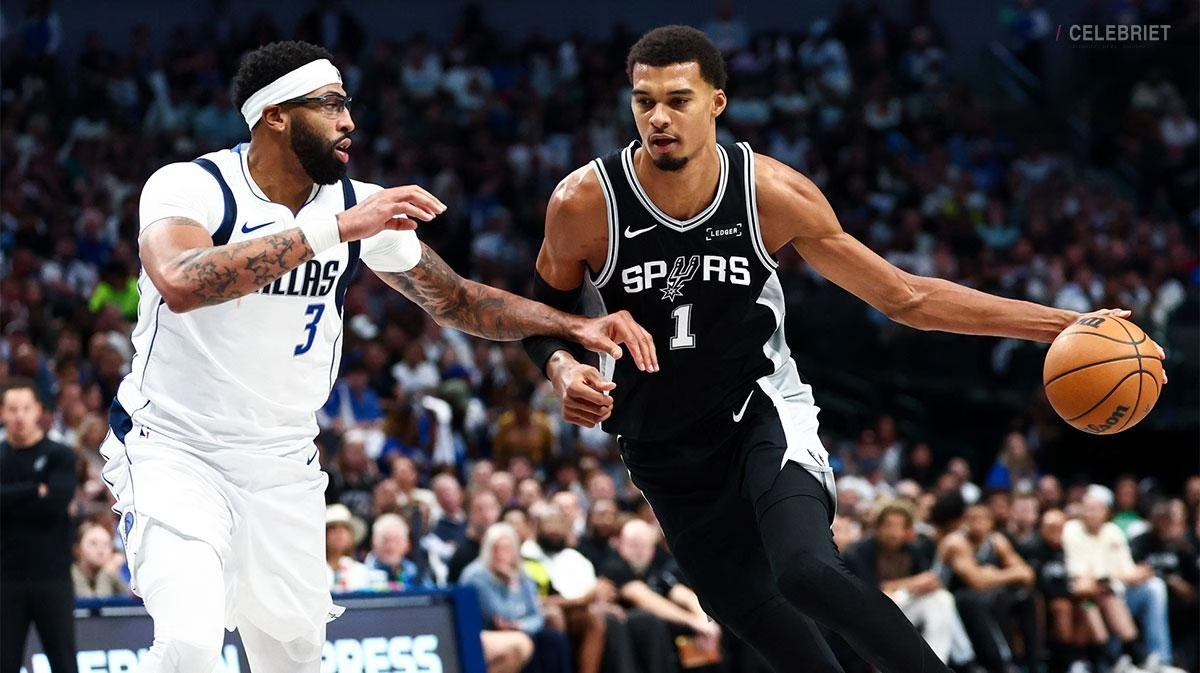
According to Cousins, the most effective way to challenge Wembanyama is by increasing physicality. He suggested that defenders should try to disrupt his rhythm by making the game uncomfortable.
“I think your best chance is trying to make the game physical for him, make it really uncomfortable,”
Cousins said. This approach targets one of the few perceived weaknesses in Wembanyama’s game. Despite his height and reach, his frame is still developing compared to more experienced players.
However, Cousins also noted that modern NBA rules limit how physical defenders can be. This creates a challenge in applying the strategy effectively. Players must find a balance between aggression and staying within the rules. Even so, he believes that controlled physicality remains the best available option. It is not about stopping Wembanyama entirely, but about reducing his efficiency.
Disrupting Rhythm and Space on the Court
Beyond physical play, Cousins highlighted the importance of denying Wembanyama comfort on the court. He stressed that defenders should focus on crowding his space at all times.
“I think just crowding his space… to the point where he’s never really comfortable in his movements,”
he explained. This tactic aims to prevent the young star from settling into his natural rhythm. When Wembanyama is allowed to play freely, his impact becomes significantly harder to contain.
The strategy involves constant pressure, both on and off the ball. Defenders must stay close, contest shots, and limit passing lanes. This level of intensity requires strong team coordination. It also demands consistency throughout the game. Any lapse in focus can give Wembanyama the opportunity to take over.
Wembanyama’s Playoff Numbers Highlight the Challenge
The difficulty of guarding Victor Wembanyama is reflected in his recent performances. During the playoffs, he has been averaging over 22 points and 12 rebounds per game. In Game 1 of the Western Conference Finals, he delivered a standout performance with 41 points and 24 rebounds. These numbers underscore his ability to dominate both offensively and defensively. They also explain why teams are struggling to contain him.
Wembanyama’s combination of height, skill, and mobility makes him a unique presence on the court. At 7’4″, he can score from multiple areas while also protecting the rim. His versatility forces defenses to adapt constantly. Traditional strategies often fall short against such a player. This is why insights from experienced players like Cousins are valuable.
High Stakes in the Western Conference Finals
Wembanyama’s performances come as his team battles through a competitive playoff series. The matchup against the Oklahoma City Thunder has been closely contested. The winner will advance to the NBA Finals, adding even more pressure to each game. Opposing players, including defenders like Isaiah Hartenstein, are tasked with applying strategies similar to those outlined by Cousins. The stakes make every adjustment critical.
With a Finals appearance on the line, teams are searching for any edge they can find. Slowing down Wembanyama could be the key to shifting momentum. However, as Cousins pointed out, executing these strategies is far from simple. The margin for error is extremely small. This makes the challenge even greater.
A Strategy That’s Easier Said Than Done
Cousins’ analysis ultimately reinforces one key point: there is no perfect way to stop Wembanyama. His advice focuses on making the game difficult rather than attempting to shut him down completely. This realistic approach reflects the current state of the NBA. Players of Wembanyama’s caliber often require collective effort rather than individual defense. Teams must work together to limit his impact.
As the playoffs continue, it will be interesting to see how teams adapt. Whether through physical play, spacing control, or tactical adjustments, every attempt will be tested. For now, Cousins’ insights provide a valuable perspective from a player who understands the demands of elite competition. His comments highlight both the challenge and the respect surrounding Wembanyama’s rise.