
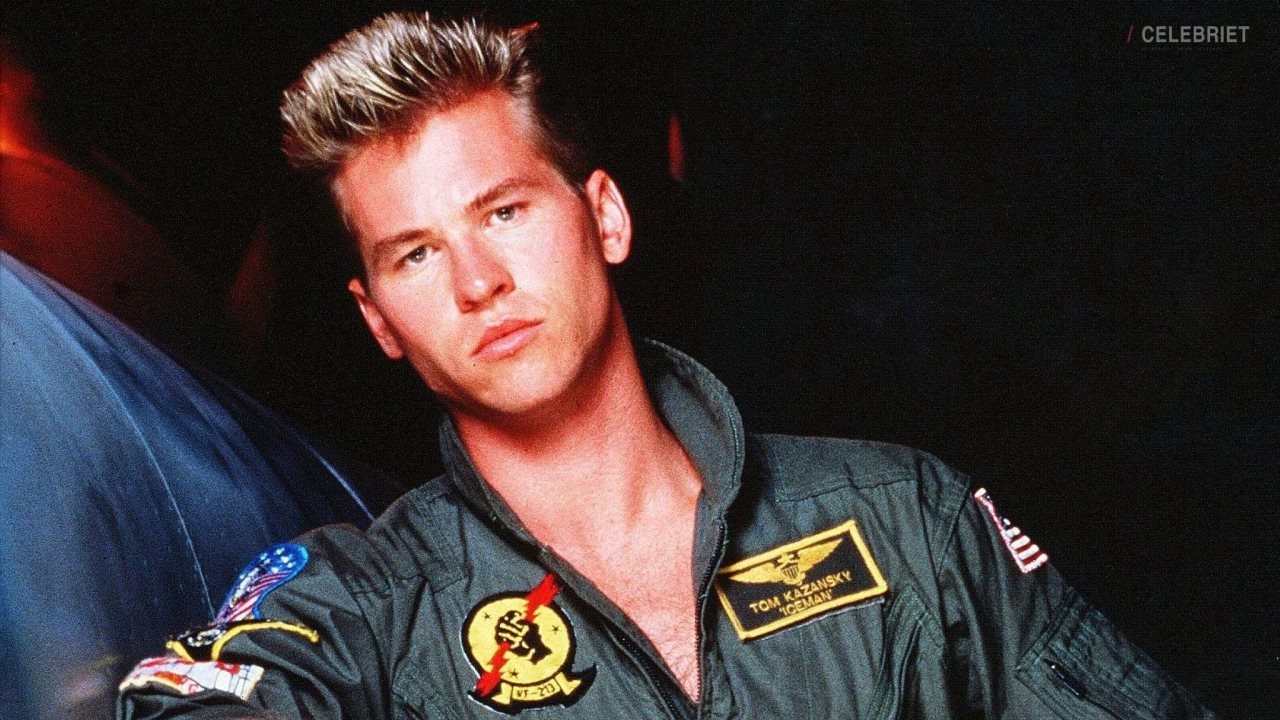
A fresh controversy has emerged surrounding the legacy of late Hollywood star Val Kilmer, after filmmaker Adam Marcus publicly criticized the actor in a series of now-deleted social media posts. The comments, which resurfaced through media coverage, have sparked renewed discussion about Kilmer’s behavior on film sets, even more than a year after his passing in April 2025.
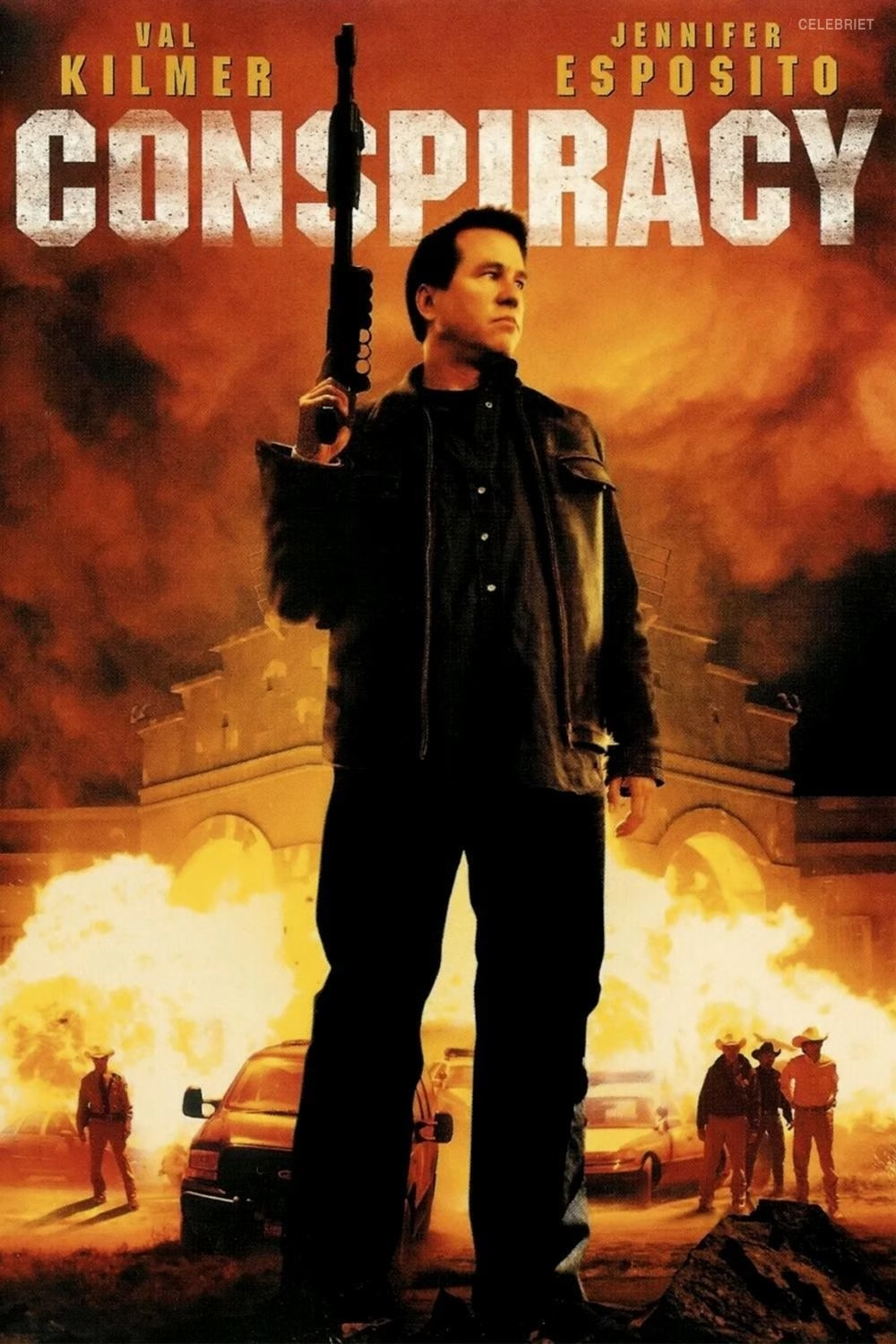
Entertainment Weekly reported that Marcus, who directed Kilmer in the 2008 thriller Conspiracy, did not hold back in his assessment.
“Worst human being I’ve ever known… and that is really saying something,”
Marcus wrote, adding that he rejected the idea of avoiding criticism simply because someone has died. His blunt remarks have divided fans, with some defending Kilmer’s legacy while others revisiting long-standing industry criticisms.
Director’s Remarks Stir Controversy
Marcus’s statements quickly gained traction due to their harsh tone and timing. In his posts, he reportedly addressed anticipated backlash by dismissing the notion of respecting the deceased, writing that if similar behavior occurred today, it would likely lead to immediate professional consequences.
His comments were tied to his experience working with Kilmer on Conspiracy, where the actor played William “Spooky” MacPherson, a disabled Iraq War veteran investigating a mysterious disappearance. While the film itself did not gain major mainstream attention, Marcus’s latest remarks have brought it back into public conversation for unexpected reasons.
The resurfacing of these claims highlights how certain behind-the-scenes stories can continue to shape an actor’s reputation long after their career has ended. It also raises questions about how much weight such personal accounts should carry when evaluating a public figure’s legacy.
A Reputation That Was Already Under Scrutiny
Marcus’s criticism is not the first time Kilmer’s on-set behavior has been questioned. Over the years, several industry figures have described him as difficult to work with. Notably, director Joel Schumacher, who worked with Kilmer on Batman Forever, once described the actor as “childish and impossible” in interviews cited by Entertainment Weekly.
These remarks contributed to a broader narrative about Kilmer’s professionalism during the peak of his Hollywood career in the 1990s. Despite his undeniable talent and performances in films like Top Gun and The Doors, stories about conflicts on set followed him for years.
At the same time, many collaborators and fans have spoken positively about his dedication to his craft, creating a complex and often contradictory public image. This duality has become a defining part of discussions around his career.
Kilmer’s Own Reflections on His Behavior
Kilmer himself addressed some of these criticisms during his lifetime. In a 2003 interview with Rolling Stone, he admitted,
“I’ve been careless about how I viewed my business,”
acknowledging that his approach may have contributed to tensions on set. However, he also defended his character, stating,
“I trust that the truth is the truth and a lie is a lie.”
Years later, in the 2021 documentary Val, Kilmer reflected more candidly on his past, saying he had “behaved poorly” at times and even “bizarrely to some.” Despite those admissions, he maintained that he had no regrets, framing his actions as part of a broader artistic journey rather than simple misconduct.
These statements have become central to how supporters interpret his legacy, often pointing to self-awareness and growth as key factors in evaluating his career.