The death of Howard Hesseman at age 81 marked the end of a television era shaped by unconventional comedy, rebellious energy, and deeply memorable characters. Best known for playing the eccentric disc jockey Dr. Johnny Fever on WKRP in Cincinnati, Hesseman became one of the defining comedic actors of late 1970s and 1980s television.
For many viewers, Hesseman represented something rare in mainstream network comedy at the time. His performances carried the spirit of counterculture humor into prime-time television without losing emotional warmth or comedic intelligence. Whether he was spinning records as Johnny Fever or inspiring students as teacher Charlie Moore on Head of the Class, Hesseman built a career around characters who felt authentic, unpredictable, and unusually human.
Following news of his death in January 2022, tributes poured in from actors, comedians, and longtime fans who viewed him as far more than a sitcom performer. His work influenced generations of comedic actors while helping shape the tone of television comedy during a major cultural transition.
Howard Hesseman died at 81 following surgery complications
Howard Hesseman died on January 29, 2022, in Los Angeles due to complications from colon surgery, according to statements released by his manager. He was 81 years old.
The announcement immediately generated widespread reactions across Hollywood and television communities. Fans remembered him primarily through WKRP in Cincinnati, while others reflected on his work in films and later sitcom appearances.
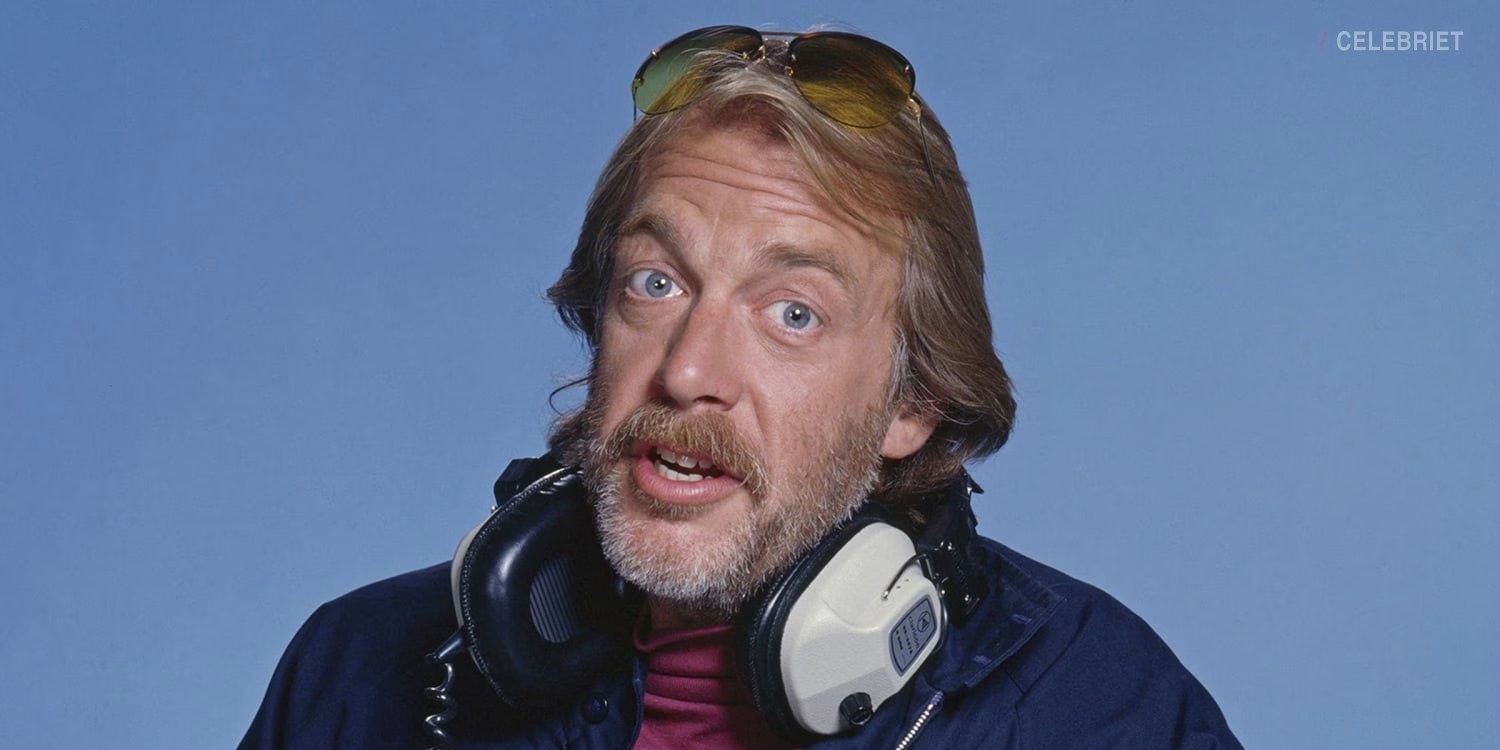
At the time of his death, Hesseman had spent more than five decades working across television, film, improv comedy, and stage productions. His résumé included everything from cult comedy classics to mainstream sitcoms and dramatic guest appearances.
Yet despite his extensive body of work, it was the role of Johnny Fever that remained most closely tied to his public identity.
When WKRP in Cincinnati premiered in 1978, network television rarely featured characters who genuinely reflected the remnants of 1960s counterculture. Hesseman’s Dr. Johnny Fever changed that immediately.
Johnny Fever was a burned-out rock radio DJ whose chaotic personality perfectly captured the shift between old-school corporate broadcasting and rebellious FM radio culture. Hesseman played the role with a mix of deadpan humor, improvisational looseness, and underlying vulnerability that made the character instantly memorable.
The performance felt authentic partly because Hesseman himself had actually worked as a radio DJ in San Francisco during the late 1960s under the alias “Don Sturdy.” That real-life experience heavily influenced how he portrayed Fever’s on-air energy and musical personality.
The role earned Hesseman two Emmy nominations for Outstanding Supporting Actor in a Comedy Series in 1980 and 1981.
More importantly, Johnny Fever became a cultural symbol for viewers who saw parts of themselves reflected in his irreverent humor and outsider attitude.
WKRP in Cincinnati changed television comedy
Although WKRP in Cincinnati lasted only four seasons from 1978 to 1982, the sitcom later gained recognition as one of the smartest workplace comedies of its era.
Set inside a struggling Cincinnati radio station transitioning from easy listening music to rock programming, the series blended satire, absurd humor, and surprisingly emotional storytelling. Hesseman’s Johnny Fever stood at the center of that balance.

Unlike broader sitcom performances common at the time, Hesseman approached comedy with naturalistic timing and improvisational instincts. Many of Johnny Fever’s funniest radio monologues reportedly came from ad-libbing rooted in Hesseman’s own broadcasting experience.
The character also reflected broader cultural tensions of the late 1970s. Johnny Fever represented aging counterculture figures trying to survive inside increasingly corporate systems. That deeper subtext helped the comedy resonate beyond simple workplace jokes.
Over time, WKRP in Cincinnati developed a massive cult following and is now frequently cited among television’s greatest sitcoms.
Hesseman brought counterculture authenticity to Hollywood
Long before WKRP, Howard Hesseman had already established himself within the American counterculture comedy scene. During the 1960s, he became involved with the San Francisco improvisational comedy troupe The Committee alongside performers like David Ogden Stiers.
The group frequently performed at antiwar protests and politically charged events, helping define a style of improv comedy rooted in satire and social commentary.
Hesseman’s early acting career often involved playing hippies, rebels, and unconventional outsiders. He appeared in projects like Billy Jack and early episodes of Dragnet, where his counterculture persona contrasted sharply with establishment authority figures.
That background made him uniquely suited for Johnny Fever. Unlike actors simply imitating rebellious personalities, Hesseman genuinely came from that cultural world. His performances carried credibility because viewers sensed he understood the attitudes and experiences behind the comedy.
After WKRP in Cincinnati, Hesseman successfully reinvented himself for a younger television audience through Head of the Class. Premiering in 1986, the ABC sitcom cast Hesseman as Charlie Moore, an unconventional history teacher leading a classroom filled with gifted students.
While the role was very different from Johnny Fever, many of the same qualities made the performance memorable. Charlie Moore challenged authority, encouraged independent thinking, and connected with students through humor rather than rigid discipline.
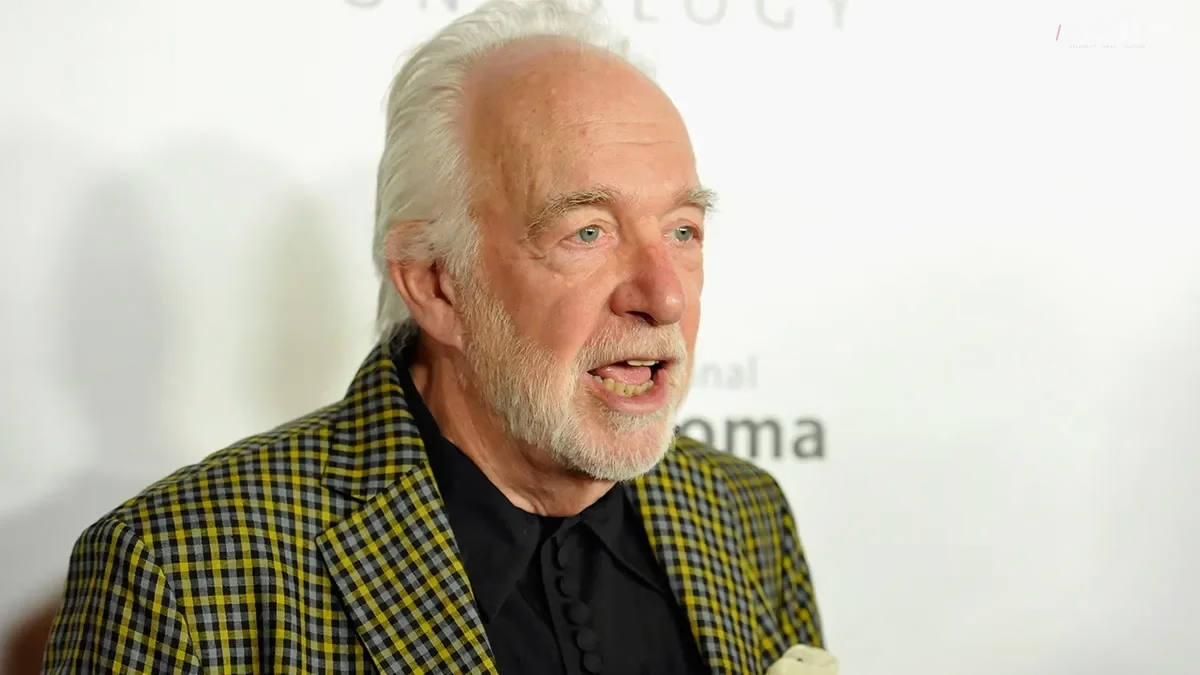
The show became especially notable because of its progressive tone during the conservative political climate of the 1980s. Discussions around social issues, education, and individuality appeared more openly than in many family sitcoms of the era.
Hesseman later admitted he wished the series had taken even greater creative risks, but his performance still became beloved among viewers who grew up watching the show. For many younger audiences, Charlie Moore became just as iconic as Johnny Fever.
Howard Hesseman’s film and television career extended far beyond sitcoms
Although sitcoms defined much of his fame, Hesseman’s acting career stretched across numerous genres and decades.
His film appearances included roles in This Is Spinal Tap, Clue, Flight of the Navigator, and About Schmidt.
Television audiences also saw him appear on series like Boston Legal, House, That ’70s Show, and ER.
Even in smaller guest roles, Hesseman brought a recognizable energy that stood out immediately. His comedic rhythm felt relaxed and spontaneous in ways many television actors struggled to replicate. He also remained active in theater and improv comedy throughout different stages of his career.
After Hesseman’s death, many actors and comedians reflected on his influence within television and improv performance.
Actor and comedian Michael McKean described Hesseman as impossible to overstate in terms of influence on improvisational performers.
Meanwhile, longtime WKRP co-star Loni Anderson called him stylish, eloquent, and hilarious while remembering their decades-long friendship.
Part of Hesseman’s impact came from how naturally he blended improvisation with scripted television comedy. Many performers later adopted a similar approach, using conversational realism and loose timing instead of heavily theatrical sitcom delivery.
His work helped sitcom performances feel more grounded and less artificial during an era when television comedy was rapidly evolving.