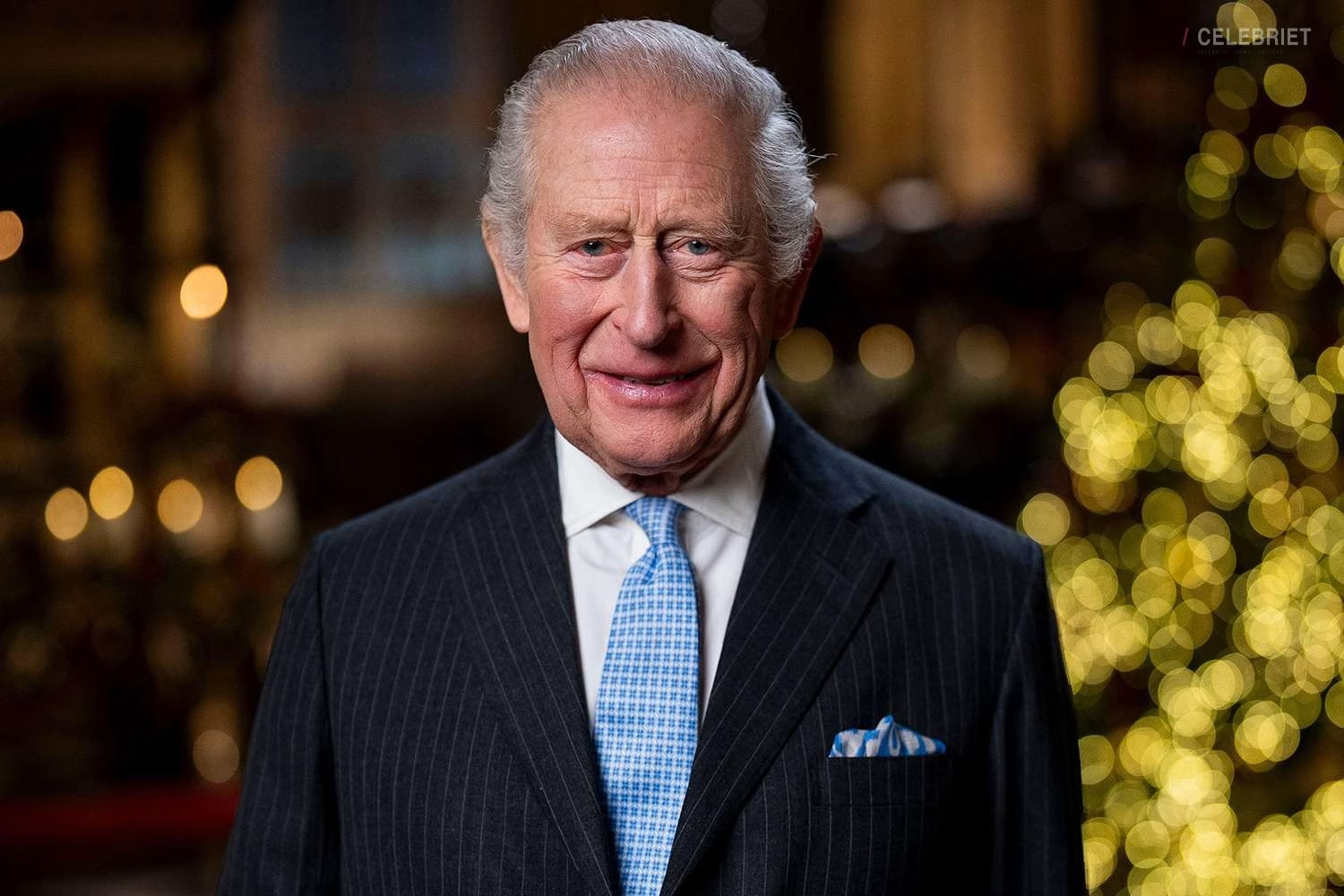
King Charles III ended his U.S. visit with a symbolic moment that aligned closely with his lifelong environmental work. During a stop at Shenandoah National Park, the 77-year-old monarch was officially named a junior ranger, a gesture that reflected his decades of commitment to conservation rather than his age.
The ceremony, organized by the National Park Service, was designed to celebrate environmental stewardship and inspire younger generations. While the title may sound playful, the message behind it was serious. It reinforced the idea that conservation is a shared responsibility that extends across generations and borders.
What the Junior Ranger Honor Represents
The junior ranger title is typically associated with children learning about nature and environmental protection. In this case, it was used to highlight a broader principle. Officials emphasized that the role is not defined by age but by commitment to preserving the natural world.
By including King Charles in the program, organizers underscored his long-standing advocacy for sustainability, biodiversity, and climate awareness. His involvement helped draw attention to conservation efforts while reinforcing the importance of leadership in environmental issues.
During the event, he also participated in swearing in new junior rangers, greeting each participant and encouraging them to stay engaged with nature. The interaction added a personal dimension to the ceremony, connecting a global figure with local environmental initiatives.
The Shenandoah event was not an isolated moment. It formed part of a broader theme throughout the King’s U.S. visit, which included discussions on environmental protection and international cooperation.
At the park, he met representatives from the Monacan Nation, exchanging views on preserving ecosystems and traditional approaches to nature. Conversations touched on topics such as declining tree populations and the importance of pollinators like honey bees.
These discussions highlighted a shared concern for sustainability and demonstrated how conservation efforts can bridge cultural and geographic boundaries. The King’s engagement in these conversations reinforced his reputation as an advocate for environmental responsibility on a global scale.
Wildlife Encounters Reinforce the Theme
The visit also included interactions with wildlife that symbolized conservation success and ongoing challenges. King Charles was introduced to a bald eagle named Buddy, an ambassador from the Wildlife Center of Virginia.
The bald eagle, once endangered, has become a notable example of successful conservation efforts in the United States. Presenting the bird during the visit served as a reminder of what coordinated environmental action can achieve.
A live demonstration featuring a Harris hawk added an unscripted moment to the event. The bird’s unexpected flight path created a brief disruption, but it also highlighted the unpredictability of working with wildlife. These moments reinforced the authenticity of the experience and the importance of respecting natural behavior.
Why This Moment Matters for Conservation Awareness
The significance of the junior ranger ceremony lies in its messaging rather than its formality. By participating, King Charles helped bring global attention to local conservation efforts. His presence emphasized that environmental protection is not limited to policymakers or scientists. It is a shared responsibility that requires public engagement.
The event also demonstrated how symbolic actions can support practical goals. Encouraging young participants, engaging with local communities, and highlighting successful conservation stories all contribute to broader awareness.
For the National Park Service, the involvement of an international figure added visibility to its programs. For the King, it reinforced a lifelong commitment to environmental causes that has defined much of his public work.
As the final public engagement of his trip, the Shenandoah ceremony provided a clear closing message. It combined education, community interaction, and environmental advocacy in a single event.
The King’s ability to connect with participants, despite a demanding schedule, reflected the importance he places on these issues. Observers noted his active engagement and willingness to ask questions, reinforcing the authenticity of his interest.
The visit also included reflections on past environmental efforts, with historians sharing moments from his earlier trips to the United States. These connections added historical context, showing that his involvement in conservation spans decades rather than recent years.