Released in 1999, Notting Hill remains one of the most recognizable romantic comedies ever made, pairing Hugh Grant and Julia Roberts in a story that blends celebrity fantasy with everyday London life.
Directed by Roger Michell and written by Richard Curtis, the film is inseparable from its setting. Much of its charm comes from real locations across West London, particularly the vibrant Notting Hill district, where filming took place extensively in 1998.
What makes these locations notable is that they are not studio recreations but actual streets, shops, and landmarks that viewers can still visit today. Below is a complete, research-based breakdown of the most important filming sites used in the movie.
Portobello Road: The Heart of the Film
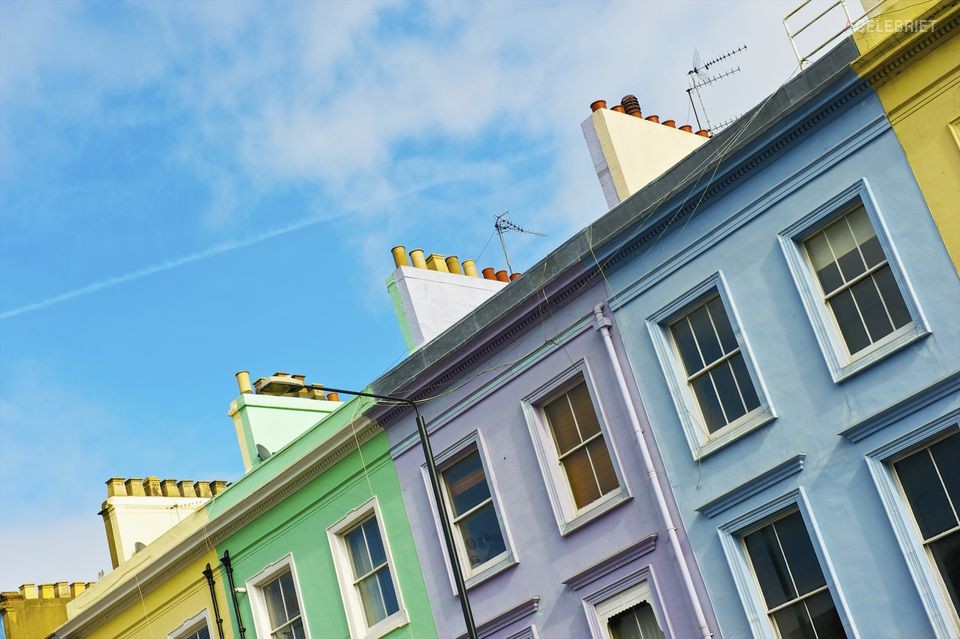
At the center of Notting Hill is Portobello Road, a lively street famous for its antique market and colorful buildings. This is where William Thacker’s fictional travel bookshop is located and where many of the film’s most iconic moments occur.
The bookshop itself was filmed at 142 Portobello Road. Interestingly, it was not originally a bookstore but an antique shop that was transformed for filming. The street also hosts the memorable scene where William bumps into Anna Scott while carrying drinks, setting the story in motion.
Portobello Road’s significance goes beyond a single scene. The film uses it to show the passage of time through seasons, turning the street into a visual metaphor for change and emotional growth.
The Travel Bookshop
Although fictional, the Travel Bookshop is one of the most famous filming locations. It was inspired by a real bookstore nearby, but shot at a different storefront on Portobello Road.
This location anchors the narrative. It is where Anna first meets William and where she later delivers the film’s most quoted line. Over the years, the shop has changed tenants multiple times, but its association with the film continues to attract visitors
The Blue Door at Westbourne Park Road
Another instantly recognizable location is William’s flat, located at 280 Westbourne Park Road. The famous blue door became a cultural symbol after the film’s release.
In reality, the interior scenes were filmed in a studio, and the house itself is far more upscale than the modest flat depicted onscreen. The original door was even auctioned for charity, with replacements installed later.
Despite these changes, the location remains a pilgrimage site for fans.
Rosmead Gardens: The Romantic Park Scene
One of the film’s most memorable sequences takes place in Rosmead Gardens, where William and Anna sneak into a private communal garden at night.
The scene captures the intimacy and spontaneity of their relationship. While the gardens are not usually open to the public, visitors can still view the exterior gate where the characters climb over.
The bench seen in the film was only a prop and does not remain today, but the location still carries strong cinematic associations.
The Ritz Hotel and Savoy Hotel
Several key scenes shift away from Notting Hill into central London, particularly at luxury hotels. Anna stays at The Ritz London, where William famously pretends to be a journalist to gain access to her.
Later, the film’s emotional climax unfolds at The Savoy Hotel, where William publicly declares his love during a press conference.
These locations emphasize Anna’s celebrity world, contrasting sharply with William’s modest lifestyle in Notting Hill.
Nobu Restaurant, Mayfair
The couple’s romantic dinner takes place at Nobu London Old Park Lane, a high-end Japanese restaurant inside the Metropolitan Hotel.
This scene highlights the tension between their worlds. William feels out of place in the upscale setting, reinforcing the film’s central theme of an ordinary man navigating extraordinary circumstances.
Kenwood House, Hampstead Heath
The period film set where Anna is working was shot at Kenwood House, a historic mansion in North London.
This location serves as a “film within a film,” showing Anna in her professional environment and offering a glimpse into the artificial world of movie production.
Lansdowne Road: The Dinner Party Scene
The home of Bella and Max, where the awkward and heartfelt birthday dinner takes place, is located at 91 Lansdowne Road.
This scene is crucial to the story. It humanizes Anna by placing her among ordinary people and includes the famous “who has the worst life” conversation, which deepens the emotional stakes of the film.
Coronet Cinema and Other Local Spots
The Coronet Cinema appears in the film when William watches one of Anna’s movies.
Other smaller but notable locations include Golborne Road, where a friend’s failed restaurant is set, and various corners of Westbourne Park Road that feature in transitional scenes.
Together, these locations build a cohesive sense of place, grounding the story in a real and lived-in neighborhood.
Shepperton Studios and Interior Filming
While many scenes were shot on location, interior sequences were filmed at Shepperton Studios.
This allowed the production team to control lighting and design, particularly for William’s flat and other indoor settings. The combination of real locations and studio work helped maintain authenticity while ensuring practical filming conditions.
Notting Hill did more than tell a love story. It reshaped how audiences viewed the neighborhood itself. The film turned Notting Hill into a global tourist destination, with visitors flocking to see Portobello Road, the blue door, and other landmarks.
The choice to film on real streets rather than constructed sets added a layer of realism that continues to resonate. The neighborhood’s mix of cultures, markets, and residential charm reflects the film’s core theme: that extraordinary love stories can happen in ordinary places.
The filming locations of Notting Hill are not just backdrops. They are integral to the film’s identity. From the bustling energy of Portobello Road to the quiet intimacy of Rosmead Gardens, each site contributes to the story’s emotional texture.
More than two decades later, these locations remain largely intact, allowing fans to step directly into the world of the film. Whether it is the iconic blue door or the elegant halls of the Savoy, each place serves as a reminder of why Notting Hill endures as one of the most beloved romantic comedies ever made.