The Promised Neverland started as one of the most promising anime adaptations of the late 2010s, blending psychological tension, mystery, and emotional storytelling into a unique experience. Based on the manga by Kaiu Shirai and illustrated by Posuka Demizu, the series quickly gained a reputation for its intense first season. It introduced viewers to a deceptively peaceful orphanage hiding a terrifying secret, creating one of the most memorable opening arcs in modern anime.
However, what began as a critically acclaimed series eventually became one of the most debated anime adaptations due to its controversial second season. Fans who praised its careful pacing and strategic storytelling in Season 1 were left disappointed by rushed plotlines and major omissions later on. The ending, in particular, sparked widespread criticism for abandoning key arcs from the original manga.
Understanding why The Promised Neverland divided fans requires looking at its story, themes, and how the adaptation evolved. Let’s break down what made it special and where it ultimately fell apart.
Story Overview: A Brilliant Premise That Hooked Audiences
The story of The Promised Neverland begins at Grace Field House, an orphanage where children live seemingly happy lives under the care of their loving guardian, Isabella. The environment feels warm and safe, with daily routines filled with games, learning, and strong bonds among the children. However, this peaceful setting is quickly revealed to be a carefully constructed illusion.
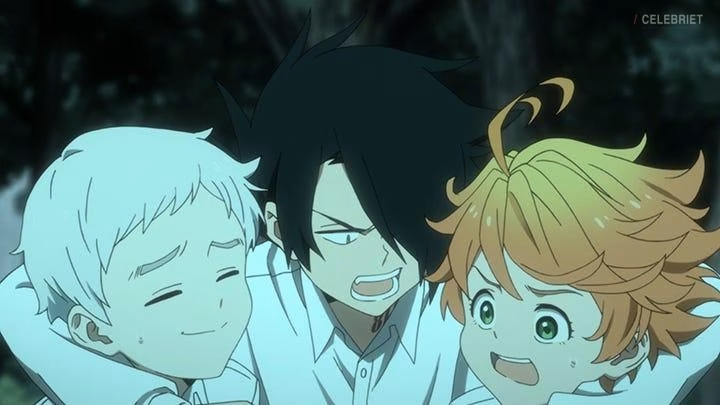
The central characters, Emma, Norman, and Ray, discover the horrifying truth that the orphanage is actually a farm where children are raised as food for demons. This surprising twist sets the tone for the entire series, transforming it into a high-stakes survival story driven by intelligence and strategy rather than brute force.
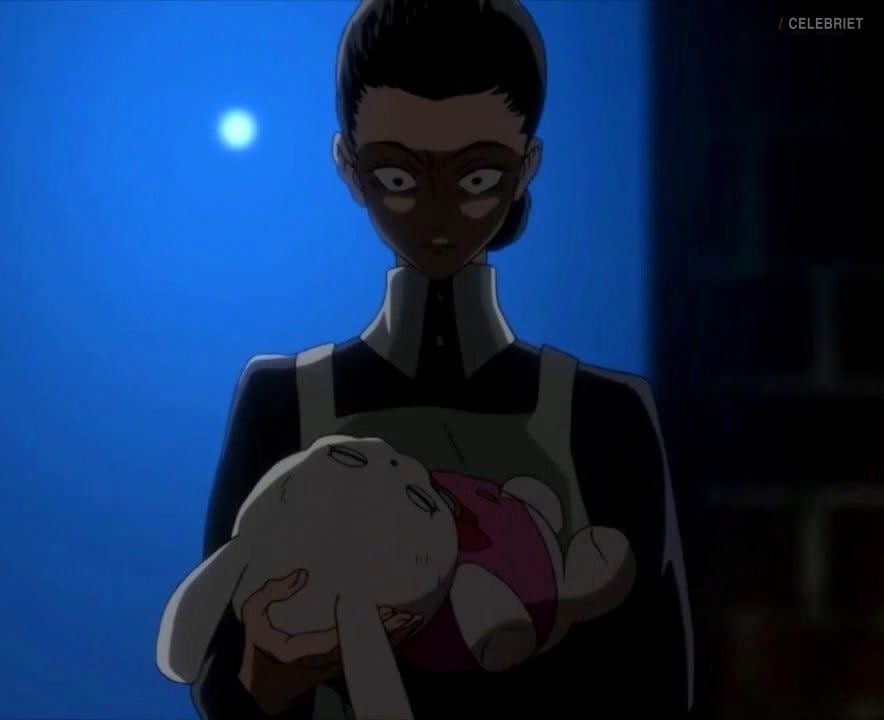
What makes the premise so compelling is its focus on psychological tension. The children cannot openly rebel because they are constantly monitored, forcing them to rely on careful planning and deception. This creates a cat-and-mouse dynamic between the children and Isabella, who becomes one of the most complex antagonists in anime.
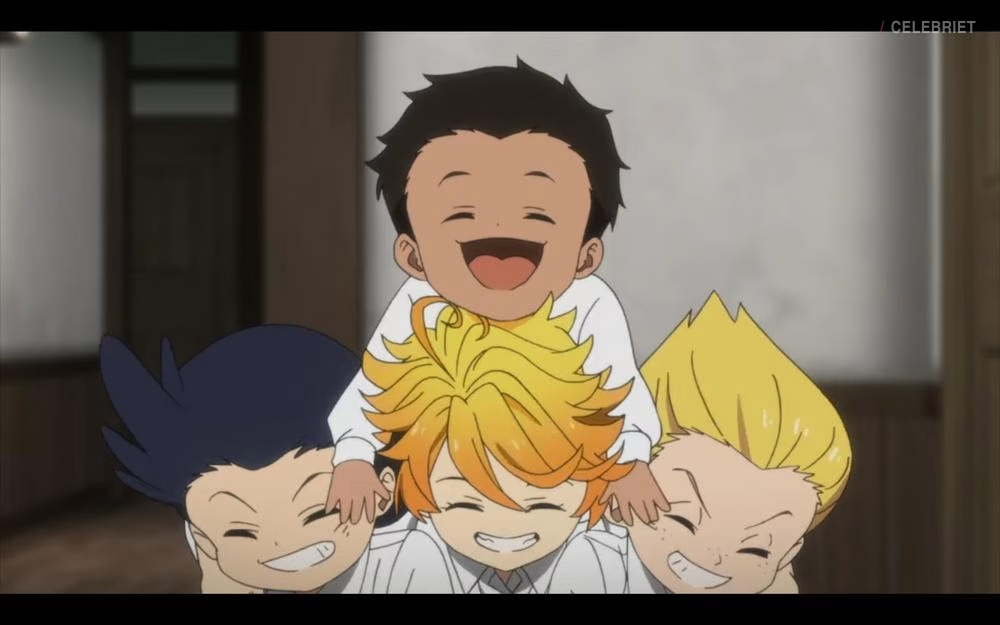
The story thrives on its ability to maintain suspense while exploring deeper themes. It examines morality, sacrifice, and the value of life, raising difficult questions about survival and what it means to protect others. These elements lift it beyond a typical thriller.
Season 1 Review: A Masterclass in Suspense and Storytelling
The first season of The Promised Neverland is widely regarded as one of the best anime adaptations in recent years. It faithfully adapts the early arcs of the manga, focusing on the children’s attempts to escape Grace Field House. The pacing is deliberate, allowing tension to build gradually as the stakes become clearer.
One of the strongest aspects of Season 1 is its use of limited information. Viewers learn about the world alongside the characters, creating a sense of mystery that keeps the narrative engaging. Each episode reveals just enough to maintain interest while leaving room for speculation.
The character development is another highlight. Emma’s optimism, Norman’s strategic thinking, and Ray’s pragmatic approach create a dynamic trio with distinct personalities. Their interactions drive the story forward, making their decisions feel meaningful and emotionally impactful.
Isabella, often referred to as “Mom,” stands out as one of the most compelling antagonists. She is not portrayed as purely evil but as someone shaped by her circumstances. Her intelligence and emotional complexity make her a formidable opponent, adding depth to the story.
Visually, the first season excels in creating atmosphere. The contrast between the bright, cheerful setting and the underlying horror enhances the sense of unease. The direction, combined with a haunting soundtrack, ensures that even quiet moments carry tension.
Season 1 succeeds because it balances plot, character, and theme effectively. It delivers a complete arc while leaving room for expansion, setting high expectations for future installments.
Season 2 Review: Where Everything Went Wrong
The second season of The Promised Neverland is where the series became controversial. Instead of continuing the careful adaptation of the manga, the anime diverged significantly from the source material. Major story arcs, including fan-favorite sections like the Goldy Pond arc, were entirely skipped.
This decision had a profound impact on the narrative. The pacing became rushed, with important events condensed into a few episodes. Characters were introduced and resolved quickly, leaving little time for development. This removed much of the emotional depth that defined the first season.
Another major issue was the simplification of the story’s conflict. The manga expands the world significantly, exploring different factions, moral dilemmas, and the complexity of the human-demon relationship. The anime, however, reduces these elements, resulting in a more straightforward and less engaging narrative.
The final episodes were particularly criticized for relying on exposition rather than storytelling. Instead of showing key events, the anime summarizes them through a montage, effectively skipping what could have been an entire season’s worth of content. This approach left many viewers feeling unsatisfied.
Fan reaction to Season 2 was overwhelmingly negative. While some appreciated certain moments, the consensus was that the adaptation failed to capture the depth and complexity of the original story. This stark contrast with Season 1 is the primary reason the series remains so divisive.
The Ending Explained: Anime vs Manga Differences
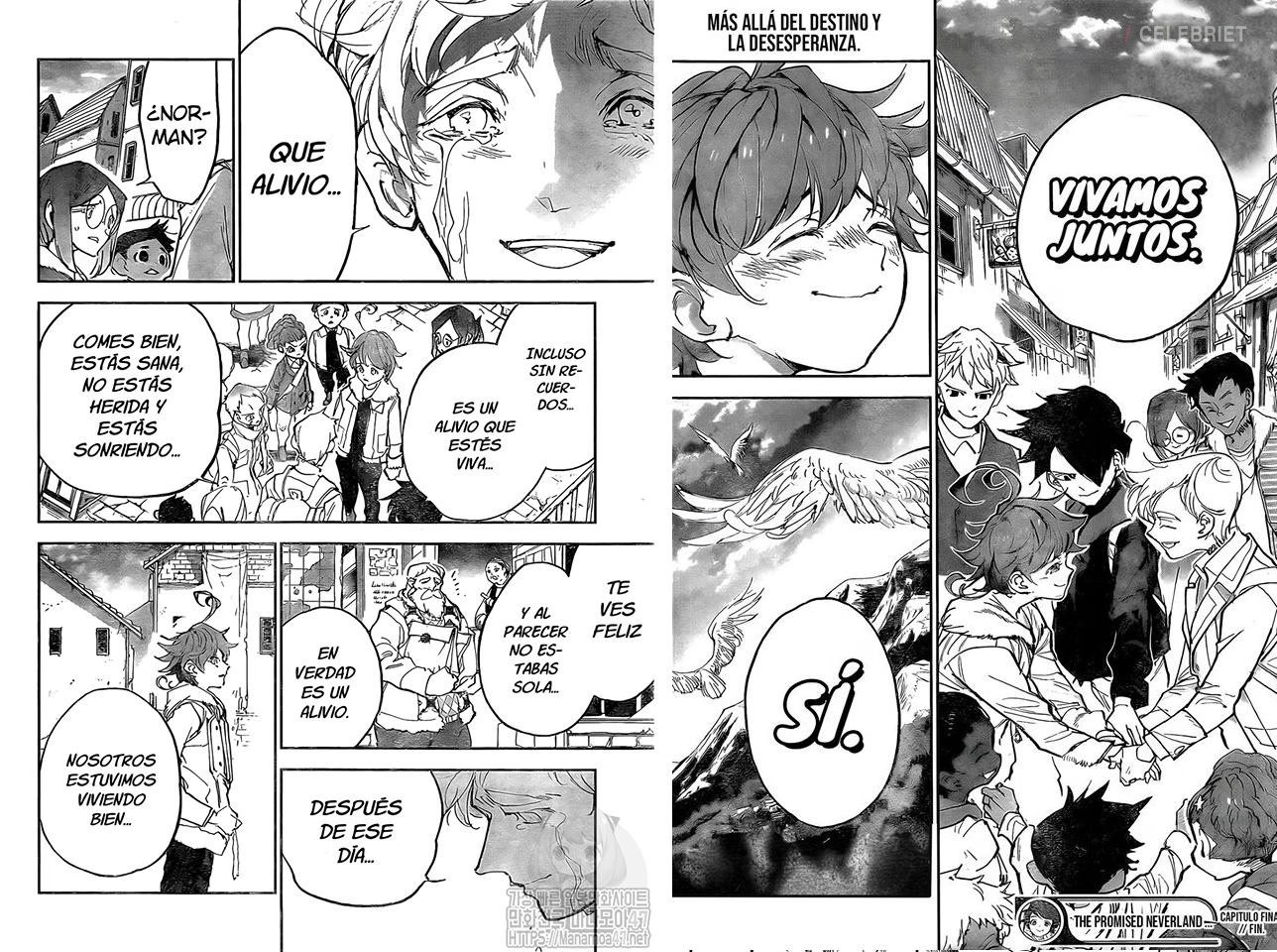
The ending of The Promised Neverland anime differs significantly from the manga, which is a major source of controversy. In the anime, the story concludes with Emma and the children successfully finding a way to escape to the human world, seemingly resolving the central conflict.
However, this resolution feels abrupt due to the lack of buildup. Key events that would normally lead to such an ending are either skipped or briefly mentioned. As a result, the conclusion lacks the emotional weight and narrative payoff that fans expected.
In contrast, the manga provides a more detailed and nuanced ending. It explores the consequences of the characters’ actions, the challenges of creating a new world, and the sacrifices required to achieve freedom. While the manga’s ending also received mixed reactions, it is generally considered more complete than the anime version.
The anime’s decision to condense the story into a short final arc significantly impacted how the ending was received. Without the necessary development, the resolution feels less earned and more like a summary than a conclusion.
Why The Promised Neverland Divided Fans
The division among fans largely stems from the stark difference between expectations and execution. After the success of Season 1, viewers anticipated a continuation of the same level of quality. Instead, they received an adaptation that diverged from the source material and rushed through critical storylines.
Another factor is the popularity of the manga. Fans who were familiar with the original story were particularly disappointed by the omissions and changes. For them, the anime represented a missed opportunity to fully realize the story’s potential.
At the same time, some viewers who had not read the manga found Season 2 more acceptable, though still flawed. This created a divide between different segments of the audience, contributing to ongoing debates about the series.
The situation highlights a broader issue in anime adaptations. Balancing creative decisions with audience expectations is challenging, especially when adapting a well-loved source material. In this case, the choices made in Season 2 significantly altered the reception of the entire series.
Themes and What the Series Does Well
Despite its issues, The Promised Neverland excels in several areas. Its exploration of morality and survival remains one of its strongest elements. The story forces characters to make difficult decisions, often questioning what is right versus what is necessary.
The emphasis on intelligence over physical strength is another standout feature. Unlike many action-oriented series, the characters rely on strategy, planning, and teamwork to overcome challenges. This approach adds a unique layer of tension.
The series also explores the concept of family in a meaningful way. The bonds between the children drive much of the narrative, highlighting the importance of trust and cooperation. Even in the face of danger, these relationships remain central to the story.
Additionally, the world-building introduced in the manga provides a fascinating backdrop. While the anime does not fully explore it, the idea of a society where humans and demons coexist in a complex system adds depth to the narrative.
Final Verdict: Is The Promised Neverland Worth Watching?
The Promised Neverland remains a series worth watching, particularly for its first season. Season 1 delivers a near-perfect blend of suspense, character development, and thematic depth. It stands as one of the strongest introductory arcs in anime.
However, viewers should approach Season 2 with tempered expectations. While it provides a conclusion, it does not match the quality or depth of the earlier episodes. For those interested in the full story, the manga is often recommended as the definitive version.
Ultimately, the series is a case study in how adaptation choices can impact audience reception. It showcases both the potential of anime storytelling and the risks of deviating from a successful formula.
The Promised Neverland is a story of contrasts. It begins as a gripping psychological thriller that charms audiences with its premise and execution. Yet, it becomes a cautionary tale about adaptation decisions that can undermine even the strongest foundations.
Its legacy is defined by both its brilliance and its shortcomings. While the anime may have divided fans, its impact on the genre remains undeniable. For new viewers, it offers a compelling introduction to suspense-driven storytelling, even if the journey is not without its flaws.