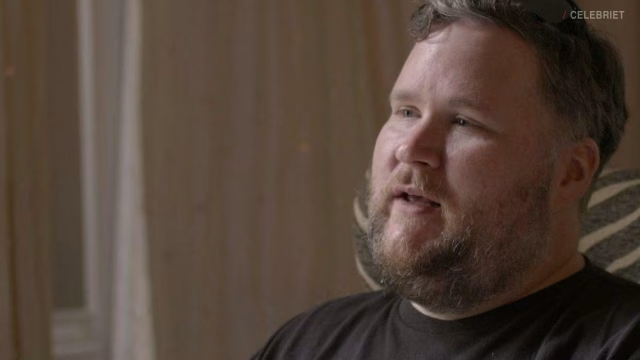


Rosie Smith is an English musician, songwriter, producer, and keyboardist best known for her work with the extreme metal band Cradle of Filth. Over the years, she has built a diverse career that extends far beyond her time with the influential metal group. Her musical journey has included performing with bands, launching solo projects, producing music independently, and teaching aspiring musicians.
While many fans first discovered Rosie Smith through her energetic keyboard performances on international stages, her creative output spans multiple genres, including rock, metal, jazz-influenced music, and experimental projects. Her ability to combine technical musicianship with songwriting and production skills has helped her establish a unique place within the British music scene.
This detailed look at Rosie Smith explores her early life, musical beginnings, rise to prominence with Cradle of Filth, solo ventures, and her lasting impact as a musician and educator. The article also examines how her career evolved after leaving one of metal’s most recognizable bands and why she remains an interesting figure in contemporary music.
Early Life and Musical Background
Rosie Smith was born as Rosemary Ellen Smith on July 20, 1983, in London, England. Although she was born in the capital city, her family later relocated to Dorset when she was around twelve years old. The move would play a significant role in shaping her future musical career.
From a young age, Smith showed a strong interest in music and developed skills across multiple instruments. Rather than focusing on a single specialty, she explored various forms of musical expression, which later contributed to her versatility as a performer and composer.
Her formal musical education began at Weymouth College, where she earned a music diploma. During this period, she gained practical experience by performing with local bands and developing her stage presence. These early years laid the foundation for a career that would eventually take her to international audiences.
While studying, Smith became involved with her first notable band, Jacks Back. This experience gave her valuable exposure to collaborative songwriting and live performance. At the same time, she broadened her musical abilities by playing saxophone in a Tina Turner tribute band, demonstrating an openness to different genres and performance styles.
Education and Development as a Musician
After completing her studies in Dorset, Smith continued her education at the University of Salford. Her university years proved to be another important chapter in her development as a musician and songwriter.
During this period, she became involved with a band called Sugalo. The project allowed her to further refine her creative voice and gain experience working within a group environment. These years helped her understand not only performance but also the songwriting and production aspects of the music industry.
Unlike many musicians who become known for a single instrument, Smith cultivated expertise across several areas. She became proficient on keyboards while also maintaining skills on instruments such as the saxophone and harp. This multi-instrumental approach would later distinguish her from many of her peers in the rock and metal scenes.
Her educational background and practical experience combined to create a strong foundation that prepared her for professional opportunities. One of those opportunities would soon arrive through a connection to a globally recognized metal band.
Joining Cradle of Filth
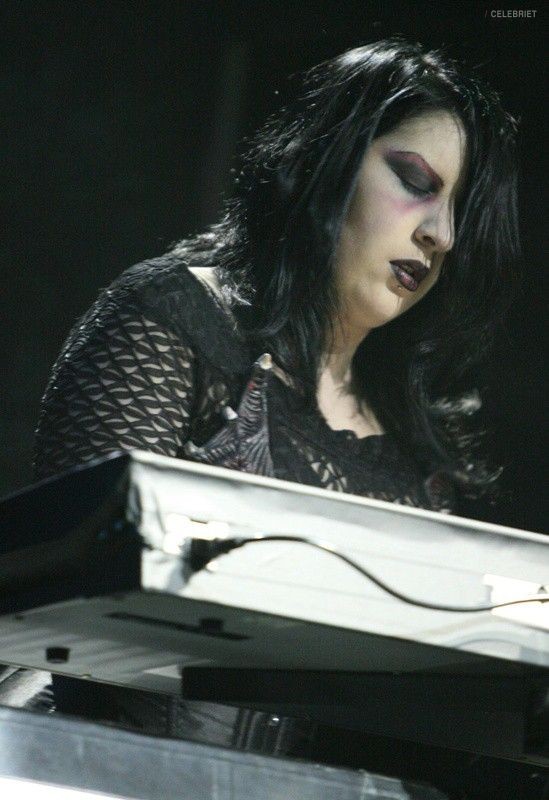
Rosie Smith’s breakthrough came when she connected with members of Cradle of Filth, one of England’s most successful extreme metal bands. According to biographical information, she was introduced to the band through a mutual acquaintance who suggested she audition for the role of keyboardist.
Cradle of Filth had already established a significant international following through albums that blended black metal influences with gothic and symphonic elements. Keyboards played an important role in the band’s sound, making Smith’s skills particularly valuable.
After successfully auditioning, she joined the group as a touring keyboardist. The position provided her with a major platform and introduced her to audiences across Europe, North America, and other international markets.
For many musicians, joining a band of Cradle of Filth’s stature represents a career-defining opportunity. Smith embraced the challenge and quickly became an important contributor to the band’s live performances. Her stage presence and musicianship helped strengthen the atmospheric elements that had become a hallmark of the group’s sound.
Life on the International Metal Scene
As a member of Cradle of Filth’s touring lineup, Smith experienced the demanding realities of professional touring. The band performed at festivals, concert halls, and major music events around the world.
Touring with an internationally recognized metal act requires more than technical ability. Musicians must adapt to intense travel schedules, long performances, and the pressure of consistently delivering high-quality live shows. Smith proved capable of handling these challenges while maintaining her role as a keyboardist and performer.
During interviews from this period, she also discussed some of the difficulties faced by women working in the heavy metal genre. The music industry, particularly certain segments of the metal scene, has historically been male dominated. Smith spoke about the importance of being taken seriously as a musician rather than being judged primarily on appearance or gender.
Her comments resonated with many fans and fellow musicians. They highlighted broader discussions about representation and professionalism within the music industry while emphasizing the need to recognize talent regardless of gender.
Leaving Cradle of Filth
Rosie Smith remained associated with Cradle of Filth until 2009. Her departure marked the end of a significant chapter in her career but also created opportunities for new creative directions.
Leaving a high-profile band can be a difficult transition for any musician. The visibility and stability that come with a major touring act are often difficult to replace. However, Smith chose to focus on projects that allowed for greater artistic freedom and personal expression.
Rather than attempting to replicate her experiences with Cradle of Filth, she expanded her creative horizons by exploring independent music production, songwriting, and experimental genres. This decision reflected her broader interests and desire to build a career on her own terms.
Her post-Cradle period demonstrated that she was not simply a supporting musician but a creative artist capable of developing original concepts and projects.
Rosa Damascena and Solo Creative Work
One of Smith’s most notable independent ventures is Rosa Damascena, a solo project that allowed her to experiment with sounds beyond traditional metal. The project showcased a different side of her musical identity and highlighted her skills as a composer and producer.
Through Rosa Damascena, Smith released the EP 3 Days Before Midnight. The music incorporated elements she described as “Gazz,” a term she created to represent a blend of gothic influences and jazz-inspired musical ideas.
This genre experimentation reflected her willingness to challenge conventional boundaries. While many musicians remain within the style that first brought them recognition, Smith explored new creative territories and developed a distinctive artistic voice.
The project also demonstrated her growing confidence as an independent creator. Rather than relying on large record labels or established bands, she pursued a more personal approach to music making.
Robert John and Rosie Smith
Another important chapter in her career involved a collaborative project called Robert John and Rosie Smith. The duo focused on songwriting and recording original material that differed significantly from the extreme metal environment associated with Cradle of Filth.
The project worked on an album titled Broken Branches, showcasing Smith’s continued interest in collaboration and artistic exploration. The music highlighted her ability to adapt to different genres while maintaining her identity as a songwriter and musician.
What made this collaboration particularly significant was Smith’s involvement in the production process. She was not merely performing material written by others. Instead, she played a major role in recording, mixing, mastering, and producing the music.
This hands-on approach reflected a growing trend among independent artists who seek greater creative control over their work. For Smith, it represented another step in her evolution from performer to full-spectrum music creator.
Production Work and Studio Leadership
As her career progressed, Smith increasingly focused on production and studio work. According to available biographical information, she became the CEO of Shooting Gallery Studios, a role that expanded her influence beyond performance alone.
Running a recording studio requires a combination of artistic and business skills. Studio leaders must understand recording technology, client management, project organization, and financial operations. Smith’s involvement in these areas illustrates the breadth of her professional experience.
Her production work also allowed her to help other artists bring their musical ideas to life. This mentoring and collaborative aspect of her career reflects a commitment to supporting creativity beyond her own projects.
The transition into studio leadership further diversified her professional portfolio and demonstrated her adaptability within an evolving music industry.
Teaching and Community Involvement
In addition to performing and producing, Rosie Smith has dedicated part of her career to music education. She has worked as a piano teacher, helping students develop their musical skills and confidence.
Teaching offers musicians a way to share their knowledge while nurturing the next generation of artists. For someone with experience in touring, recording, songwriting, and production, Smith brings a practical perspective that many students find valuable.
Her involvement in education also highlights an important aspect of her career that often receives less attention than her work with Cradle of Filth. While international touring may attract headlines, teaching can have a lasting impact on individual musicians and local communities.
This educational work reflects her broader commitment to music as both an art form and a means of personal development.
Rosie Smith’s Legacy and Influence
Rosie Smith’s career demonstrates how musicians can successfully evolve beyond the projects that first make them famous. Although she remains closely associated with Cradle of Filth, her achievements extend far beyond her years with the band.
Her work as a keyboardist, songwriter, producer, educator, and studio executive showcases remarkable versatility. Few musicians successfully navigate so many different aspects of the industry while maintaining a distinct creative identity.
She has also served as an example for women pursuing careers in rock and metal music. Through both her performances and public comments, Smith has highlighted the importance of professionalism, talent, and perseverance within competitive creative environments.
Today, her career stands as a reminder that musical success can take many forms. Whether performing on international stages, producing independent recordings, teaching students, or running a studio, Rosie Smith continues to contribute to the music world in meaningful ways. Her journey reflects a commitment to artistic growth, creative independence, and lifelong engagement with music.