
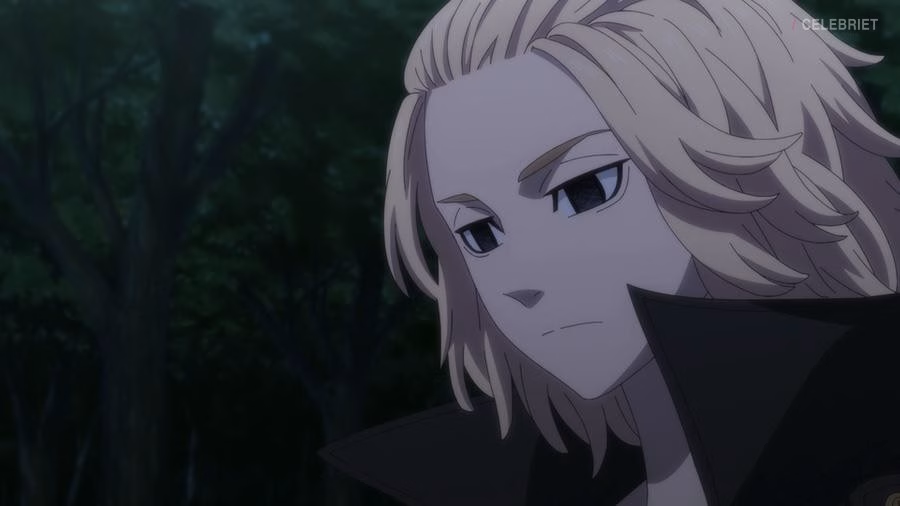
Tokyo Revengers has become one of the most popular modern anime and manga franchises, known for its time-travel narrative, emotional storytelling, and layered characters. At the center of its story is Manjiro Sano, better known as Mikey, the charismatic yet deeply troubled leader of the Tokyo Manji Gang. While many fans are drawn to his strength and leadership, others are fascinated by his tragic journey across different timelines.
Mikey’s age, timeline shifts, and character development are central to understanding the story of Tokyo Revengers. As the narrative jumps between past and present, his personality evolves dramatically, revealing both his light and dark sides. From a carefree teenager to a feared gang leader, Mikey’s transformation reflects the emotional core of the series. Let’s break down Mikey’s age across timelines, his role in the story, and why he remains one of anime’s most compelling characters.
Mikey’s Age Explained Across Timelines
Understanding Mikey’s age requires following the time-travel structure of Tokyo Revengers. The story primarily shifts between two timelines: the past (when the characters are middle schoolers) and the present (around 12 years later).
In the main past timeline, Mikey is 15 years old. This is the period when he leads the Tokyo Manji Gang, often referred to as Toman. Despite his young age, he commands respect and authority, demonstrating leadership qualities that set him apart from others.
In the present timeline, Mikey is approximately 27 years old. By this point, his life has taken a much darker turn, depending on the timeline. In several versions of the future, he becomes a powerful yet emotionally broken figure, often involved in criminal activities.
These age differences are crucial to understanding his character. The contrast between the optimistic teenage Mikey and the hardened adult version highlights how events and choices shape his life.
Timeline Breakdown: How Mikey’s Life Changes
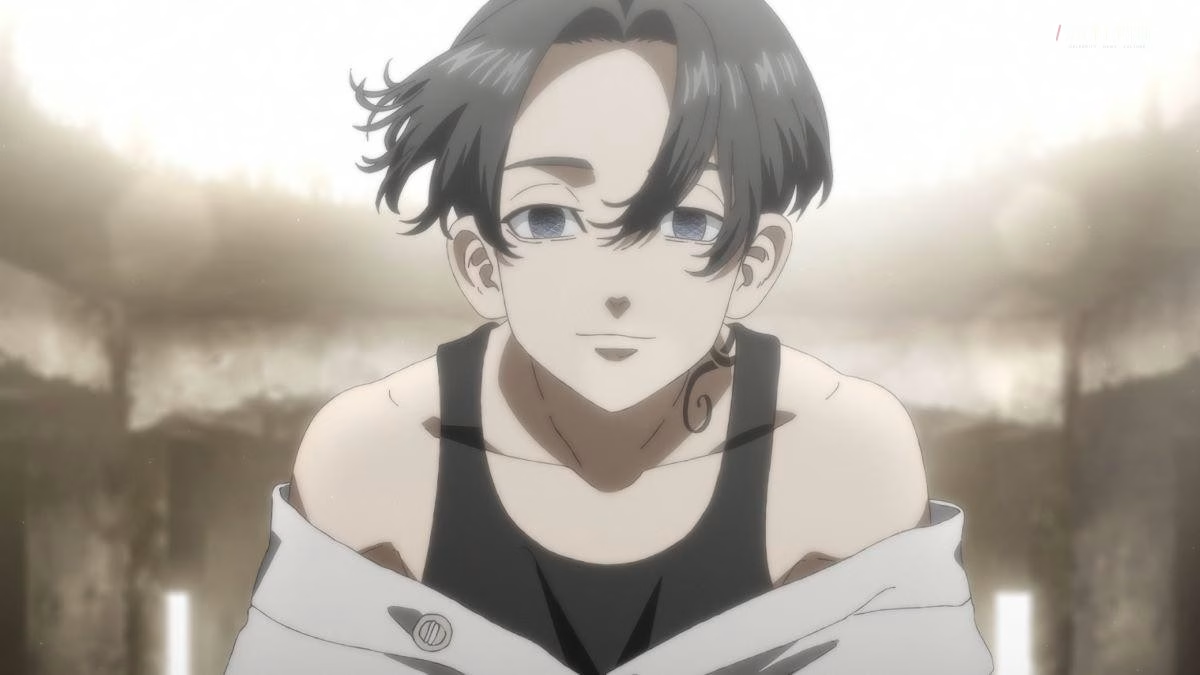
The timeline structure of Tokyo Revengers plays a key role in Mikey’s character development. Each time the protagonist alters the past, Mikey’s future changes in significant ways.
In the original timeline, Mikey becomes the leader of a dangerous criminal organization. His personality shifts dramatically, showing signs of emotional instability and isolation. This version of Mikey represents what happens when his darker tendencies go unchecked.
As the timeline changes, different versions of Mikey emerge. In some timelines, he is more controlled and less destructive, while in others, he becomes even more dangerous. These variations highlight the fragile balance between his positive and negative traits.
The repeated timeline changes emphasize one key idea: Mikey’s fate is not fixed. His future depends heavily on the people around him and the choices made during his teenage years. This concept drives much of the story’s emotional tension.
Mikey as the Leader of Toman
Mikey’s role as the leader of the Tokyo Manji Gang is central to his identity. Despite being only 15, he commands loyalty and respect from older and more experienced members.
His leadership style is unique. Unlike traditional gang leaders who rely solely on fear, Mikey inspires loyalty through a mix of charisma, strength, and genuine care for his friends. This balance makes him both admired and feared.
Under his leadership, Toman grows into one of the most powerful gangs in Tokyo. However, this success comes with consequences. As the gang expands, it becomes increasingly involved in conflicts that push Mikey toward darker decisions.
Mikey’s leadership also reflects his internal struggles. While he wants to protect his friends, the responsibilities of leadership often force him into difficult situations. This duality is one of the defining aspects of his character.
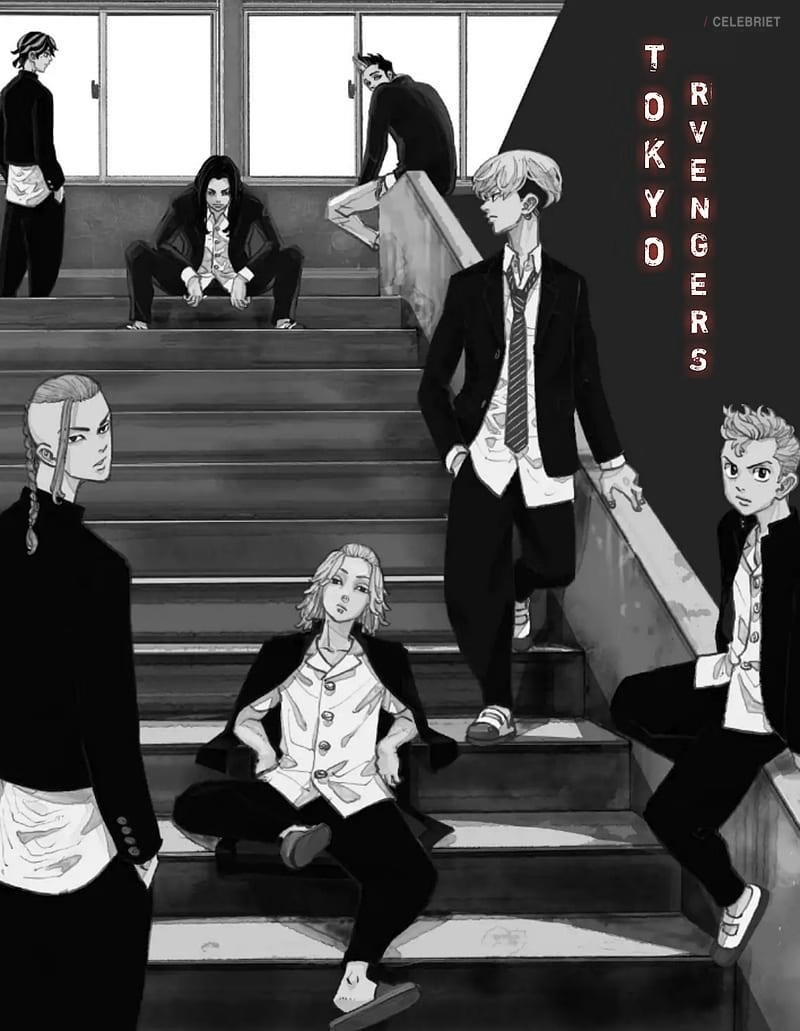
The Dual Nature of Mikey’s Personality
One of the most compelling aspects of Mikey’s character is his dual nature. On the surface, he appears carefree, playful, and even childlike. He enjoys simple things, jokes with his friends, and often acts like a typical teenager.
However, beneath that exterior lies a much darker side. Mikey has a capacity for extreme violence and emotional detachment, especially when pushed to his limits. This darker side becomes more prominent as the story progresses.
The contrast between these two aspects of his personality creates tension throughout the series. It also explains why his future versions are often so different from his past self.
This duality is not just a character trait but a central theme of Tokyo Revengers. Mikey represents the idea that even the strongest individuals can struggle with inner darkness.
Key Relationships That Shape Mikey
Mikey’s character is heavily influenced by his relationships with other characters. These connections play a crucial role in determining his actions and emotional state.
One of the most important relationships is with Ken Ryuguji, also known as Draken. As Mikey’s closest friend and right-hand man, Draken often acts as his moral anchor. His presence helps keep Mikey’s darker tendencies in check.
Another key figure is Takemichi Hanagaki, the protagonist who travels through time to change the future. Takemichi’s influence on Mikey becomes increasingly important as the story progresses.
Mikey’s relationships with his family, particularly his brother Shinichiro, also shape his character. The loss of his brother has a profound impact on his emotional state and contributes to his darker tendencies.
These relationships highlight how interconnected Mikey’s journey is with those around him. His fate is not determined solely by his own choices but also by the people he trusts.
Mikey’s Strength and Fighting Ability
Mikey is widely regarded as one of the strongest fighters in Tokyo Revengers. Despite his relatively small frame, he possesses incredible speed, agility, and striking power.
His signature move, often referred to as his high kick, is capable of knocking out opponents instantly. This ability makes him nearly unbeatable in one-on-one combat.
However, his strength is not just physical. Mikey’s presence alone can intimidate opponents and inspire his allies. This combination of physical and psychological strength reinforces his position as a leader.
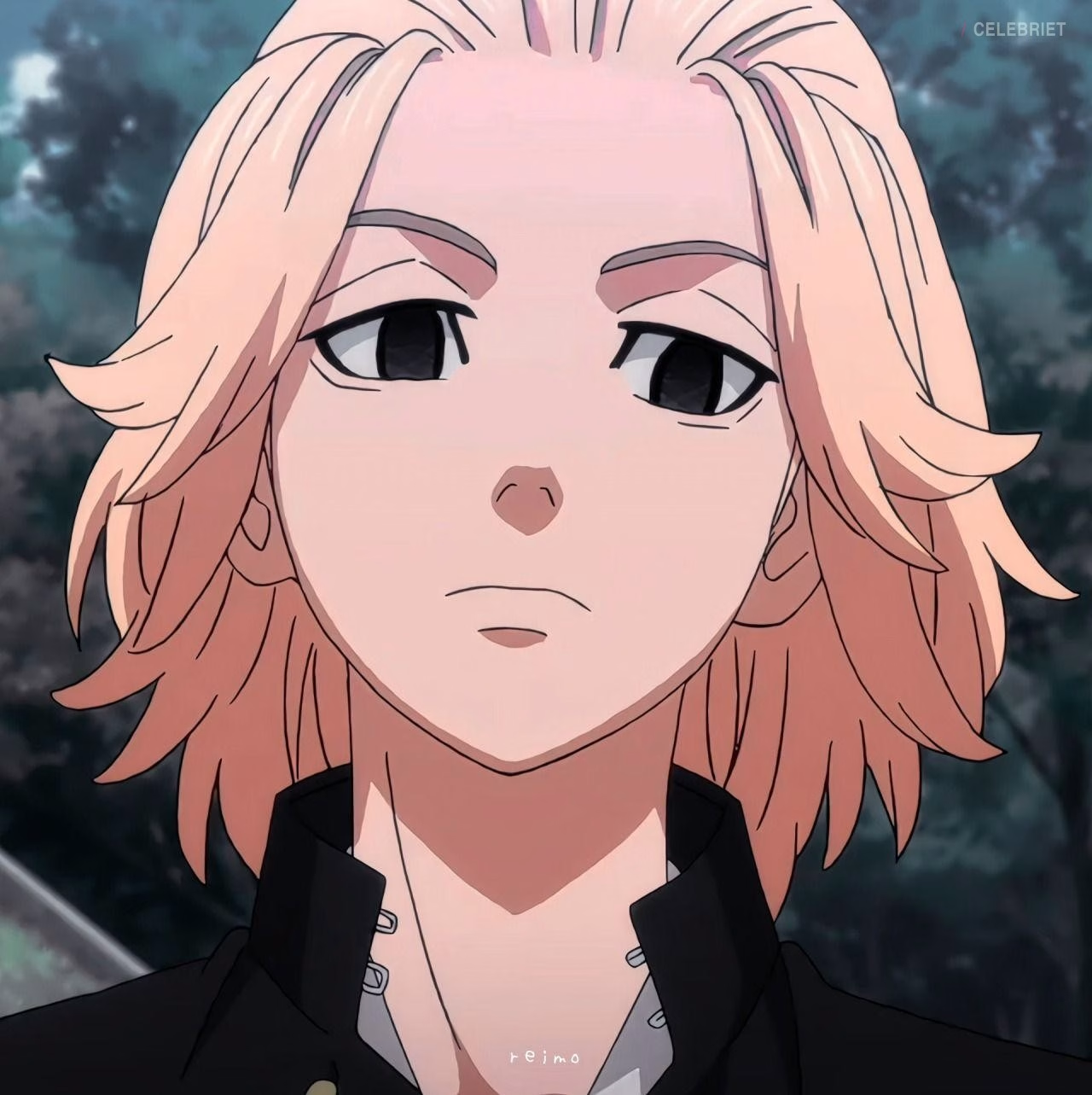
His fighting ability also reflects his personality. When he fights, his darker side often emerges, showing a level of intensity that contrasts with his usual demeanor.
Why Mikey Becomes Dark in the Future
One of the biggest questions in Tokyo Revengers is why Mikey becomes so dark in the future timelines. The answer lies in a combination of loss, responsibility, and emotional isolation.
Throughout the series, Mikey experiences significant losses, including the deaths of people close to him. These events gradually erode his emotional stability.
At the same time, the burden of leadership isolates him from others. As Toman grows, Mikey becomes increasingly distant, losing the support system that once kept him grounded.
Without strong emotional connections, his darker tendencies take over. This transformation is not sudden but the result of accumulated trauma and pressure.
The story uses this arc to explore how even strong individuals can be broken by circumstances. It also emphasizes the importance of support and connection.