The Marvel Cinematic Universe has introduced a wide range of villains, but few are as emotionally complex and morally layered as Gorr the God Butcher. Introduced in Thor: Love and Thunder, Gorr stands apart from typical antagonists because his motivations are rooted in grief, betrayal, and loss rather than simple ambition or conquest. His story is not just about destruction but about questioning the very idea of gods and their responsibility toward those who worship them.
Played by Christian Bale, Gorr quickly became one of the most talked-about elements of the film, with critics and fans praising the performance for adding depth to an otherwise tonal Marvel entry. His journey from a desperate father to a feared god killer explores themes of faith, suffering, and revenge, making him one of the MCU’s most tragic villains. Let’s break down who Gorr really is, his origins, powers, motivations, and how he compares to his comic book counterpart.
Gorr’s Origin Story: From Faithful Believer to Broken Survivor
Gorr’s story begins on a desolate and dying planet where survival itself is a daily struggle. He lives as part of a deeply religious society that places complete faith in their gods, believing that divine beings will eventually reward their devotion. Despite immense hardship, Gorr remains loyal to this belief system, trusting that suffering has a purpose.
That faith is shattered when tragedy strikes his family, particularly the death of his daughter. The loss forces Gorr to question everything he once believed, yet he still clings to hope that the gods will intervene. Instead of divine salvation, he is met with silence, which slowly transforms his faith into doubt and anger.
The turning point comes when Gorr encounters a god who embodies everything he once revered. Instead of compassion or understanding, the god shows indifference and arrogance, treating Gorr’s suffering as insignificant. This moment confirms Gorr’s worst fears that the gods are not protectors but selfish beings unworthy of worship.
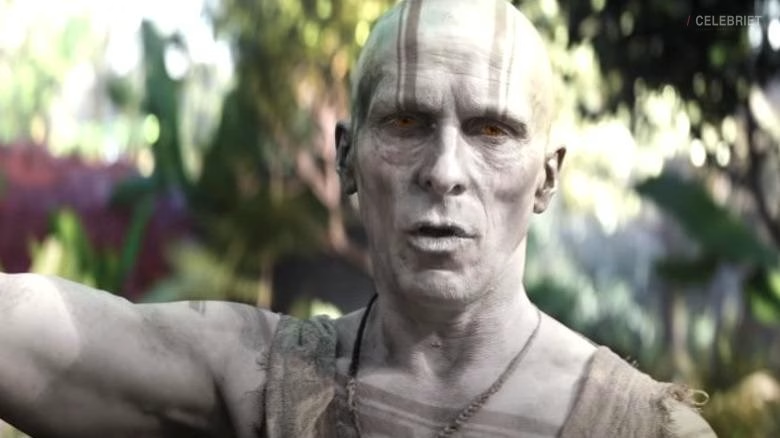
Marvel’s official character breakdown highlights this transformation as the core of Gorr’s identity, describing him as someone whose tragedy leads him to wage war against all gods. His origin is not driven by power but by a profound sense of betrayal.
The Necrosword and Gorr’s Transformation
Gorr’s journey into becoming the God Butcher truly begins when he comes into contact with the Necrosword, a powerful and dangerous weapon. The sword is not just a tool but a corrupting force that enhances Gorr’s abilities while feeding on his pain and hatred.
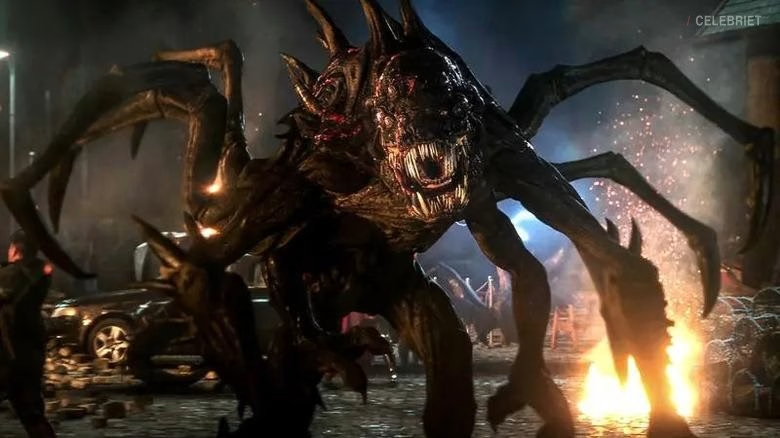
Once bonded with the Necrosword, Gorr gains immense strength, speed, and the ability to manipulate shadow-like energy. He can create creatures, travel across vast distances, and survive injuries that would kill ordinary beings. These powers allow him to challenge gods on their own level, turning him into a legitimate cosmic threat.
However, the weapon comes with a cost. The Necrosword slowly consumes its wielder, physically and mentally. As Gorr uses it more, his body deteriorates, and his personality becomes increasingly consumed by vengeance. This duality makes him both powerful and tragic, as the very tool that gives him purpose also destroys him.
In Marvel Comics lore, the Necrosword is closely tied to dark cosmic entities, adding another layer of danger to its use. While the MCU simplifies some of these elements, the core idea remains the same. Gorr is not just wielding a weapon, he is being shaped by it.
Why Gorr Hates Gods: The Core Motivation Explained
Unlike many MCU villains who seek domination or revenge against specific individuals, Gorr’s mission is philosophical. He believes that all gods are inherently flawed and undeserving of worship because they fail to protect those who depend on them.
This belief is rooted in personal experience. Gorr’s suffering, combined with his encounter with an uncaring god, convinces him that divine beings exploit faith without fulfilling their responsibilities. From his perspective, eliminating gods is not evil but necessary to free the universe from false hope.

The film reinforces this idea through dialogue and character interactions, presenting Gorr as someone who genuinely believes he is doing the right thing. His actions are extreme, but his reasoning is understandable, which makes him far more compelling than a traditional villain.
Marvel Studios’ narrative framing positions Gorr as a dark reflection of Thor. While Thor learns to protect and inspire others, Gorr represents what happens when faith in gods is completely destroyed. This contrast drives much of the film’s emotional tension.
Gorr vs Thor: A Clash of Beliefs
The conflict between Gorr and Thor is not just physical but ideological. Thor represents the idea that gods can grow, learn, and become better, while Gorr believes they are inherently selfish and beyond redemption.
Throughout Thor: Love and Thunder, their encounters highlight this philosophical divide. Gorr challenges Thor to justify the existence of gods, forcing him to confront his own role and responsibilities. This dynamic adds depth to their rivalry, making it more than just a battle between hero and villain.
Thor’s character development plays a crucial role in this conflict. By the time he faces Gorr, Thor has experienced his own losses and failures, making him more empathetic. He understands Gorr’s pain but refuses to accept his methods, creating a layered and emotionally charged confrontation.
The film ultimately uses this clash to explore larger themes about leadership, responsibility, and the meaning of power. It asks whether gods exist to serve themselves or to protect others, a question that resonates beyond the immediate story.
How Powerful Is Gorr the God Butcher?
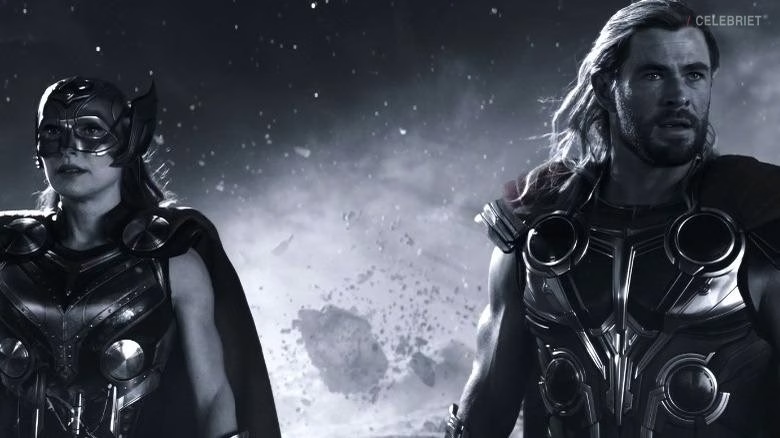
Gorr is one of the most powerful villains introduced in the MCU, largely due to the Necrosword. His abilities place him on a level where he can challenge gods, which immediately sets him apart from many other antagonists.
He demonstrates superhuman strength, enhanced durability, and the ability to regenerate from injuries. His control over shadows allows him to create weapons, creatures, and environments that give him a tactical advantage in battle. These powers make him unpredictable and difficult to defeat.
In both the film and comic versions, Gorr is known for killing multiple gods across different worlds. This reputation is what earns him the title “God Butcher.” It is not just a name but a reflection of his accomplishments and the fear he inspires.
However, his power is not limitless. The Necrosword’s corrupting influence weakens him over time, creating a balance between strength and vulnerability. This limitation adds tension to his story, as it suggests that his mission is ultimately unsustainable.
Differences Between MCU Gorr and Marvel Comics Version
While the MCU adaptation of Gorr stays true to the core concept, there are notable differences between the film and comic versions. In the comics, Gorr’s story spans thousands of years and involves encounters with multiple versions of Thor across different timelines.
The comic version also delves deeper into the cosmic mythology of the Marvel Universe. The Necrosword is revealed to have connections to powerful entities, making it even more dangerous and significant. These elements add scale and complexity to Gorr’s story.
In contrast, the MCU version focuses more on emotional storytelling and character relationships. The film simplifies some of the larger cosmic aspects to keep the narrative grounded and accessible. This approach allows audiences to connect more directly with Gorr’s personal journey.
Despite these changes, the essence of the character remains intact. Both versions portray Gorr as a tragic figure driven by loss and a desire to hold gods accountable. The differences lie primarily in scope rather than theme.
Christian Bale’s Performance and Critical Reception
Christian Bale’s portrayal of Gorr received widespread praise, even from critics who had mixed feelings about the film itself. Many reviews highlighted Bale’s ability to bring emotional depth and intensity to the character.
Entertainment outlets like Variety noted that Bale’s performance stood out as one of the film’s strongest elements, describing it as haunting and compelling. His portrayal emphasizes Gorr’s pain and desperation, making his actions feel grounded in genuine emotion rather than exaggerated villainy.
Bale’s approach to the role focuses on subtle expressions and controlled delivery rather than over-the-top theatrics. This restraint makes Gorr’s moments of anger and violence more impactful, as they feel like the result of suppressed grief finally breaking through.
The performance also helps balance the film’s lighter tone. While Thor: Love and Thunder includes humor and colorful visuals, Gorr’s presence introduces a darker and more serious element that anchors the story.
Is Gorr a Villain or a Tragic Antihero?
One of the most interesting aspects of Gorr’s character is how difficult it is to categorize him. On the surface, his actions clearly place him as a villain, as he is responsible for widespread destruction and death.
However, his motivations complicate that label. Gorr does not seek power, wealth, or domination. His goal is to eliminate what he sees as a broken system, even if his methods are extreme. This perspective aligns him more closely with a tragic antihero than a traditional villain.
The film intentionally blurs these lines, encouraging viewers to empathize with Gorr even as they oppose him. His story serves as a reminder that villains are often shaped by circumstances rather than inherent evil.
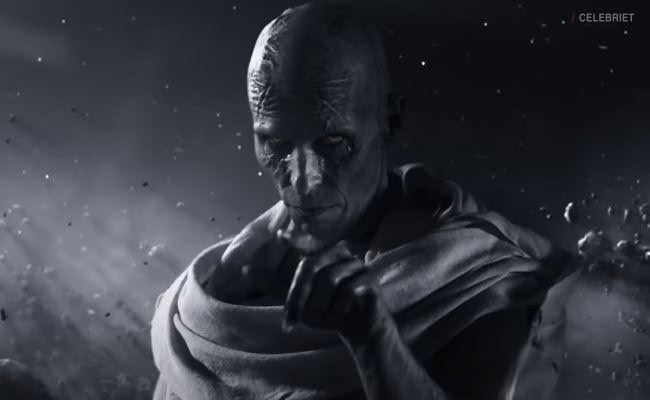
Marvel has increasingly explored morally complex antagonists, and Gorr represents one of the most successful examples of this approach. His character demonstrates that emotional depth can make a villain far more memorable and impactful.
Gorr’s Ending Explained and What It Means
Gorr’s story reaches its emotional climax when he finally achieves his goal of reaching Eternity, a cosmic entity capable of granting wishes. At this moment, he has the power to fulfill his mission of eliminating all gods.
However, his final decision reveals the true depth of his character. Instead of choosing revenge, Gorr chooses love by wishing for the return of his daughter. This choice represents a significant shift, showing that beneath his anger and hatred, he still values what he lost.
Thor’s influence plays a crucial role in this outcome. By showing compassion and understanding, Thor helps Gorr see another path. The moment underscores the film’s central theme that love can be stronger than vengeance.
Gorr’s ending reinforces the idea that he was never purely evil. His journey is ultimately about grief and the choices people make when faced with loss. The resolution provides emotional closure while leaving a lasting impact on Thor’s character.