Video game music has evolved far beyond simple background loops, but few composers have changed the industry quite like Mick Gordon. Best known for his work on DOOM and DOOM Eternal, Gordon became one of gaming’s most recognizable composers by blending aggressive metal guitars, distorted synths, industrial textures, and cinematic sound design into something instantly identifiable. His soundtrack work helped transform modern DOOM into more than just a shooter franchise. It became an audio experience fans associated with adrenaline, chaos, and raw intensity.
The Australian composer gained worldwide attention after DOOM (2016) and DOOM Eternal delivered some of the most celebrated game soundtracks of the last decade. Tracks like “Rip & Tear,” “BFG Division,” and “The Only Thing They Fear Is You” became viral hits across gaming communities, streaming platforms, and metal circles alike. Gordon’s influence eventually extended beyond games into mainstream metal collaborations and live performances. At the same time, his public dispute with id Software and Bethesda over the DOOM Eternal soundtrack also became one of gaming’s most discussed controversies.
Here is a closer look at Mick Gordon’s career, his music style, his role in shaping DOOM Eternal, and why his work continues to influence modern game audio design.
Mick Gordon’s Early Career Before DOOM
Before becoming synonymous with demon-slaying metal soundtracks, Mick Gordon worked across several game projects as a composer and sound designer. He began gaining industry attention through titles like Need for Speed, Killer Instinct, and Wolfenstein. His reputation steadily grew because of his ability to combine cinematic scoring with electronic and industrial experimentation.
Unlike many traditional composers, Gordon approached music from a sound design perspective. He often manipulated guitars, synths, machinery noise, and distorted effects into rhythmic elements rather than relying purely on melody. This unusual approach later became the foundation of the modern DOOM sound.
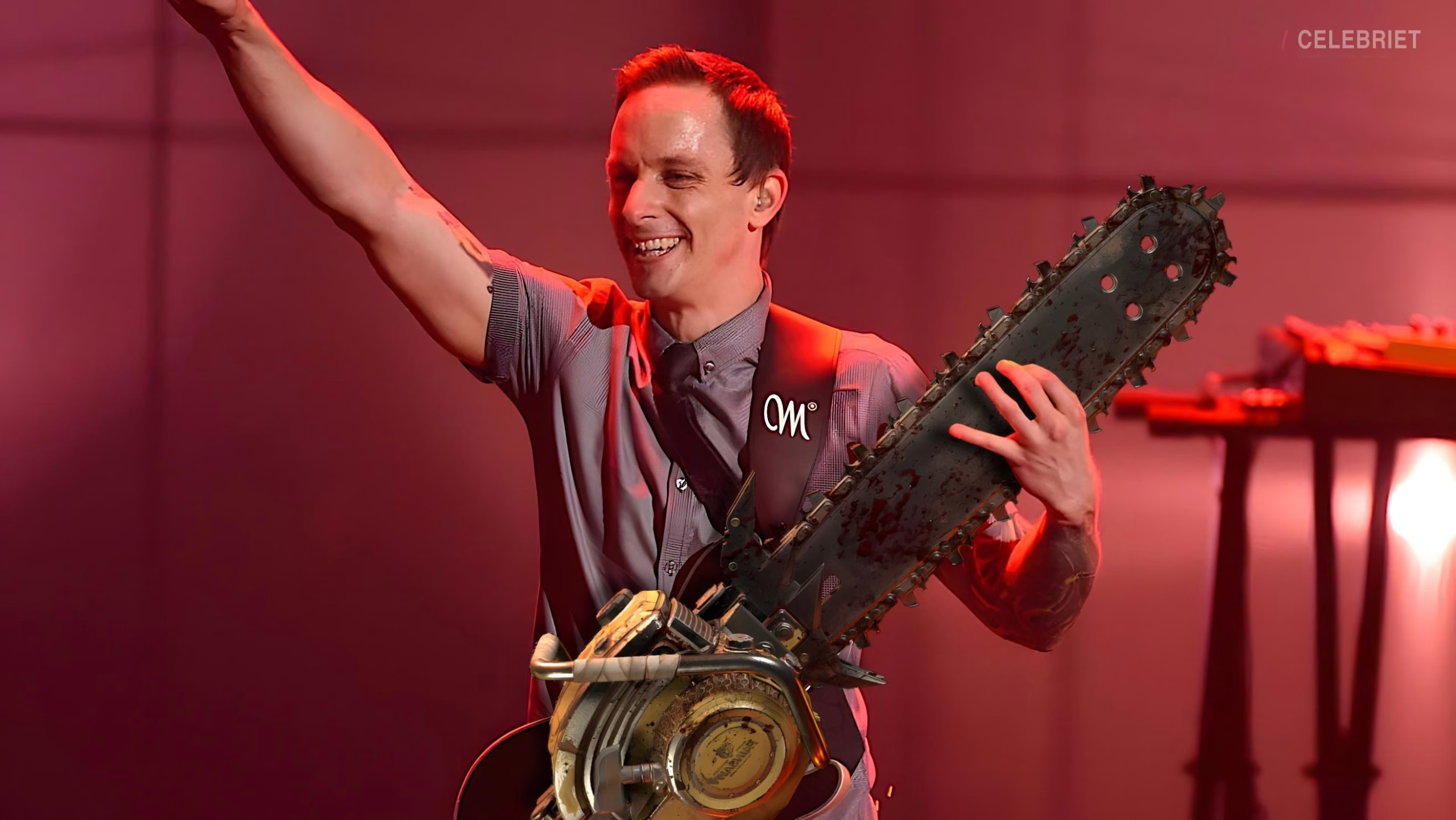
His work on Killer Instinct especially drew praise from players and critics because of its aggressive energy and layered production. That success eventually helped position him for the project that would define his career.
When id Software rebooted DOOM in 2016, the developers reportedly did not initially want a heavy metal soundtrack. Gordon later revealed that “no metal” was one of the original conditions discussed during production. Ironically, his eventual fusion of industrial metal and electronic chaos became one of the game’s defining features.
Instead of creating traditional orchestral action music, Gordon designed tracks that reacted to gameplay intensity. His compositions layered distorted eight-string guitars, mechanical noise, synthesizers, and unconventional audio textures into a constantly evolving soundscape. Some tracks even used chainsaw recordings and heavily processed machine sounds as percussion elements.
The soundtrack’s success surprised even longtime fans of the franchise. Songs from DOOM spread rapidly across YouTube, Twitch streams, TikTok edits, and gym playlists. The music became so iconic that many players associated the soundtrack directly with the game’s brutal combat loop.
Critics and fans praised Gordon for creating music that felt physically tied to gameplay momentum. Rather than simply playing behind combat, the soundtrack amplified the player’s aggression and pacing. That achievement helped establish DOOM (2016) as one of the most influential shooter reboots in modern gaming.
Why the DOOM Eternal Soundtrack Became So Popular
By the time DOOM Eternal entered development, expectations for Gordon’s soundtrack work had become enormous. Instead of repeating the same formula, he expanded the musical identity of the franchise even further.
For DOOM Eternal, Gordon experimented with heavier distortion, more complex layering, and even created a “heavy metal choir” using guttural vocal performances. Reports and interviews revealed that he pushed the soundtrack toward a darker and more chaotic direction to match the game’s larger scale.
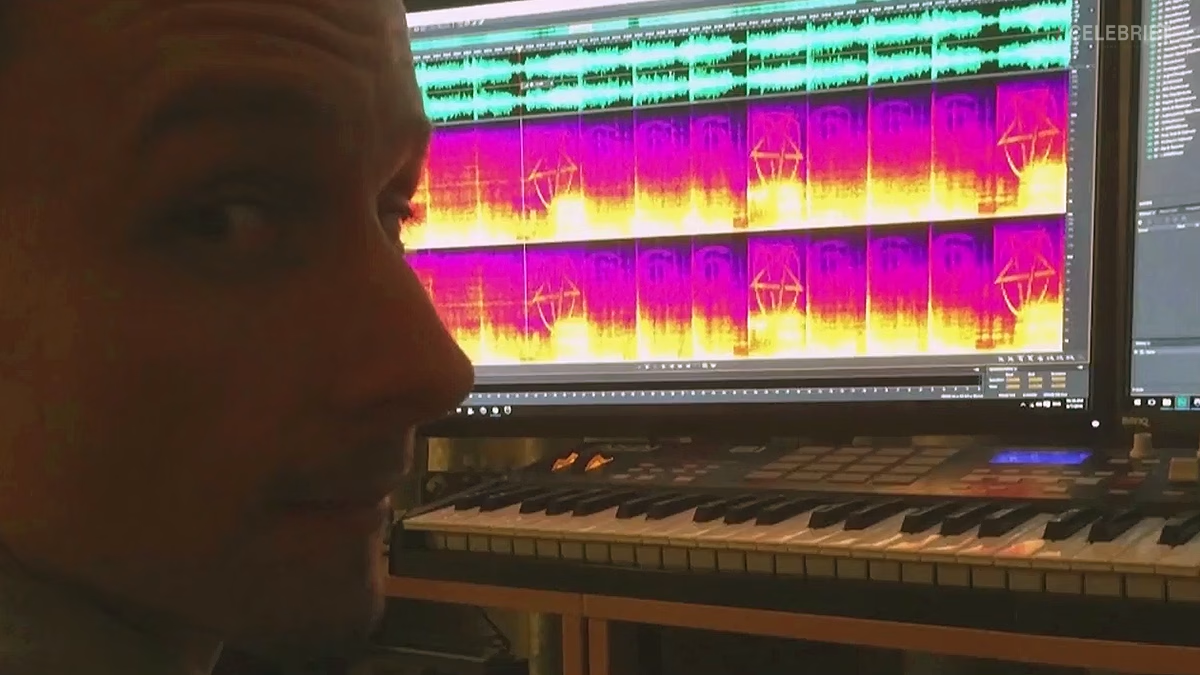
Tracks such as “The Only Thing They Fear Is You” quickly became internet phenomena. Fans praised the soundtrack for feeling both technical and emotionally aggressive. Unlike many cinematic game scores designed to fade into the background, Gordon’s music demanded attention.
Part of the soundtrack’s popularity also came from how seamlessly it integrated into gameplay systems. Combat arenas intensified dynamically with the music, creating a feedback loop between player action and sound design. This made the soundtrack feel interactive rather than passive.
The influence of Gordon’s work extended beyond gaming audiences. Metal musicians, producers, and audio engineers frequently discussed his production techniques online. His use of low tunings, distorted synths, and experimental mixing inspired countless creators across gaming and music communities.
The DOOM Eternal Soundtrack Controversy Explained
Despite the soundtrack’s massive popularity, the release of the official DOOM Eternal OST became controversial shortly after launch. Fans noticed inconsistencies in audio quality and mixing, leading to criticism online.
Executive producer Marty Stratton later published an open letter blaming production problems partly on Gordon. Years later, Gordon released a lengthy public statement disputing those claims and accusing id Software and Bethesda of mismanagement, communication failures, withheld payments, and extreme production pressure.
The controversy sparked widespread debate throughout gaming communities. Many fans sided with Gordon after reading his detailed explanation of the project’s timeline and production conditions. Others defended id Software’s version of events. Bethesda later issued statements rejecting some of Gordon’s allegations.
Regardless of where people stood on the dispute, the controversy significantly impacted Gordon’s relationship with the DOOM franchise. Since DOOM Eternal, he has largely shifted toward selective collaborations and outside projects rather than another full DOOM soundtrack.
The situation also sparked broader conversations about crunch culture, freelance contracts, and creative control within the gaming industry.
Mick Gordon’s Influence on Modern Gaming Music
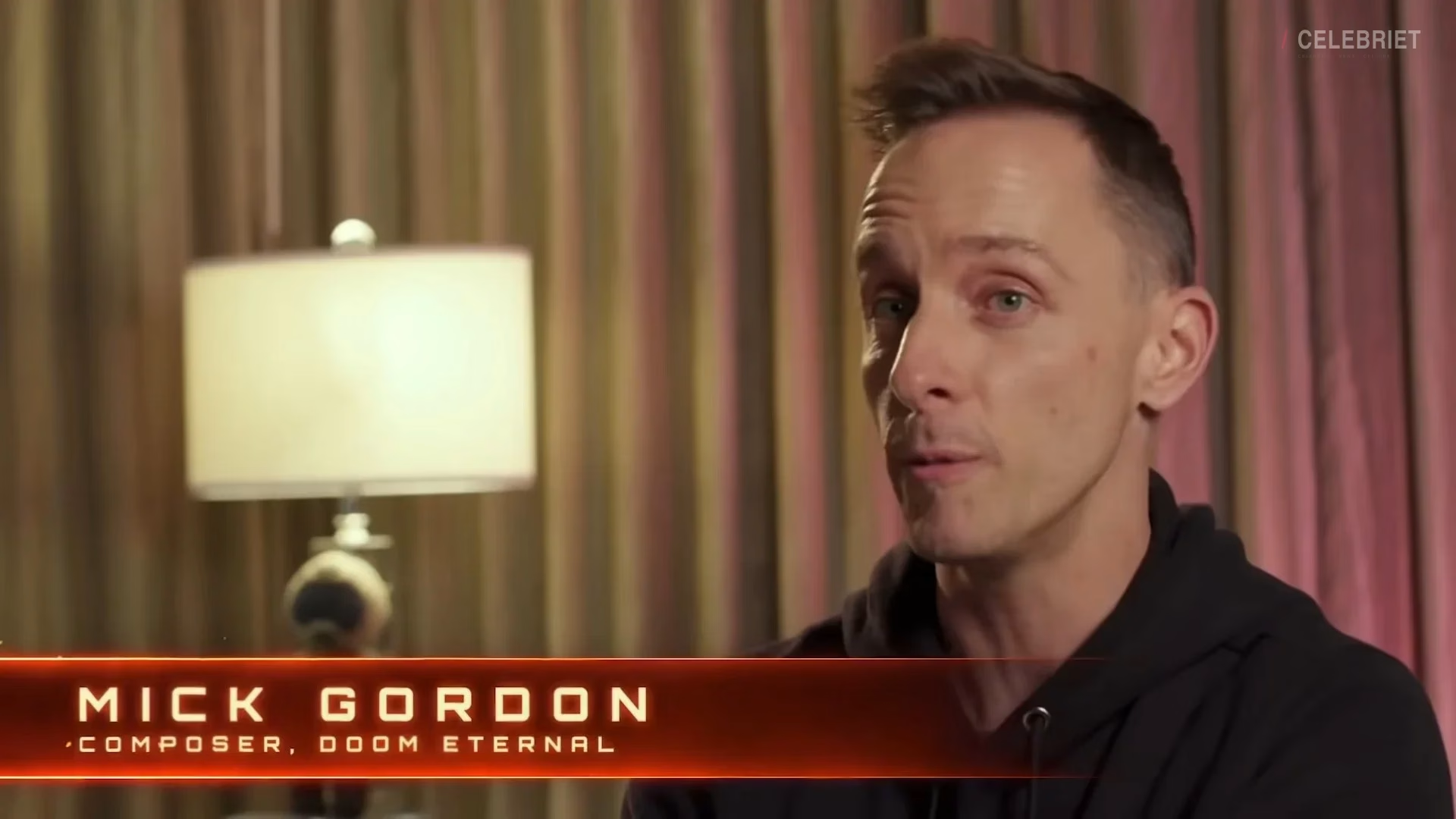
Even years after DOOM Eternal, Mick Gordon’s influence remains visible across gaming and metal music. Many modern shooters now emphasize aggressive, reactive soundtracks inspired by his work. Developers increasingly treat audio design as part of gameplay identity rather than simple background atmosphere.
Gordon also helped normalize heavier music within AAA gaming. While rock and metal had always existed in games, his DOOM scores demonstrated that extreme industrial metal could carry mainstream blockbuster titles successfully.
Outside gaming, Gordon has collaborated with major metal acts and producers. His production style became recognizable because of its sharp low-end textures, distorted layering, and rhythmic intensity. Fans often describe his music as sounding mechanical yet emotional at the same time.
Recent reports also suggest Gordon is returning to larger-scale game soundtrack work again with upcoming projects, showing that demand for his style remains extremely strong.
Mick Gordon’s impact goes beyond a few popular tracks. He helped redefine expectations for what game music could accomplish emotionally and mechanically. His work on DOOM and DOOM Eternal showed that soundtracks could become as culturally important as gameplay itself.
For many players, Gordon’s music is inseparable from modern DOOM. The pounding guitars, distorted synths, and industrial chaos became part of the franchise’s identity. Even today, discussions about the best video game soundtracks of the last decade almost always include his work.
Whether through his groundbreaking audio design, his influence on modern metal production, or the industry debates sparked by the DOOM Eternal controversy, Mick Gordon remains one of gaming’s most important contemporary composers. His sound helped define an era of action games, and its influence is still echoing through the industry years later.