Few public figures have experienced the kind of intense global scrutiny that Monica Lewinsky faced in the late 1990s. Once known primarily for her involvement in a political scandal with then U.S. President Bill Clinton, Lewinsky has since transformed her life and public image in a way that continues to shape conversations around media ethics, online bullying, and personal accountability.
For years, her name was tied almost entirely to the Clinton-Lewinsky scandal, a controversy that dominated headlines and led to Clinton’s impeachment proceedings. However, Lewinsky’s story did not end there. Over time, she stepped away from the spotlight, pursued further education, and later re-emerged as a powerful advocate against cyberbullying and public shaming.
Today, Monica Lewinsky is widely recognized not just for her past, but for her efforts to reframe her narrative and use her experience to speak about the human cost of public humiliation in the digital age.
Monica Lewinsky’s Early Life and Education
Monica Lewinsky was born on July 23, 1973, in San Francisco, California, and raised in Los Angeles. She grew up in a relatively affluent environment, attending private schools before enrolling at Lewis & Clark College in Portland, Oregon. She later completed a degree in psychology, which would influence how she later spoke about trauma, shame, and public perception.
After college, Lewinsky moved to Washington, D.C., where she secured an internship at the White House in 1995. At the time, she was in her early twenties and working in an environment that placed her in close proximity to powerful political figures. That opportunity would soon change the course of her life permanently.
Her early years are often overlooked in public discussions, but they provide important context about her background before the scandal that made her internationally known.
The relationship between Monica Lewinsky and Bill Clinton became public in 1998, sparking one of the most widely covered political scandals in modern history. Investigations led by independent counsel Kenneth Starr uncovered details about their interactions, which ultimately became central to legal proceedings against the president.
Clinton initially denied the relationship in a statement that became infamous in American political history. However, further evidence contradicted that denial, leading to his impeachment by the House of Representatives on charges related to perjury and obstruction of justice. He was later acquitted by the Senate.
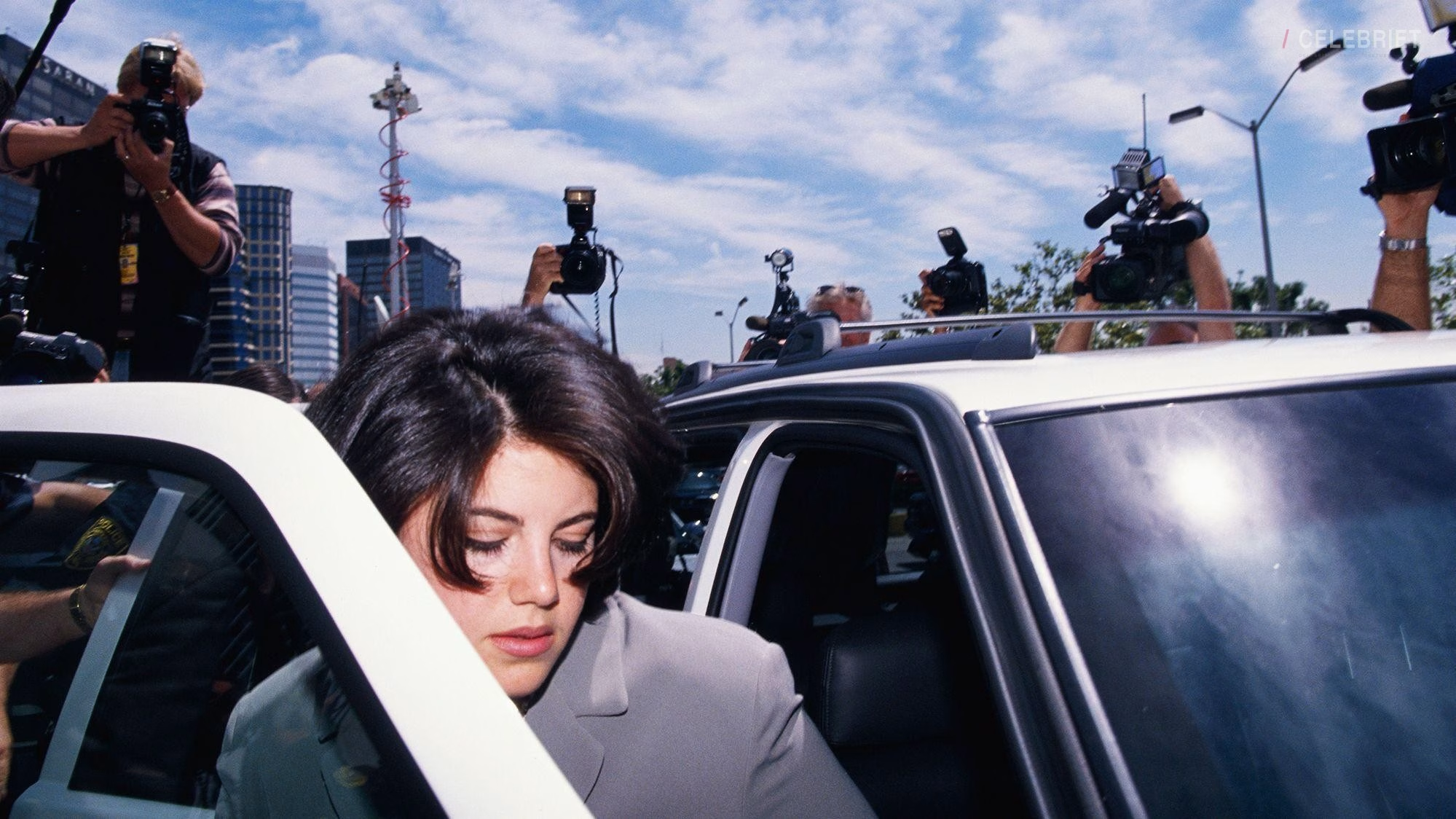
For Lewinsky, the consequences were deeply personal. She became the subject of relentless media coverage, late-night comedy, and public ridicule on a scale rarely seen at the time. The scandal unfolded during the early days of internet culture, meaning her story became one of the first major global controversies amplified online.
Following the scandal, Monica Lewinsky largely retreated from public life. She attempted various career paths, including fashion and television, but found it difficult to escape the shadow of her past. Public perception remained harsh, and opportunities were often limited by the lingering association with the scandal.
In the mid-2000s, Lewinsky chose to pursue higher education in the United Kingdom. She earned a master’s degree in social psychology from the London School of Economics, a decision that reflected her interest in understanding the dynamics of shame, identity, and public judgment.
This period of relative privacy allowed her to rebuild her life away from constant media attention. It also laid the foundation for her later work as an advocate and speaker.
Reinventing Her Public Image
More than a decade after the scandal, Monica Lewinsky returned to public life with a new purpose. In 2014, she wrote an essay for Vanity Fair in which she reflected on her experiences and the lasting impact of public shaming. The piece marked a turning point in how she was perceived.
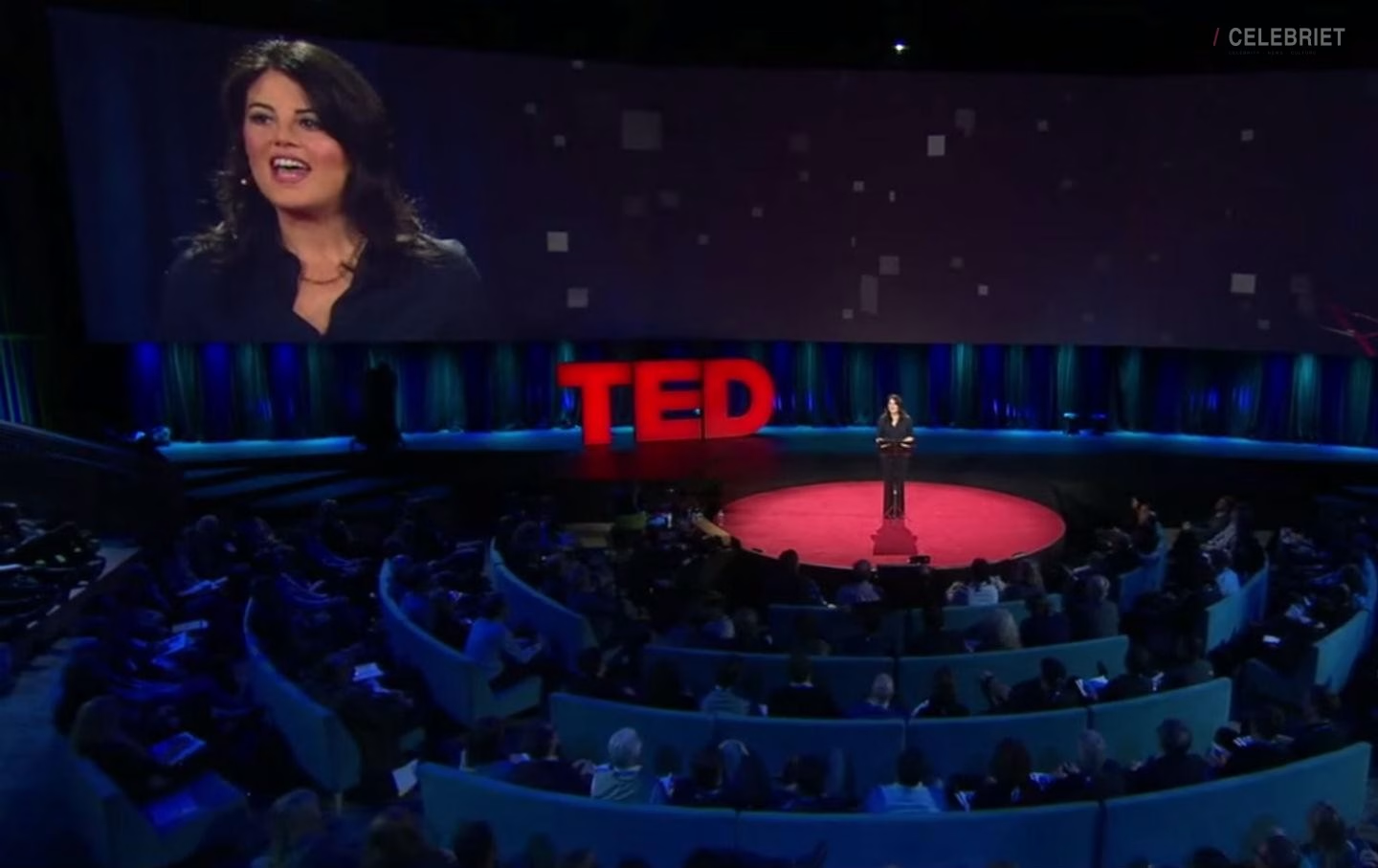
In 2015, Lewinsky delivered a widely viewed TED Talk focused on cyberbullying and what she described as a “culture of humiliation.” Drawing from her own experience, she argued that the internet had made public shaming more widespread and more damaging than ever before.
Her message resonated with audiences around the world, particularly as social media platforms continued to grow. Lewinsky became a leading voice in discussions about empathy, accountability, and the ethics of online behavior.
Today, Monica Lewinsky is recognized as an anti-bullying activist and public speaker. She has worked with organizations focused on digital safety and has contributed to conversations about how media narratives can shape public perception.
Her story has also been re-examined in recent years through documentaries and television projects, including Impeachment: American Crime Story, where her perspective played a role in reshaping how the events of the 1990s are understood. Many modern analyses view her less as a scandal figure and more as someone who was subjected to disproportionate public scrutiny.
This shift reflects broader cultural changes in how society views power dynamics, media responsibility, and gender bias. Lewinsky’s experience is often cited as an early example of the kind of online harassment that has since become more widely recognized and criticized.
Today, Monica Lewinsky is best known for her work as an anti-bullying advocate, writer, and public speaker. She collaborates with organizations and campaigns that address online harassment, digital ethics, and social media accountability, often drawing directly from her own experience as one of the first people globally shamed on the internet.
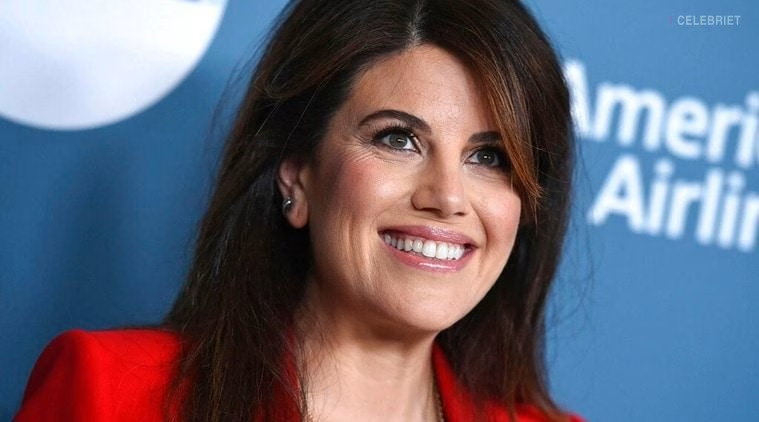
She has also built a credible presence in media and storytelling. Lewinsky has contributed essays to major publications like Vanity Fair and served as a producer on Impeachment: American Crime Story, which revisited the events of the 1990s with more context and nuance. These roles position her not just as a subject of history, but as someone actively shaping how that history is understood today.
In recent years, her public appearances, interviews, and speaking engagements have focused less on revisiting the scandal and more on broader cultural issues. That includes how reputations are formed online, how quickly narratives escalate, and what accountability should look like in the digital age. This shift defines her current identity far more than the controversy that first made her famous.
Monica Lewinsky’s journey continues to resonate because it intersects with several ongoing issues, including media ethics, digital culture, and personal resilience. Her ability to reclaim her narrative after years of public ridicule has made her an important figure in conversations about redemption and accountability.