Among MAMAMOO’s members, Wheein has long stood out for her emotional vocals, smooth stage presence, and understated artistic identity. While the group itself became famous for breaking K-pop conventions through strong live singing and mature musical concepts, Wheein developed a reputation as one of the industry’s most versatile performers. Fans often describe her as the emotional core of MAMAMOO’s sound because of the warmth and texture in her voice.
Over the years, Wheein expanded far beyond simply being known as “a member of MAMAMOO.” Through solo releases like Redd, WHEE, and In the Mood, she established herself as an artist with a deeply personal creative style rooted in R&B, introspection, and emotional storytelling.
At the same time, her journey has also included major career decisions, including leaving RBW Entertainment while remaining connected to MAMAMOO. That move marked an important turning point in her artistic independence and reshaped how many fans viewed her future in the music industry.
Today, Wheein is widely recognized not just for vocal ability, but for the emotional authenticity and artistic sensitivity she brings into modern K-pop.
Who Is Wheein?
Wheein, whose full name is Jung Whee-in, was born on April 17, 1995, in Jeonju, South Korea.
According to KProfiles, she developed an interest in music and the arts from a young age and later attended Wonkwang Information Arts High School. The same profile also notes that she has known fellow MAMAMOO member Hwasa since middle school, with both eventually pursuing music careers together.
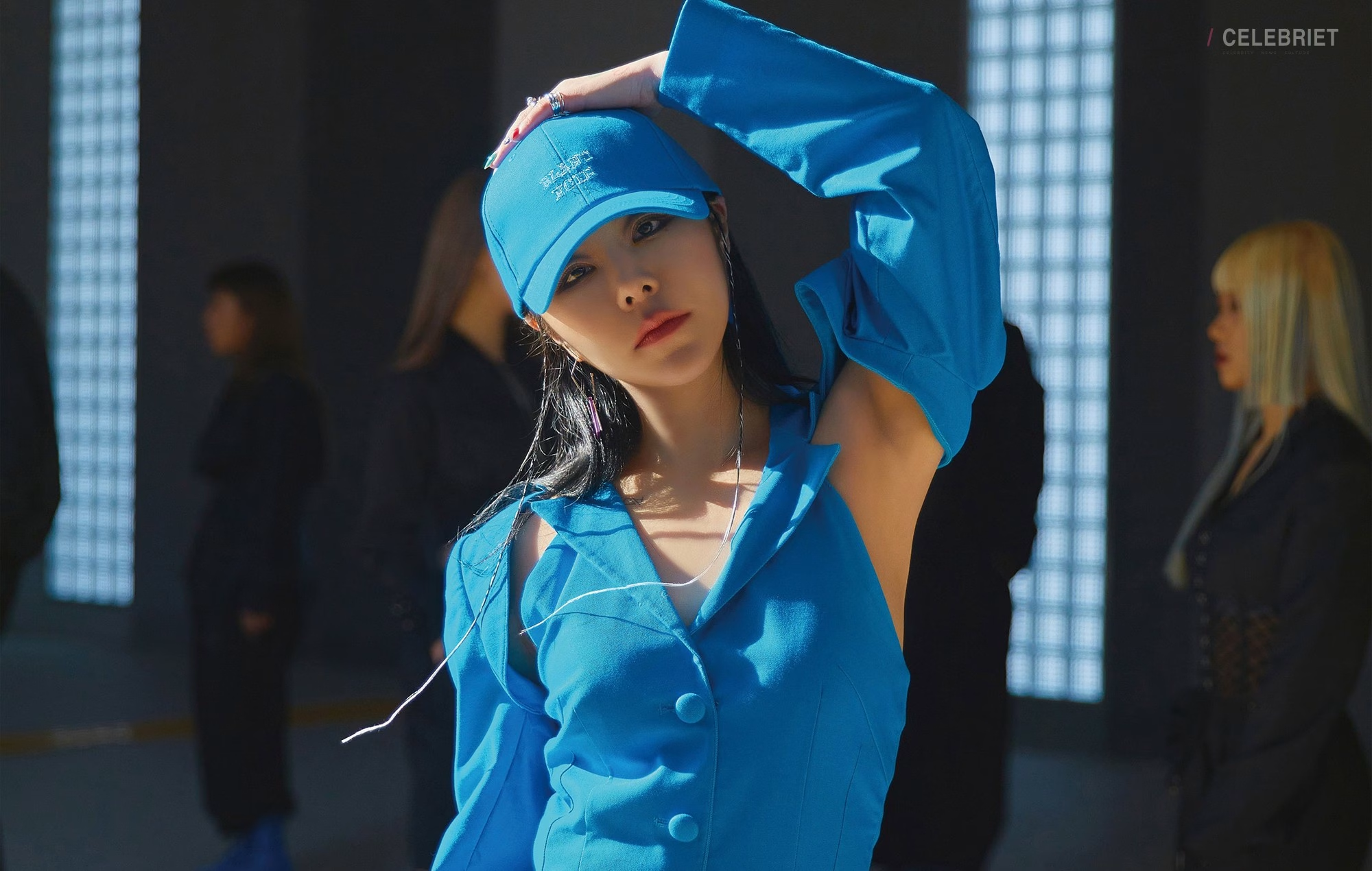
Before debuting, Wheein trained under multiple companies and built a reputation internally for her strong vocals and dance ability. Even within MAMAMOO, a group already famous for vocal talent, she quickly became recognized as one of the standout singers.
According to publicly available profile information, Wheein officially debuted with MAMAMOO in June 2014 through the single “Mr. Ambiguous.”
From the beginning, the group differentiated itself from many other K-pop acts through live performance quality, jazz and R&B influences, and a more musically mature image. Wheein’s soft but technically strong voice became central to that identity.
One reason Wheein became so respected in K-pop circles is because of how naturally she blends technical ability with emotional expression.
Fans and critics frequently describe her vocals as warm, airy, and emotionally layered rather than purely power-focused. While MAMAMOO member Solar often handles explosive high notes and Hwasa delivers a distinctive vocal tone, Wheein became known for creating emotional balance inside the group’s music.
Discussions within K-pop communities often praise her versatility specifically. A Reddit discussion on r/unpopularkpopopinions described her as “the best vocalist and dancer” in the group despite sometimes being less publicly flashy than other members.
That understated quality actually became part of her identity. Unlike idols built around extreme personas, Wheein often projected calmness, emotional honesty, and artistic sensitivity.
According to an older feature from Top of the K-pop, critics and fans also repeatedly highlighted her strong dance ability alongside her vocals, even though her performance style appeared subtler than that of some members.
This combination of singing, dance versatility, and emotional nuance helped establish MAMAMOO as one of the strongest live-performing girl groups of their generation.
Her Solo Career Changed Public Perception of Her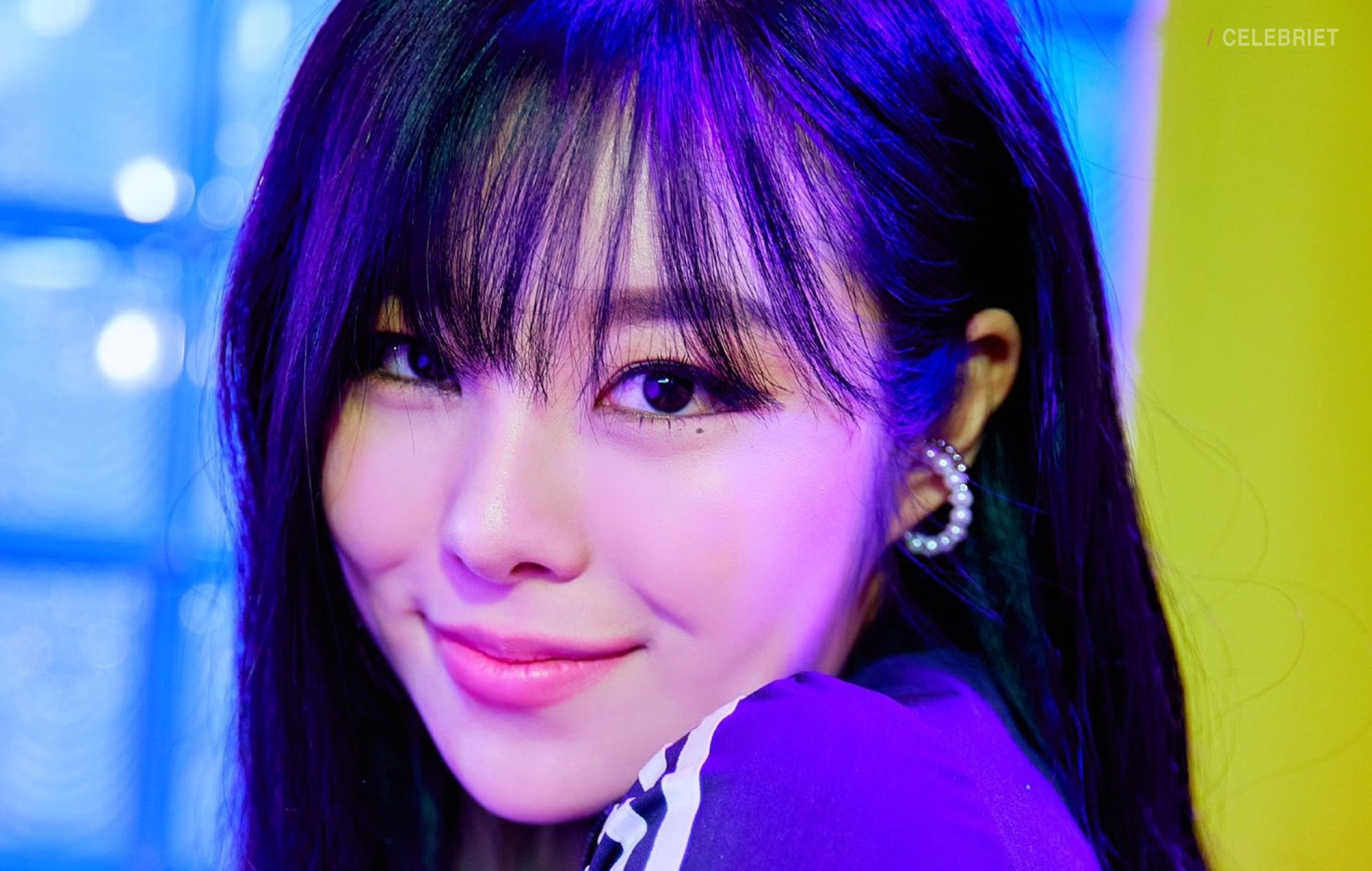
Although Wheein had always been respected inside MAMAMOO, her solo career allowed fans to understand her artistic personality more deeply.
She officially debuted as a soloist in 2018 with “Easy,” followed later by projects like Soar, Redd, WHEE, and eventually her first full-length album In the Mood.
Her solo work leaned heavily into:
R&B
neo-soul
emotional pop
introspective songwriting
That sound contrasted with the louder, performance-heavy concepts often dominating mainstream K-pop.
According to NME, Wheein explained that her 2022 mini album WHEE was designed to reflect her personality directly. She said:
“I feel like this album equals Wheein.”
That statement captured what many listeners already felt. Her solo music sounded deeply personal rather than commercially manufactured.
In another NME interview, Wheein discussed stepping into a more independent artistic phase after changing agencies and exploring new creative freedom.
Those interviews significantly shaped public understanding of her as an artist rather than simply an idol performer.
One of the most important projects in Wheein’s career was her 2021 EP Redd. According to information summarized in coverage of the album, the title symbolized removing false versions of oneself and embracing authenticity.
The lead single “Water Color” became especially important because of its message about self-expression and confidence.
Teen Vogue described the song as an anthem about “taking control of your narrative.” The feature also highlighted how Wheein participated creatively in the album’s writing and emotional direction.
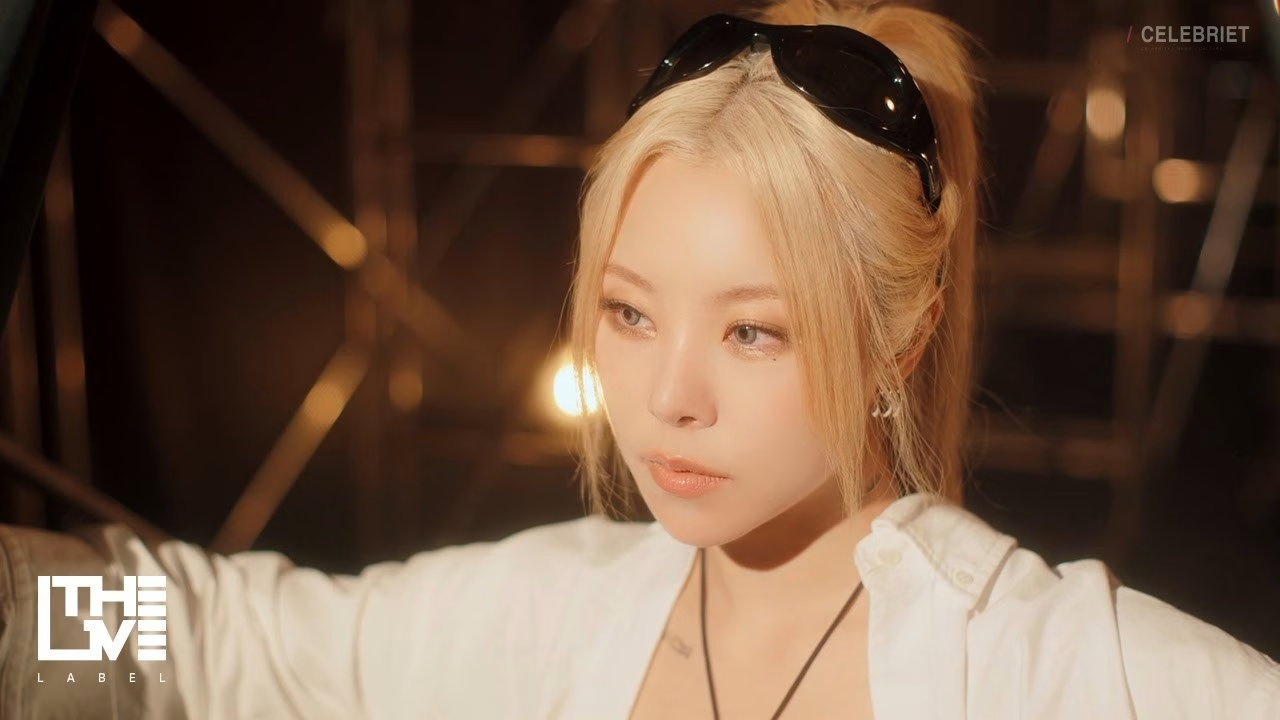
In interviews surrounding the album, Wheein repeatedly emphasized individuality and emotional honesty.
According to AllKPop, she explained:
“I wanted to express my own colors.”
That focus on identity became central to her solo image. Rather than trying to separate herself aggressively from MAMAMOO, Wheein instead used solo projects to reveal quieter and more personal parts of herself.
Leaving RBW Became a Major Turning Point
One of the biggest moments in Wheein’s career happened in 2021 when she decided not to renew her solo contract with RBW Entertainment.
The announcement immediately sparked concern among fans because MAMAMOO’s future became uncertain at the time.
However, according to Teen Vogue, RBW clarified that Wheein would continue participating in MAMAMOO group activities through a separate agreement despite leaving the company individually. Later, Wheein signed with THE L1VE label to pursue her solo career independently.
In an interview with Teen Vogue, she discussed the transition openly and explained that she wanted to continue growing creatively while still remaining emotionally connected to MAMAMOO.
The move was widely viewed as an important act of artistic independence rather than a rejection of the group itself.
For many fans, it marked the moment Wheein fully stepped into her identity as an individual artist.
One of the most beloved parts of Wheein’s story involves her longtime friendship with fellow MAMAMOO member Hwasa.
According to profile information and multiple interviews, the two became friends during middle school before eventually entering the music industry together.
Fans often describe their friendship as one of the most genuine long-term relationships in K-pop because it predates fame entirely.
That closeness also influenced MAMAMOO’s group chemistry overall. Unlike idol groups formed entirely through company casting, MAMAMOO often projected a more natural and emotionally connected dynamic publicly.
Teen Vogue’s feature on MAMAMOO’s WAW era emphasized how deeply the members’ personal history influenced the emotional vulnerability of their music.