

When Batsheva Haart and Ben Weinstein announced their separation in 2021, many fans of My Unorthodox Life were surprised. The pair had been together for nearly a decade and were often presented on-screen as one of the more stable relationships within the Haart family. However, viewers who closely followed the series had already seen signs of growing tension around religion, lifestyle choices, and long-term goals.
The breakup quickly became one of the most discussed storylines connected to the Netflix series because Batsheva and Ben’s relationship represented a major part of the show’s larger theme: steering life after leaving an ultra-Orthodox Jewish community. Over time, it became increasingly clear that while the couple deeply cared for each other, they were evolving in different directions.
Importantly, both Batsheva and Ben publicly emphasized that their split was not caused by cheating, scandal, or dramatic betrayal. Instead, they described the breakup as the result of personal growth and incompatible visions for the future. Their own interviews, social media statements, and comments on the show provide a much clearer picture of why the marriage ended.
How Batsheva Haart and Ben Weinstein Met
Before their reality television fame, Batsheva and Ben grew up in the ultra-Orthodox Jewish community of Monsey, New York. According to reporting from The Times of Israel, the couple married in 2012 when both were just 19 years old, following the expectations common within their religious community.
Their relationship later became part of the central narrative in My Unorthodox Life, which followed the Haart family after Batsheva’s mother, Julia Haart, left the ultra-Orthodox community and built a new life in fashion and media. The show documented how Batsheva and Ben adjusted to a more modern lifestyle while still trying to preserve aspects of their religious identity.

From the beginning, viewers saw that the couple genuinely loved each other. However, the series also highlighted recurring disagreements involving modesty standards, social media exposure, religious observance, and future family planning. These issues later became central to understanding their separation.
In November 2021, Batsheva and Ben officially confirmed their separation through a joint Instagram statement. Multiple outlets, including People, Entertainment Tonight, and Us Weekly, reported the announcement.
Their statement read in part:
“There are no secrets nor salacious events to blame.”
They also described themselves as:
“Two best friends who met at a very young age.”
The wording mattered because speculation online immediately focused on whether cheating or a hidden scandal caused the breakup. Instead, both insisted the split was mutual and rooted in personal growth rather than betrayal.
According to Us Weekly, a source close to the couple said,
“People change and shift, that’s what happened here. They made a loving decision to separate.”
That explanation aligned closely with what viewers had already seen developing throughout the show.
Religion Became a Major Source of Conflict
One of the clearest reasons behind the breakup involved changing views about religion and lifestyle. Throughout My Unorthodox Life, Batsheva and Ben were shown steering different comfort levels regarding modern life outside the ultra-Orthodox community.
According to The Cinemaholic, Ben wanted to maintain a more modern Orthodox Jewish lifestyle, including observing Shabbat and maintaining kosher traditions within a future family structure. Batsheva, meanwhile, gradually moved further away from religious observance.
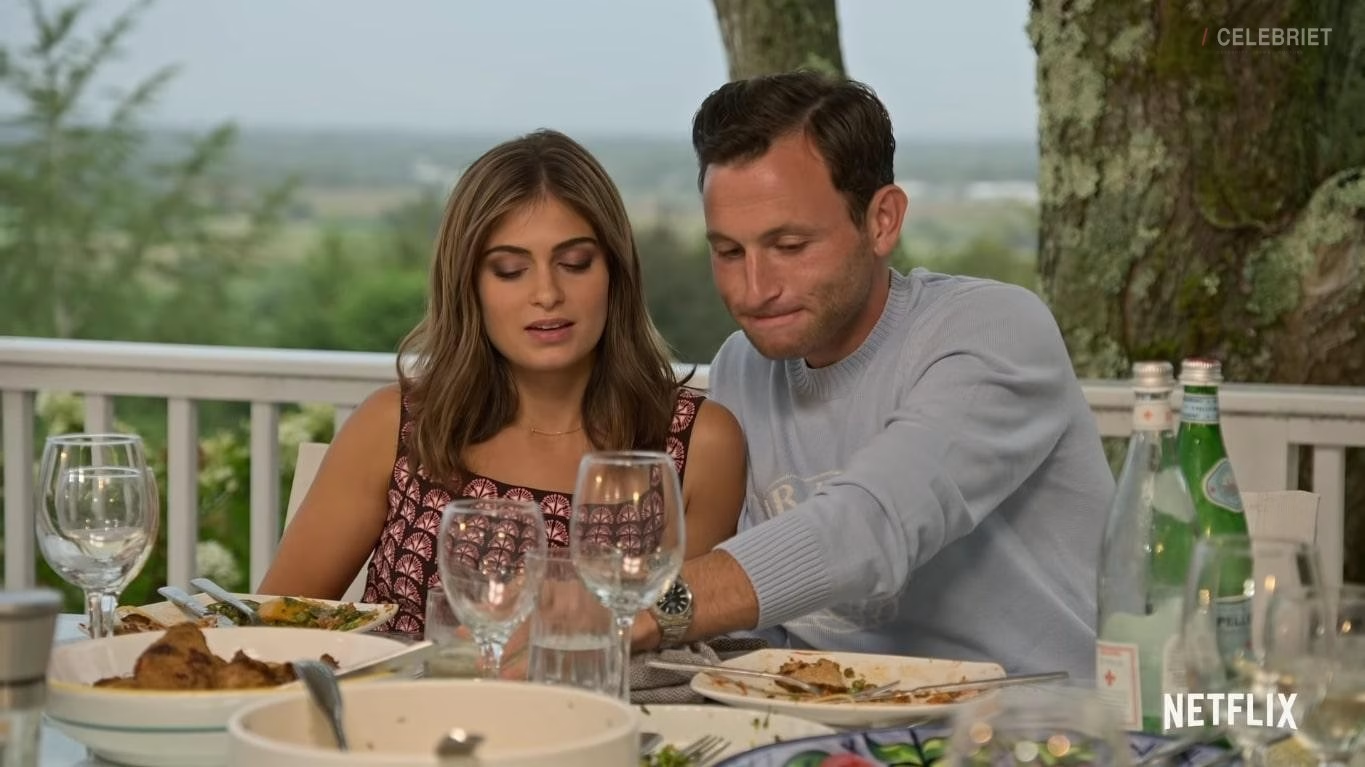
During season 2 of the Netflix series, Batsheva directly explained the divide. She stated:
“His vision was to have a modern Orthodox family.”
She then added:
“That’s just not what I want.”
These comments became some of the most revealing public explanations for the split because they clarified that the couple’s disagreement was ultimately about the type of life they wanted moving forward.
Earlier episodes of the series had already hinted at these tensions. Arguments about Batsheva wearing pants, her growing social media career, and changing religious practices frequently appeared throughout the first season.
Getting Married Young Also Played a Role
Both Batsheva and Ben later acknowledged that marrying at 19 affected the long-term stability of their relationship.
In a YouTube Q&A referenced by The Times of Israel, Ben admitted:
“I would not recommend getting married young.”
Batsheva similarly said she would not choose to marry so young again if given another chance.
Those comments became especially important because they suggested the couple had matured into different people over the course of their marriage. Rather than growing closer through those changes, they ultimately developed incompatible priorities.
This theme also appeared repeatedly in media coverage after the breakup. Women’s Health noted that disagreements about religion and timing around having children became recurring points of tension between them.
Fans of the show had already seen those disagreements play out on-screen. Ben appeared more ready to settle into traditional family life, while Batsheva increasingly focused on independence, influencing, and exploring opportunities outside the religious structure they grew up with.

Despite the emotional difficulty of ending a nearly decade-long marriage, both Batsheva and Ben consistently described the breakup as respectful and peaceful.
According to Entertainment Tonight, the pair emphasized that they still had “love and respect” for each other even after separating.
Later coverage from The Cinemaholic also reported that there appeared to be no major hostility between them after the divorce. The outlet noted that while they were no longer actively involved in each other’s daily lives, there was also “no bad blood.”
That relatively calm separation stood out partly because reality television relationships often become highly public and combative after breakups. Instead, Batsheva and Ben largely avoided public attacks or sensational accusations.
Batsheva later spoke openly about how emotionally difficult the transition to single life was. According to Women’s Health, she credited her family, especially her mother and sister, with helping her through the adjustment period after the separation.
How the Split Changed My Unorthodox Life
The breakup became a major storyline in season 2 of the Netflix series. By the time new episodes aired, viewers saw Batsheva steering life as a newly single woman in New York while also reassessing her identity outside marriage.
At the same time, the split reinforced one of the show’s central themes: how dramatically life changes after leaving a strict religious environment. Batsheva and Ben’s relationship had initially survived that transition, but eventually their personal evolution pulled them in different directions.
Their divorce also resonated with many viewers because it felt more grounded and realistic than typical reality television drama. Online discussions, including Reddit conversations referenced in fan communities, often described the breakup as believable precisely because the couple seemed to outgrow each other gradually rather than implode suddenly.
Where Batsheva Haart and Ben Weinstein Stand Today
Since the breakup, Batsheva has continued building her career as a social media influencer and reality television personality. Her online content increasingly focuses on fashion, lifestyle, and independent living in New York.
Ben, meanwhile, has remained significantly more private. Compared to Batsheva’s public-facing influencer career, he has kept a much lower profile following the separation.
Although fans still occasionally speculate about reconciliation, neither has publicly suggested that they plan to reunite. Instead, their own comments consistently frame the breakup as a necessary step for personal growth and long-term happiness.
Based on everything both have said publicly, the core reason behind the divorce was not scandal or betrayal. It was ultimately about two people who married very young, changed significantly over time, and realized they no longer wanted the same future.