For decades, Bud Abbott and Lou Costello were among the biggest comedy stars in America. Their legendary routines, especially “Who’s on First?”, became defining pieces of classic Hollywood comedy and influenced generations of performers afterward. During the 1940s and early 1950s, Abbott and Costello dominated radio, movies, and television, becoming one of the highest-paid entertainment acts of their era.
But behind the laughter, the partnership was far more complicated than audiences realized. While the duo appeared inseparable on screen, years of business disagreements, personal frustration, health problems, and growing resentment steadily damaged their relationship off camera. By the mid-1950s, the strain had become impossible to ignore, and the famous comedy partnership officially ended in 1957.
The breakup of Abbott and Costello was not caused by one dramatic event alone. Instead, it was the result of years of accumulated tension involving money, ego clashes, emotional exhaustion, and changing Hollywood trends. Here’s what actually happened between the legendary comedy pair and why one of entertainment history’s most successful duos ultimately fell apart.
Abbott and Costello’s partnership was successful but often tense
Abbott and Costello officially teamed up in the 1930s after meeting in burlesque theater circuits in New York. Their chemistry quickly stood out because Abbott played the sharp straight man while Costello delivered frantic, emotional comedy. That balance became the foundation of their act and eventually turned them into major Hollywood stars.
By the early 1940s, the pair had become massive box office draws through films like Buck Privates and Abbott and Costello Meet Frankenstein. Their routines worked because the contrast between Abbott’s calm confidence and Costello’s panic created perfect comic rhythm.
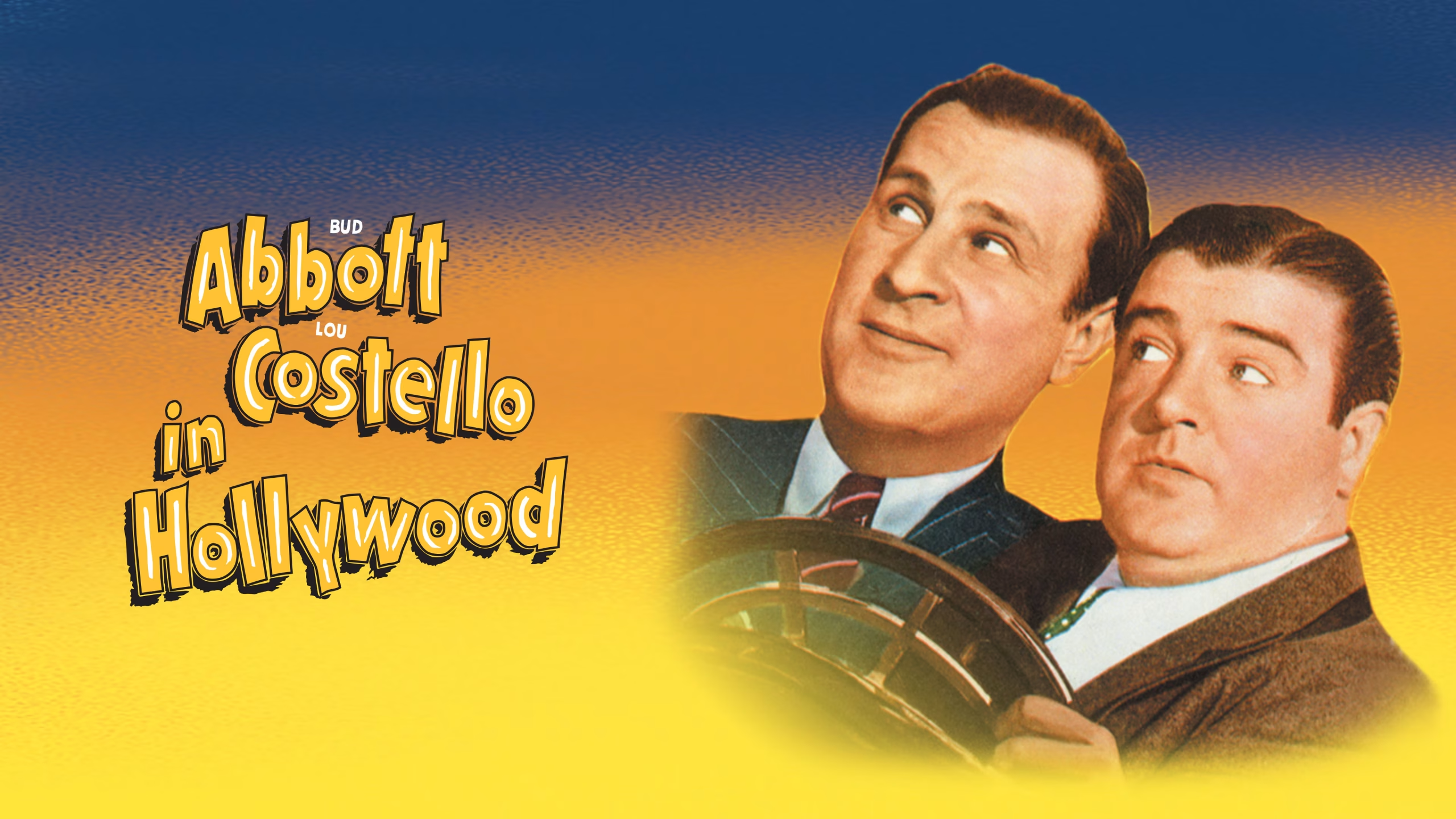
However, even during their rise to fame, the relationship was reportedly filled with disagreements. According to biographies and historical accounts, the two men had very different personalities. Abbott was viewed as disciplined and business-focused, while Costello was more emotional and sensitive. Those personality differences increasingly caused friction behind the scenes.
The duo also worked under intense pressure during their peak years, often making multiple films annually while balancing radio appearances and live performances. That nonstop workload added further stress to an already fragile partnership.
Salary disputes created major resentment between them
One of the biggest long-term issues in the Abbott and Costello partnership involved money. In traditional comedy duos during the burlesque era, the straight man was often paid more than the comedic lead because he controlled the structure and pacing of the act.
Early in their career, Abbott reportedly received 60 percent of the team’s earnings while Costello received 40 percent. Over time, Costello became unhappy with that arrangement because audiences increasingly viewed him as the duo’s main attraction. According to historical reports, Costello eventually pushed for a larger share of the earnings and later secured a 60/40 split in his own favor.
That financial shift created lingering bitterness. Abbott reportedly felt underappreciated despite being the organizational force behind much of the act. Meanwhile, Costello believed his comic performance was carrying the team’s popularity.
Another source of tension involved billing. Costello allegedly wanted the act renamed “Costello and Abbott,” believing his popularity justified top recognition. Universal Pictures refused because the “Abbott and Costello” brand was already firmly established.
While these disputes may sound minor individually, they contributed to a deeper sense of rivalry that steadily damaged their friendship.
A surprisingly petty argument caused a major split in 1945
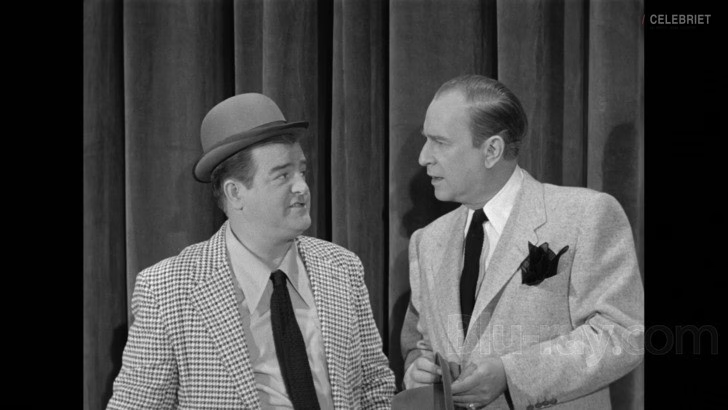
The most famous rupture between Abbott and Costello reportedly began in 1945 over an argument involving a housemaid. According to multiple historical accounts, Costello fired a maid working for his family, and Abbott later hired the same woman for his own household. Costello interpreted that decision as a personal betrayal.
The disagreement escalated so severely that the two men stopped speaking to each other outside of performances. During this period, they reportedly communicated only when contractually required on film sets.
The tension became so noticeable that some movies from that era reduced scenes requiring the pair to interact directly. In films like The Time of Their Lives, the comedians spent much of the movie separated from one another onscreen, reflecting their real-life distance behind the scenes.
Although the pair eventually reconciled publicly, many historians view the 1945 feud as the point where their relationship suffered irreversible damage.
What made the situation especially striking was how trivial the original argument appeared. However, the maid dispute likely represented years of buried resentment finally reaching the surface.
Personal tragedies and health problems worsened the relationship
The later years of Abbott and Costello’s partnership were also shaped by serious personal struggles. In 1943, Costello suffered a devastating tragedy when his infant son accidentally drowned in the family swimming pool. According to people close to him, the loss deeply changed his personality and emotional state.
Costello also struggled with recurring health problems, including rheumatic fever, which forced him away from performing for extended periods. Abbott, meanwhile, dealt with epilepsy and reportedly relied heavily on alcohol to manage stress connected to his condition.
These personal difficulties placed enormous strain on the duo’s professional relationship. Friends and collaborators later described increasing tension, irritability, and emotional exhaustion between the two men during the 1940s and 1950s.
As their private lives became more difficult, maintaining the demanding pace of Hollywood comedy became increasingly challenging.
By the early 1950s, Abbott and Costello’s popularity began declining as entertainment tastes evolved. New comedy stars such as Dean Martin and Jerry Lewis started attracting younger audiences with a more modern style of comedy.
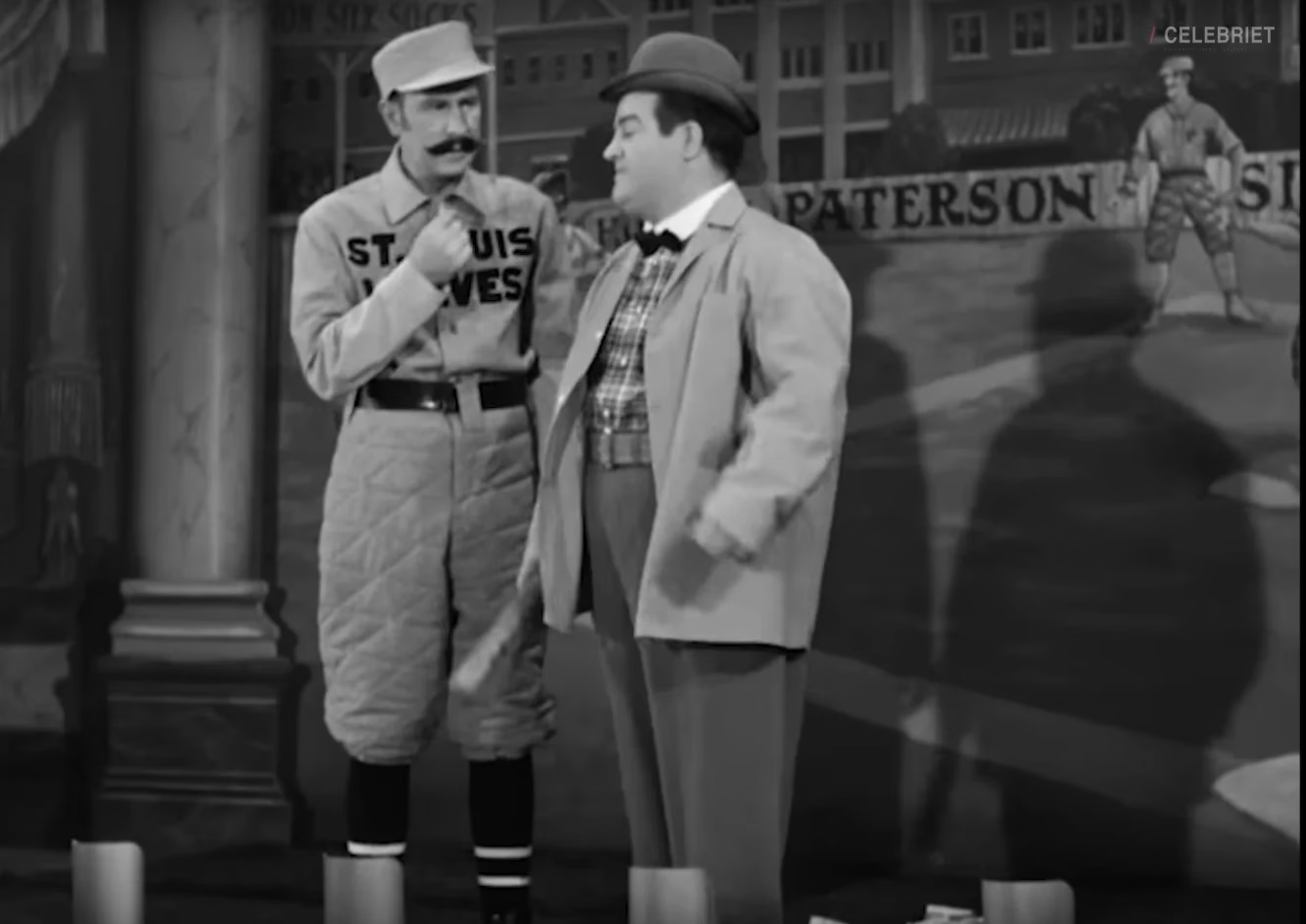
At the same time, Abbott and Costello were arguably overexposed. Their older movies were constantly re-released, their television content aired repeatedly, and audiences became highly familiar with their routines. Some writers who worked with the duo later claimed the comedians became reluctant to experiment with new material.
Financial problems also added pressure. The pair reportedly faced major tax issues with the IRS, forcing them to sell assets and properties during the 1950s.
Their relationship with Universal Pictures also deteriorated. In 1952, Abbott and Costello sued the studio for breach of contract, though the dispute was eventually settled.
All these problems combined to create an environment where continuing the partnership became increasingly difficult.
Abbott and Costello officially separated in 1957
After years of growing tension, Abbott and Costello officially ended their partnership in 1957. Their final film together was Dance with Me, Henry, which notably moved away from their traditional comedy format.
Reports from the time suggested Abbott wanted a quieter lifestyle, while Costello hoped to continue working independently. Despite their conflicts, neither man found the same level of success after the split.
Costello attempted solo appearances on television and in Las Vegas, while Abbott briefly explored comeback opportunities with other partners. However, audiences strongly associated each comedian with the iconic duo rather than their separate identities.
Tragically, Costello died of a heart attack in 1959 at just 52 years old, only two years after the breakup. Abbott later admitted that nobody could truly replace his longtime partner.