Polly Holliday became one of the most memorable parts of Alice thanks to her portrayal of Florence “Flo” Castleberry, the sharp-tongued waitress known for the iconic line “Kiss my grits.” Despite her popularity, Holliday left the series during its fourth season, prompting long-standing curiosity about the real reason behind her exit.
The primary and confirmed reason for her departure is straightforward. Holliday left Alice in 1980 to star in her own spin-off series, Flo.
This move was a common television strategy at the time, especially when a supporting character became popular enough to carry their own show. Flo had quickly emerged as a breakout character, often stealing scenes with her humor and personality, which made her an ideal candidate for a spin-off.
In the storyline of Alice, Flo’s departure was written into the plot. Her character leaves Mel’s Diner to take a job opportunity in Texas, which transitions directly into the premise of Flo.
In the spin-off, she returns to her hometown and runs her own restaurant, shifting from supporting role to central lead. This narrative continuity helped smooth her exit and gave fans a reason to follow her to the new series.
At the time, the decision appeared to be a logical career move. Flo initially performed well in ratings during its early run, even reaching the Top 10 in its first season.
However, the show struggled after scheduling changes and was eventually canceled after two seasons. Once Flo ended, Holliday did not return to Alice, aside from brief archival footage used later in the series.
While the spin-off explanation is the official reason, there have long been reports of behind-the-scenes tension contributing to her departure.
Some accounts suggest that Holliday’s growing popularity created friction within the cast, particularly with lead actress Linda Lavin. Industry reports have indicated that Holliday’s breakout success did not necessarily sit well with the show’s established hierarchy.
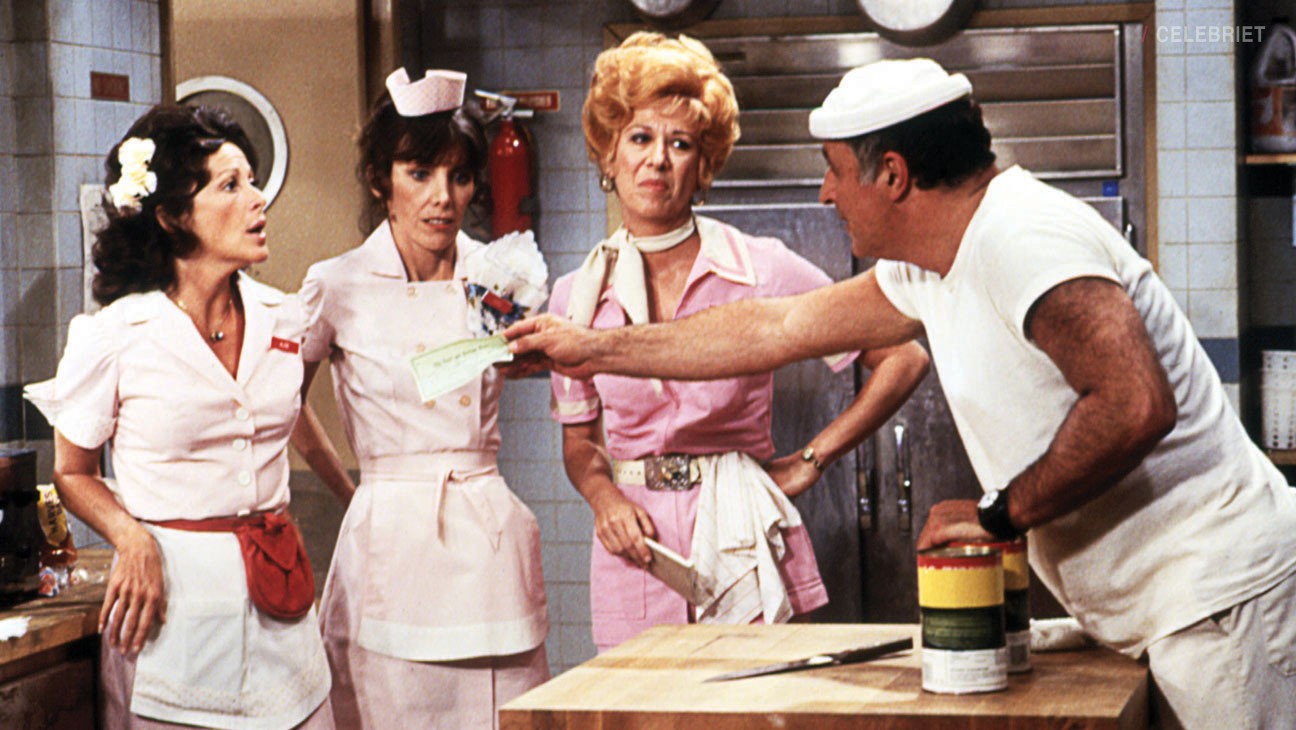
However, it is important to treat these claims carefully. No definitive public statement from Holliday confirms that interpersonal conflict was the primary reason she left. Most reliable sources frame the spin-off opportunity as the central factor, with any reported tension remaining secondary and not fully verified.
From a career perspective, Polly Holliday’s exit reflects a broader pattern in television during that era. When a supporting character gained strong audience appeal, networks often moved quickly to capitalize on that popularity. Flo’s bold personality and catchphrase-driven humor made her stand out, and CBS saw potential in expanding her story into its own series.
Even though Flo was short-lived, Holliday’s performance across both shows had a lasting impact. She earned multiple award nominations for her role and helped define one of the most recognizable characters in 1970s television. Her departure also marked a shift in Alice, which introduced new characters to fill the gap left by Flo’s absence.
Another notable aspect of her exit is that she never returned to Alice after launching the spin-off. This was not always the case with television spin-offs, where crossover appearances were common. In Holliday’s case, the separation between the two shows remained largely intact, reinforcing the idea that her career had moved in a different direction.
In hindsight, her decision can be seen as both an opportunity and a risk. While leading a spin-off allowed her to step into a starring role, it also meant leaving behind a highly successful and stable series. When Flo ended, there was no return path to her original role, which effectively closed that chapter of her career.
The real reason Polly Holliday left Alice comes down to a combination of professional opportunity and industry dynamics.
The confirmed explanation is that she departed to headline her own show, capitalizing on the popularity of her character. Reports of behind-the-scenes tension may have played a role, but they remain unconfirmed and secondary to the main reason.
Her exit did not diminish her legacy. Flo remains one of the most iconic sitcom characters of her era, and Holliday’s performance continues to be remembered as a defining element of Alice.