For more than two decades, Los Bukis dominated Latin music with emotional ballads, romantic lyrics, and the unmistakable songwriting of Marco Antonio Solís. The band became one of the most influential groups in regional Mexican music, producing massive hits throughout the 1970s, 1980s, and 1990s. Songs like “Tu Cárcel,” “A Donde Vayas,” and “Como Fui a Enamorarme de Ti” turned Los Bukis into a cultural phenomenon across Mexico and the United States.
That is why the group’s breakup in 1996 surprised fans. At the height of their popularity, Los Bukis suddenly announced they were separating, bringing an end to one of Latin music’s most successful eras. For years, speculation surrounded the split, with fans debating whether internal conflict, business disagreements, or personal tensions caused the breakup.
In reality, the story behind Los Bukis breaking up was largely tied to Marco Antonio Solís’ desire to evolve creatively and pursue a solo career. However, the transition also reflected bigger changes within the group after decades of nonstop touring, recording, and public pressure.
How Los Bukis Became One of Latin Music’s Biggest Bands
Los Bukis was formed in Michoacán, Mexico, during the 1970s by cousins Marco Antonio Solís and Joel Solís. Before becoming Los Bukis, the pair originally performed together as Los Hermanitos Solís. According to archived profiles on the Los Angeles Times, the group quickly gained attention for blending grupero music with highly emotional romantic songwriting.
Marco Antonio Solís became the band’s defining creative force. He served not only as lead vocalist but also as the primary songwriter and producer behind many of the group’s biggest hits. Over time, his writing style became inseparable from the Los Bukis identity itself.
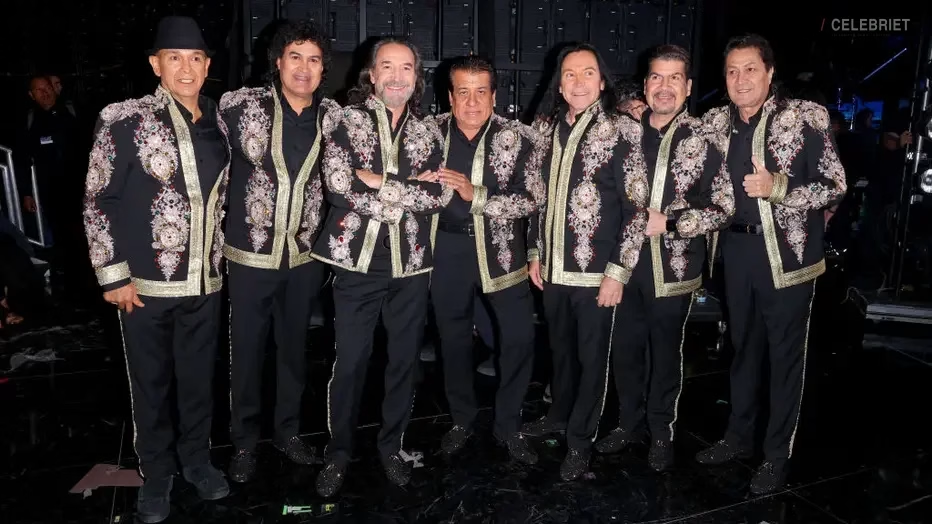
Throughout the 1980s and early 1990s, the band’s popularity exploded internationally. Their albums consistently sold well, and their music became deeply tied to themes of heartbreak, migration, family, and love. For many Mexican and Mexican American fans, Los Bukis represented an emotional connection to home and cultural identity.
By the mid-1990s, the band was already considered legendary within regional Mexican music. That status made the breakup announcement even harder for longtime listeners to accept.
The biggest confirmed reason behind the breakup was Marco Antonio Solís’ decision to begin a solo career.
According to a 1999 profile published by Los Angeles Times, Solís had already started considering a solo transition as early as 1993 after discussions with the label Fonovisa. The official breakup announcement eventually arrived in 1996, alongside plans for Solís to release his first solo album, En Pleno Vuelo.
This detail is important because it shows the separation was not entirely sudden. Internally, the idea of moving away from Los Bukis had reportedly existed for several years before the public announcement.
Unlike some famous band breakups driven by explosive personal feuds, the Los Bukis split appears to have been more professionally motivated. Solís wanted greater artistic freedom and the opportunity to explore music outside the established structure of the band.
Several later profiles and retrospectives also described the move as a natural evolution for Solís after spending over two decades leading one of Latin music’s most recognizable groups.
Creative Control Was Central to the Split
One major reason the breakup felt inevitable was how heavily Los Bukis revolved around Marco Antonio Solís creatively.
He wrote most of the music, shaped the group’s sound, and became the public face of the band. Over time, the distinction between Los Bukis and Marco Antonio Solís himself became increasingly blurred. Fans often associated the group’s identity directly with his voice and songwriting.
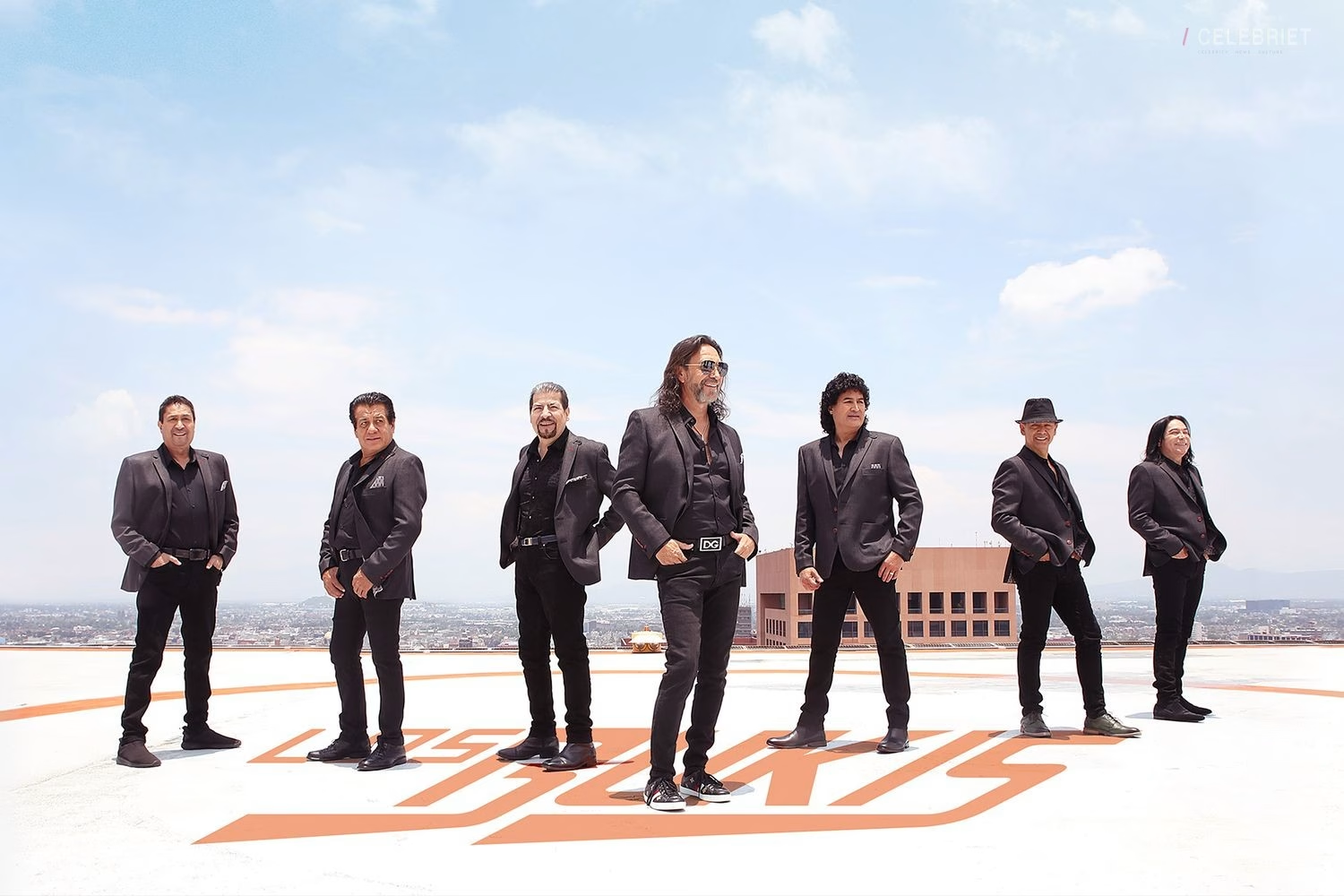
According to coverage from Los Angeles Times, Solís wanted to challenge himself artistically and experiment beyond the structure that had defined Los Bukis for years.
That desire for reinvention is common among artists who spend decades inside one musical format. By the 1990s, Los Bukis already had a deeply recognizable style. While that consistency helped build loyal audiences, it may also have limited Solís creatively after years of repeating similar touring and recording cycles.
His solo career later confirmed this shift. After leaving Los Bukis, Solís explored broader Latin pop influences while maintaining the romantic songwriting style that originally made him famous.
The Rest of the Band Continued Without Him
After Marco Antonio Solís left, the remaining members of Los Bukis regrouped under a new name: Los Mismos.
According to both Wikipedia and the archived Los Angeles Times coverage, Los Mismos achieved moderate success after the split, though they never reached the same cultural impact as Los Bukis during their peak years.
This transition reinforced how central Solís had been to the original group’s identity. While the remaining members still possessed musical chemistry and loyal fans, audiences strongly associated Los Bukis with Solís’ songwriting and voice.
Importantly, there has never been widespread verified evidence of severe public hostility between Solís and the other members after the breakup. Unlike bands torn apart by public insults or lawsuits, Los Bukis’ split remained relatively professional from the outside. That calmer separation later made their reunion possible decades later.
For nearly 25 years after the breakup, fans continuously speculated about a possible reunion. Because the split lacked dramatic public conflict, many believed reconciliation could eventually happen.
That finally became reality in 2021 during the COVID-19 pandemic. According to reporting from Remezcla and we are mitu, Marco Antonio Solís reunited with Los Bukis during a livestream event before the band officially announced a reunion tour.

The reunion immediately became one of the biggest Latin touring events of the year. Los Bukis sold out major stadiums across the United States, including SoFi Stadium in California, where they became the first Latin act to sell out the venue.
The success of the reunion showed how emotionally connected audiences still felt to the group decades after the breakup. Many fans viewed the concerts as both a nostalgic celebration and a long-awaited closure.
The Breakup Was More About Growth Than Drama
One reason the Los Bukis breakup continues to fascinate fans is that it differs from many famous band separations.
There was no widely confirmed scandal, legal war, or catastrophic public feud. Instead, the split appears to have emerged primarily from artistic evolution and the reality of sustaining a massively successful band for over twenty years.
According to multiple retrospectives, Solís simply reached a point where he wanted a different creative future.
That explanation may sound less dramatic than typical music industry breakups, but it also helped preserve goodwill between the members over time. The eventual reunion likely would not have happened if the separation had involved deeper personal resentment.
The band’s later performances together also suggested that the emotional connection between members never completely disappeared, even after decades apart.