

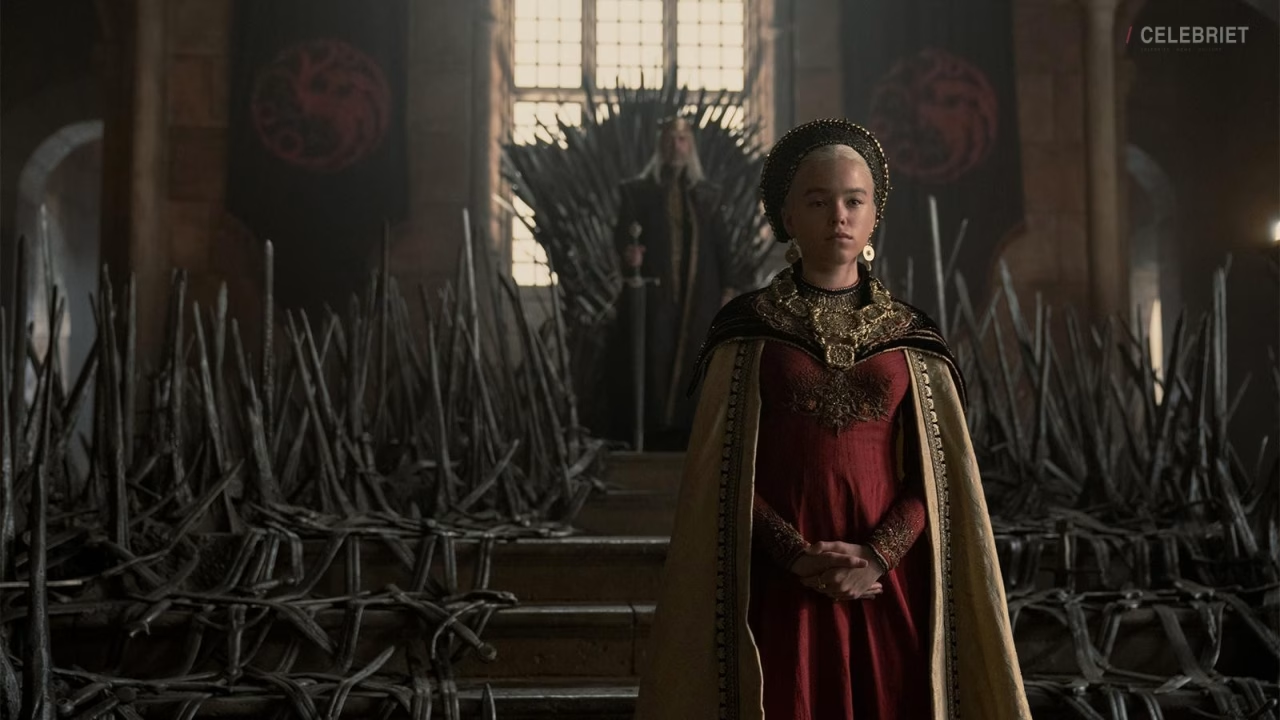
Few television series have faced as much pressure as House of the Dragon. As the first major return to George R.R. Martin’s world after the divisive ending of Game of Thrones, HBO’s prequel arrived with enormous expectations. Fans wanted the political intrigue, surprising betrayals, memorable characters, and epic scale that made Game of Thrones a global phenomenon. At the same time, many viewers remained skeptical about whether another Westeros story could recapture the magic of the original series.
Based on George R.R. Martin’s Fire & Blood, House of the Dragon takes audiences nearly 200 years before the events of Game of Thrones. Instead of exploring multiple kingdoms and families, the series focuses primarily on House Targaryen and the civil war that eventually tears the dynasty apart. The result is a more intimate but equally tragic story centered on succession, family loyalty, ambition, and power.
While House of the Dragon may not fully match the cultural impact of Game of Thrones at its peak, it succeeds in rebuilding trust in the franchise through strong performances, high production value, and a compelling central conflict.
House of the Dragon Story Review: A Family Tragedy Wrapped in Political Warfare
One of the biggest differences between House of the Dragon and Game of Thrones is its narrative focus. The original series constantly shifted between different kingdoms, noble houses, and storylines. House of the Dragon narrows its attention almost entirely to the Targaryen family and the events leading to the Dance of the Dragons.
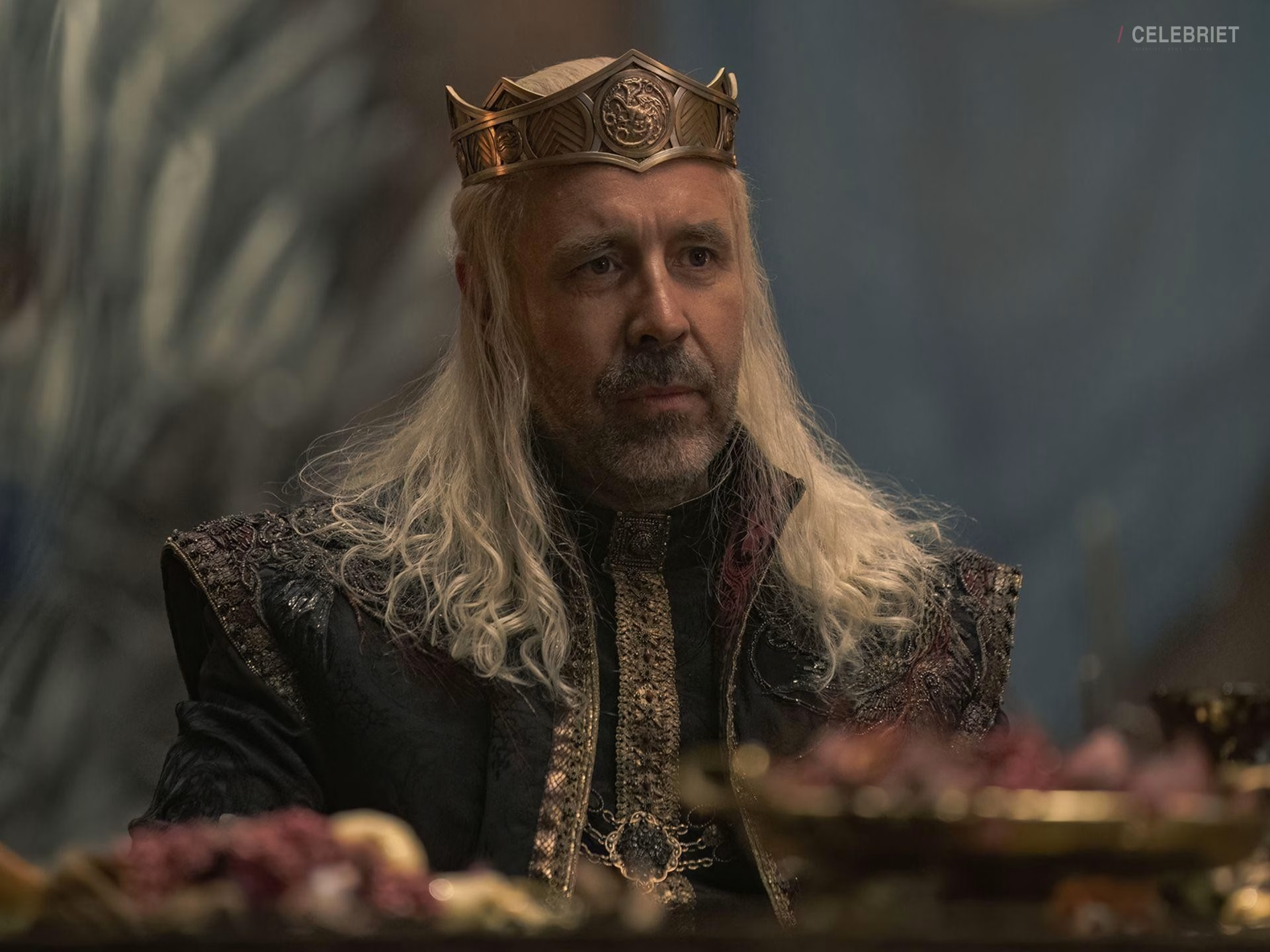
The story begins during the reign of King Viserys I Targaryen, a ruler who desperately wants stability for his kingdom. When questions arise regarding succession, Viserys names his daughter Rhaenyra Targaryen as heir to the Iron Throne. However, the decision creates tension within the royal family, especially after Viserys remarries and fathers additional children.
Rather than immediately focusing on battles and dragon warfare, the series spends significant time developing personal relationships. Friendships evolve into rivalries, family bonds fracture, and political alliances become increasingly dangerous. This slower approach allows viewers to understand the motivations behind the eventual conflict.
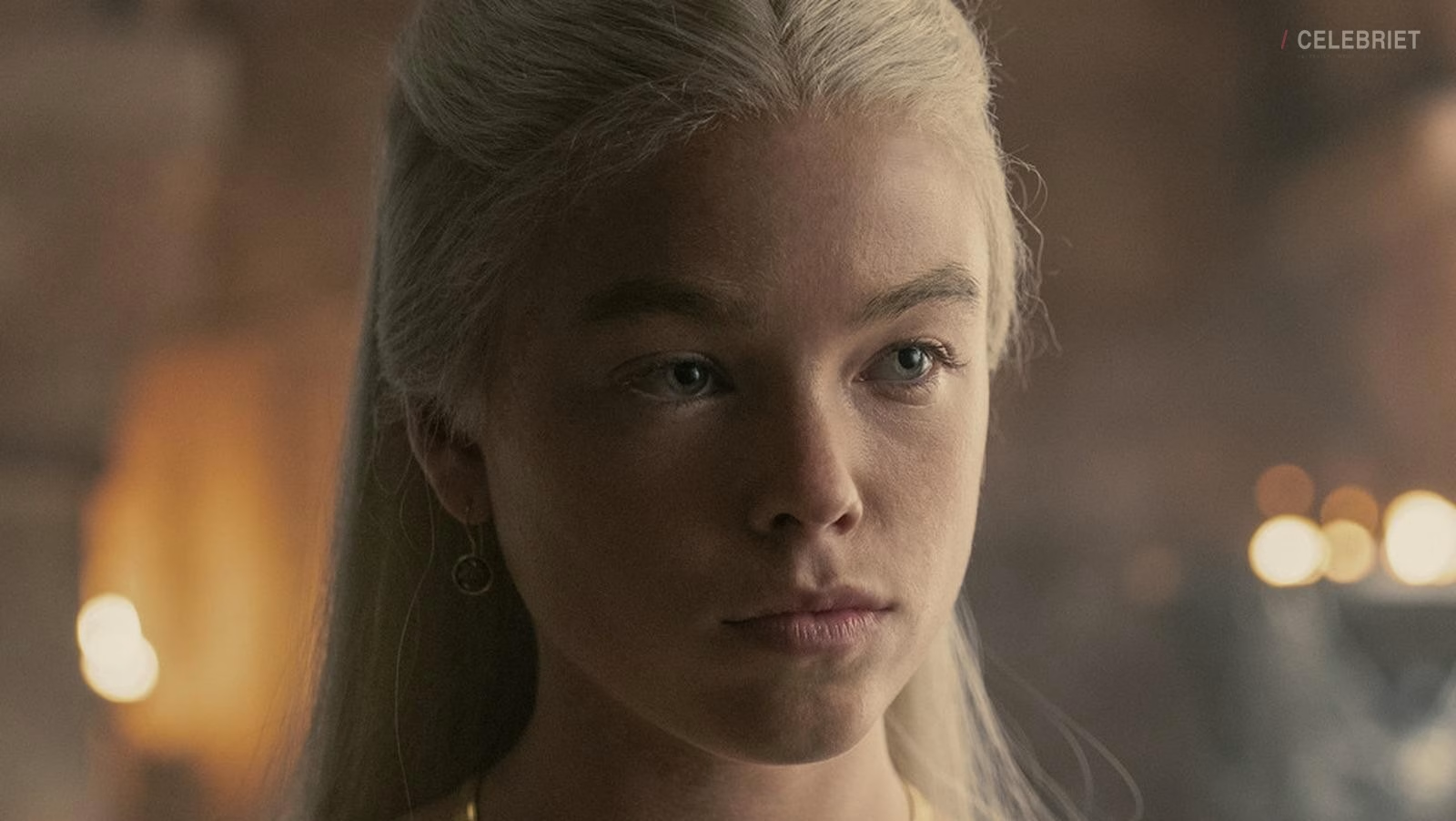
The strongest aspect of the story is how it portrays the destructive nature of power. Almost every major character believes they are protecting their family or preserving the world, yet their decisions steadily push Westeros toward catastrophe. This moral complexity mirrors some of the best storytelling from early Game of Thrones.
The series also benefits from its clear direction. Unlike the sprawling structure of Game of Thrones, House of the Dragon has a defined historical endpoint. Viewers know they are witnessing the fall of a dynasty, which adds a sense of inevitability to many dramatic moments.
Character Writing and Political Drama Remain the Show’s Biggest Strengths
Although dragons are heavily featured in marketing, House of the Dragon works best when characters are talking rather than fighting. Courtroom discussions, private conversations, succession debates, and political maneuvering often create more tension than action sequences.
Rhaenyra Targaryen serves as the emotional center of the story. Her journey explores the challenges of being a female heir in a deeply patriarchal society. The character constantly balances personal desires with political responsibilities, making her one of the most layered figures in the series.
Daemon Targaryen provides unpredictability throughout the narrative. Charismatic, violent, and ambitious, he frequently steals scenes with his presence alone. His actions often blur the line between hero and villain, making him one of the show’s most fascinating characters.
The conflict between Rhaenyra and Alicent Hightower forms the emotional foundation of the series. What begins as a genuine friendship gradually transforms into one of Westeros’ most devastating rivalries. Their relationship gives the larger political conflict a personal dimension that resonates throughout the show.
Critics frequently praised the show’s character-driven approach during its first season. Reviews highlighted how the political tension and family drama helped distinguish the series from simply being another fantasy spectacle.
House of the Dragon Cast Review: Performances That Carry the Series
The cast is arguably the strongest element of House of the Dragon. Nearly every major performer contributes to the show’s credibility, helping audiences invest in complex characters who often make morally questionable choices.
Emma D’Arcy as Rhaenyra Targaryen
Emma D’Arcy delivers one of the most important performances in the series. As the older version of Rhaenyra, D’Arcy portrays a woman carrying immense political pressure while struggling to maintain control over her family and future.
The performance avoids turning Rhaenyra into a straightforward hero. Instead, D’Arcy presents a ruler capable of compassion, ambition, frustration, and strategic calculation. This layered approach keeps the character compelling even during quieter episodes.
Matt Smith as Daemon Targaryen
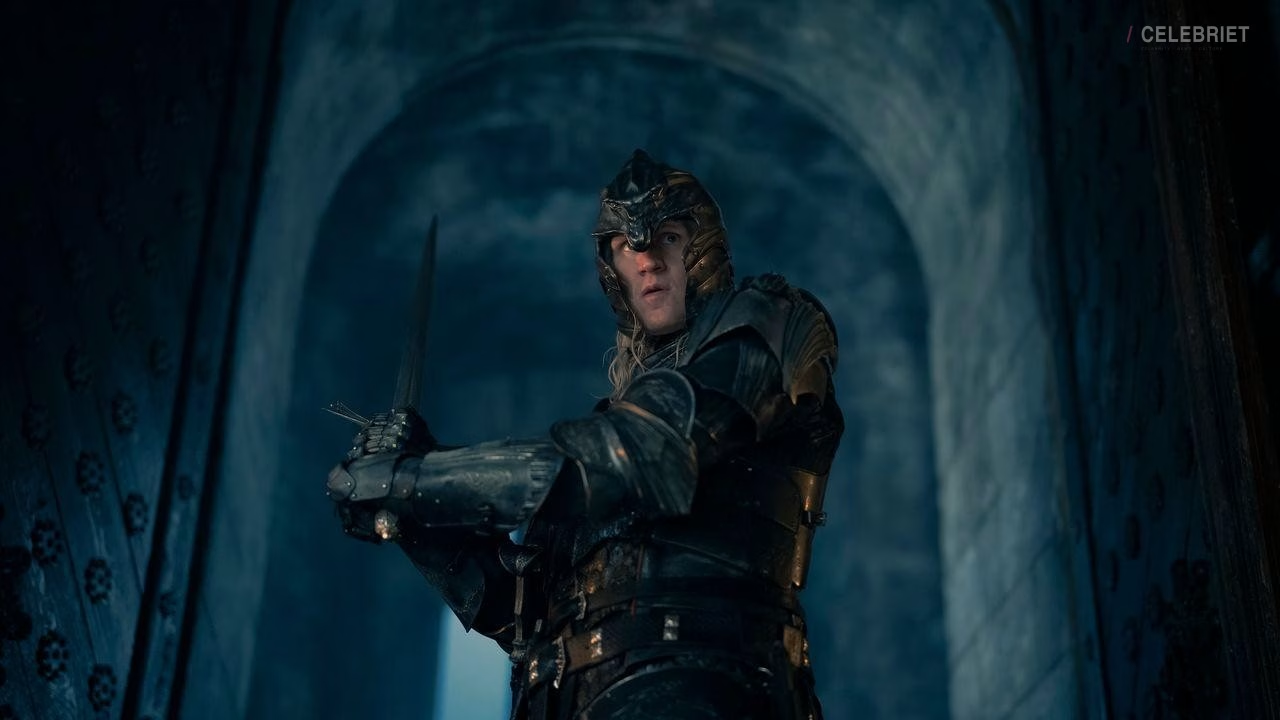
Matt Smith’s portrayal of Daemon Targaryen quickly became one of the show’s biggest talking points. Multiple critics noted that Smith brought energy and unpredictability whenever Daemon appeared on screen. Vogue specifically highlighted how Smith injected life into many early episodes through his swagger and charisma.
Daemon represents everything dangerous about House Targaryen. He is reckless, impulsive, and often cruel, yet viewers remain fascinated by him. Smith’s performance successfully transforms Daemon into one of television’s most memorable antiheroes.
Olivia Cooke as Alicent Hightower
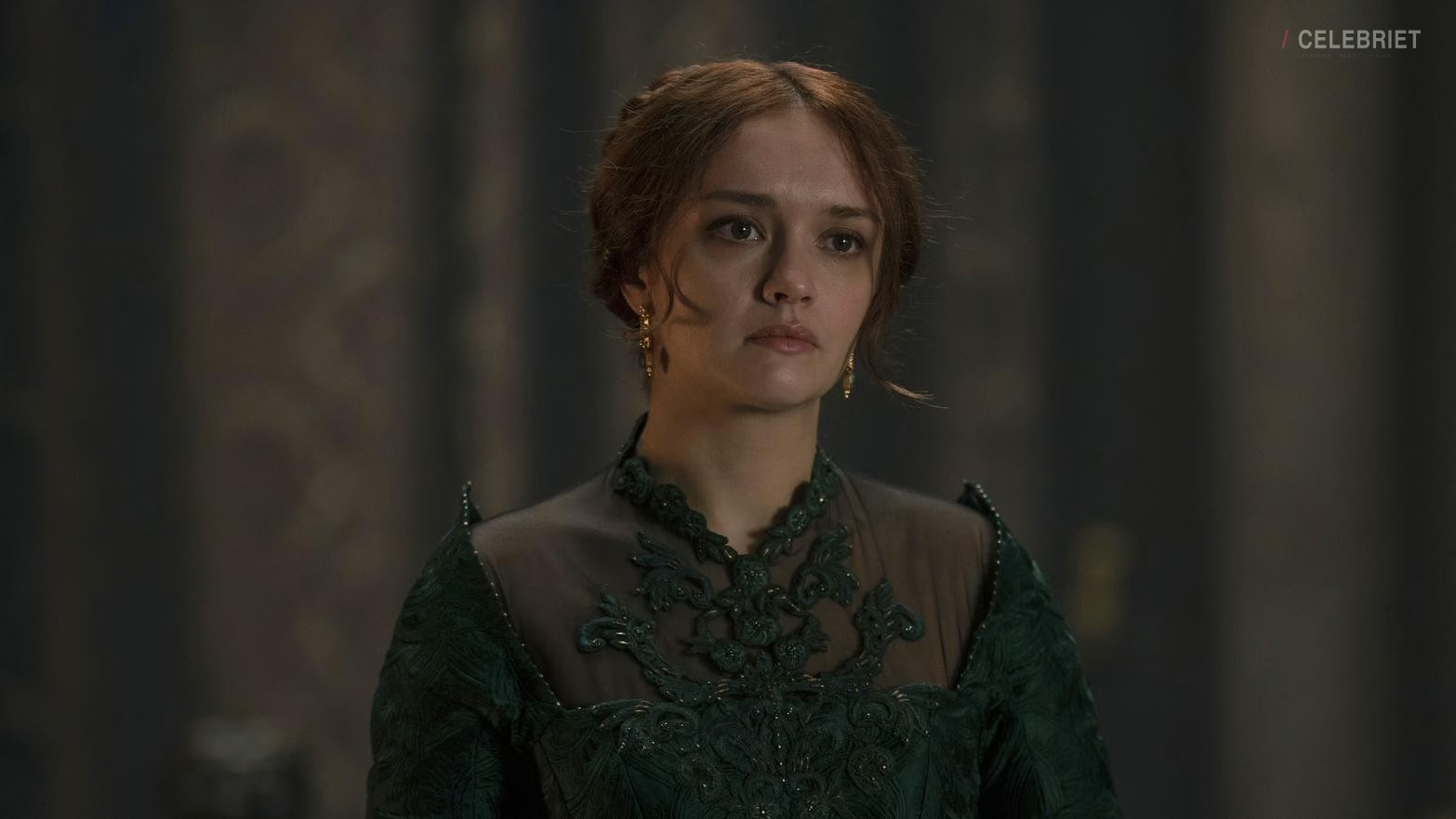
Olivia Cooke faces the difficult challenge of portraying a character many viewers initially see as an antagonist. However, Cooke gradually reveals Alicent’s fears, insecurities, and motivations.
Rather than presenting a simple villain, the performance shows a woman trapped by duty, family expectations, and political circumstances. This complexity strengthens the central conflict because audiences can understand both sides of the struggle.
Paddy Considine as King Viserys I
Paddy Considine arguably delivers the most emotionally powerful performance in the series. His portrayal of King Viserys transforms what could have been a passive character into a tragic figure attempting to hold his family together.
Many critics singled out Considine’s work as one of the season’s highlights. His gradual physical and emotional decline becomes a symbol of the kingdom’s growing instability. By the time his story reaches its conclusion, viewers fully understand how his decisions shaped the future disaster facing Westeros.
Supporting Cast Excellence
The supporting cast consistently elevates the material. Rhys Ifans, Steve Toussaint, Fabien Frankel, Ewan Mitchell, and Tom Glynn-Carney all contribute memorable performances that enrich the political terrain.
The younger versions of key characters, particularly Milly Alcock’s Rhaenyra and Emily Carey’s Alicent, also deserve recognition. Their performances establish the emotional foundations that later actors successfully build upon.
Visual Effects, Dragons, and Production Quality
One area where House of the Dragon unquestionably succeeds is production value. HBO reportedly invested heavily in the series, and that investment is visible throughout nearly every episode. Critics frequently noted the cinematic scale, impressive visuals, and ambitious presentation.
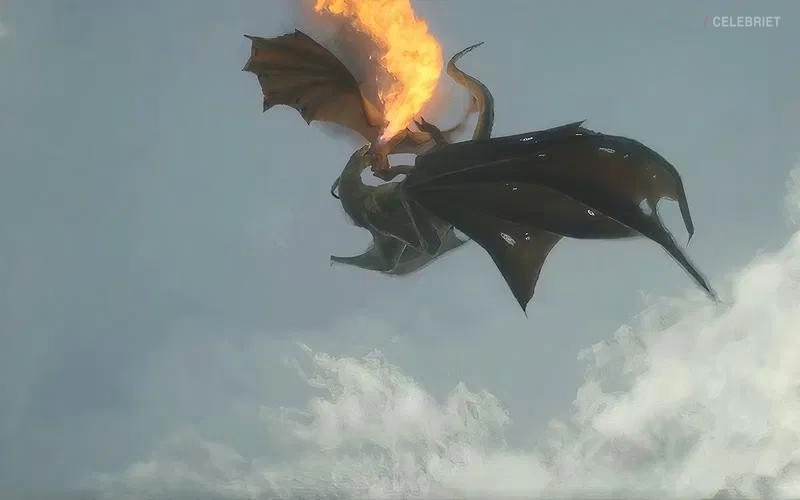
The dragons themselves are significantly more prominent than they were in most of Game of Thrones. Rather than functioning as occasional weapons, dragons become central characters with distinct appearances and personalities.
Entertainment Weekly reported that the production team worked extensively to differentiate the dragons through unique designs and behaviors. This attention to detail helps audiences identify individual creatures while emphasizing their importance within Targaryen culture.
Battle sequences also benefit from modern television budgets. Large-scale confrontations feel cinematic without sacrificing character-focused storytelling. The show generally balances spectacle and narrative better than many fantasy productions.
Costume design, set construction, and world-building remain consistently impressive. King’s Landing feels familiar to longtime fans while still reflecting a different era of Westerosi history. The city appears wealthier, more stable, and more vibrant than the version seen in Game of Thrones.
How House of the Dragon Compares to Game of Thrones
The inevitable question surrounding House of the Dragon is whether it matches the quality of Game of Thrones. The answer depends largely on which era of Game of Thrones viewers are comparing it to.
If compared to the final seasons of Game of Thrones, House of the Dragon generally performs better. The writing feels more focused, character motivations remain clearer, and the narrative benefits from having established source material guiding much of the story.
However, comparing House of the Dragon to the first four seasons of Game of Thrones creates a more difficult challenge. Those early seasons remain among television’s greatest achievements, combining political intrigue, memorable characters, and surprising storytelling on an unprecedented scale.
Several critics argued that House of the Dragon is excellent television but still falls short of the original series at its peak. Forbes described the show as beautifully acted and visually impressive while noting that it remains “no Game of Thrones.”
The Guardian similarly praised the production quality while suggesting the prequel lacks some of the fun and spontaneity that made the original series so engaging.
Areas Where House of the Dragon Is Better Than Game of Thrones
Despite the enormous legacy of Game of Thrones, House of the Dragon improves upon its predecessor in several meaningful ways.
The first advantage is narrative focus. Game of Thrones often balanced dozens of storylines simultaneously. While that ambition created an expansive world, it occasionally led to uneven pacing. House of the Dragon maintains a tighter narrative structure that keeps the central conflict consistently engaging.
The second advantage is thematic consistency. From the beginning, the series knows exactly what story it wants to tell. The rise and fall of House Targaryen remains the driving force behind every major development.
Another improvement involves dragon usage. The creatures play a far more active role in the story compared to early Game of Thrones. Because the Targaryens are at the height of their power, dragons feel integrated into daily political life rather than appearing only during major events.
The production quality also benefits from technological advancements. Visual effects are generally more polished and ambitious than those available during the early years of Game of Thrones.
Many viewers have also appreciated the stronger focus on female perspectives. Characters such as Rhaenyra and Alicent occupy central narrative positions, allowing the series to explore power structures through a different lens.
Areas Where Game of Thrones Still Holds the Crown
While House of the Dragon excels in many areas, Game of Thrones retains several advantages that explain its historic popularity.
The biggest difference is scale. Game of Thrones featured multiple kingdoms, cultures, religions, and families. The constant movement between locations created a sense of discovery that House of the Dragon rarely matches.
The original series also offered a broader collection of iconic characters. Tyrion Lannister, Jon Snow, Arya Stark, Daenerys Targaryen, Jaime Lannister, Cersei Lannister, and many others created an extraordinary ensemble.
House of the Dragon intentionally focuses on one family, which results in deeper exploration of specific relationships but less variety. Some viewers may miss the expansive scope that defined the original series.
Humor is another area where Game of Thrones often performed better. Characters like Tyrion and Bronn regularly provided levity amid dark storylines. House of the Dragon adopts a more serious tone, which occasionally makes the viewing experience feel emotionally exhausting.
Critics have also argued that House of the Dragon sometimes lacks the sense of adventure present in Game of Thrones. The prequel often feels like a royal family drama, whereas the original series blended political intrigue with exploration, warfare, mystery, and supernatural threats.
Season 2 and Ongoing Criticism
While the first season received widespread praise, reactions to later episodes and Season 2 became more divided. Some viewers appreciated the continued focus on character development and political strategy.
Others criticized pacing issues and argued that certain storylines moved too slowly. Discussions across fan communities frequently debated whether the series was spending too much time setting up future events instead of delivering immediate payoffs.
Some critics also felt that the series occasionally became too grim. The Guardian argued that parts of the show lacked the humor, warmth, and emotional variety that helped make Game of Thrones more accessible.
Nevertheless, even many critics who expressed concerns acknowledged the strength of the performances, production values, and core storyline. The debate often centers on whether House of the Dragon is merely very good television or truly great television.
Is House of the Dragon Worth Watching?
House of the Dragon succeeds where many franchise expansions fail. Rather than relying solely on nostalgia, it establishes its own identity through strong performances, focused storytelling, and compelling political drama.
The series may not fully replicate the cultural phenomenon created by early Game of Thrones, but it does not need to. Instead, it offers a more intimate tragedy centered on family conflict, ambition, and the consequences of power.
Emma D’Arcy, Matt Smith, Olivia Cooke, and Paddy Considine anchor the series with outstanding performances. Combined with impressive visual effects and carefully constructed political intrigue, they help transform the prequel into a worthy addition to George R.R. Martin’s world.
For longtime Game of Thrones fans, House of the Dragon provides a satisfying return to Westeros. For newcomers, it functions as a strong standalone fantasy drama with enough depth and spectacle to justify the hype.