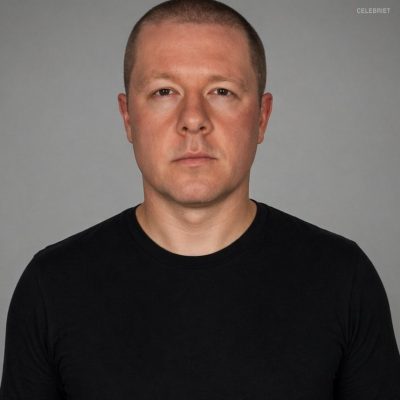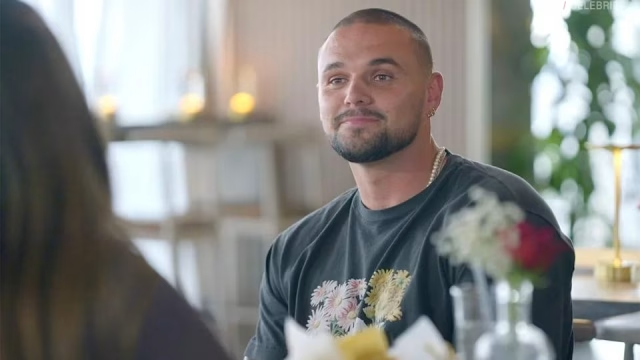

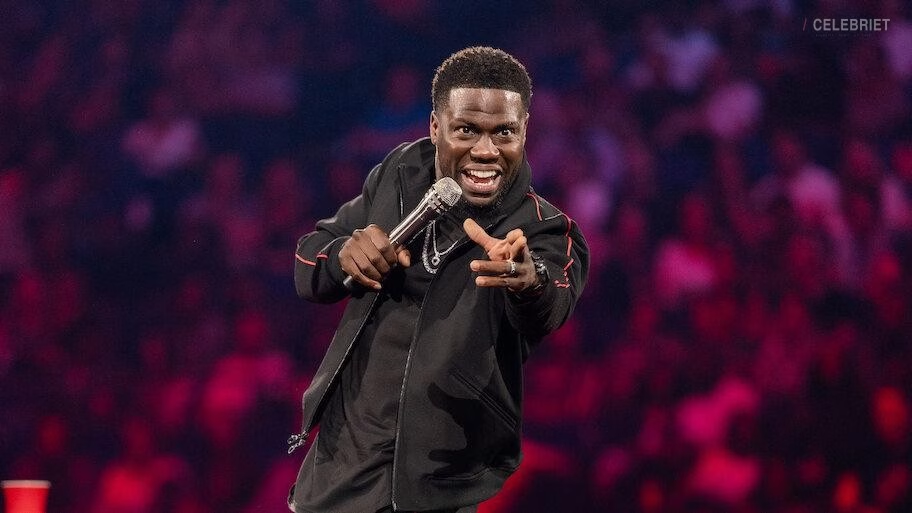
Comedian Na’im Lynn has publicly defended Kevin Hart amid ongoing backlash tied to controversial jokes made during a recent roast event. Speaking to TMZ, Lynn argued that criticism aimed at Hart is misguided, insisting that responsibility should remain with the comedian who delivered the remarks.
The controversy stems from comments made by Tony Hinchcliffe, whose jokes during the roast sparked widespread criticism. The situation quickly escalated online, with some viewers questioning why Hart did not intervene or publicly respond during the event.
Na’im Lynn Says Critics Are Targeting the Wrong Person
Addressing the situation in an interview at Los Angeles International Airport, Lynn made it clear that he believes the focus of criticism has been misplaced. TMZ captured Lynn stating that if audiences have an issue with the content of the jokes, their frustration should be directed toward the individual who made them.
Lynn emphasized that Hart should not be expected to apologize or take accountability for another performer’s material. “If you’re upset, be upset at the person who said it,” he explained, reinforcing his stance that Hart’s role in the situation has been overstated.
His comments reflect a broader debate within comedy about responsibility and boundaries during live performances, particularly in roast-style formats where provocative humor is often expected.
The Backlash Over Tony Hinchcliffe’s Remarks
The controversy began after Hinchcliffe made jokes referencing sensitive topics, including remarks that drew criticism from both fellow comedians and public figures. Among those who responded were members of George Floyd’s family, who publicly condemned the comments.
The jokes also referenced other sensitive subjects, contributing to a wider backlash that extended beyond the comedy community. As reactions intensified, attention shifted to Hart, with some questioning whether he should have addressed the situation during the event.
However, Lynn pushed back against that narrative, arguing that assigning responsibility to Hart ignores the structure of comedy performances and the independence of each comedian’s material.
Comedy, Boundaries, and Cancel Culture Debate
Beyond defending Hart, Lynn used the moment to comment on the broader climate surrounding comedy. He suggested that increasing scrutiny and public backlash have made comedians more cautious about pushing boundaries.
At the same time, Lynn acknowledged that controversial jokes still need to land effectively. In his view, humor that touches on sensitive subjects must be executed carefully, noting that if a joke is going to be provocative, it should at least succeed comedically.
His perspective highlights the ongoing tension between creative freedom and audience expectations, a debate that has become more prominent in recent years as social media amplifies reactions to live performances.
Kevin Hart’s Role in the Situation
Despite being at the center of the event, Hart has not been directly linked to the content of Hinchcliffe’s jokes. Lynn described Hart as a “stand-up guy,” reinforcing his belief that there is no basis for expecting an apology from him.
This distinction is important in understanding the controversy. While Hart’s name is attached to the roast, each performer operates independently, making their own choices about material and delivery.
Lynn’s defense suggests that holding Hart accountable sets a precedent that could complicate how collaborative comedy events are perceived in the future.